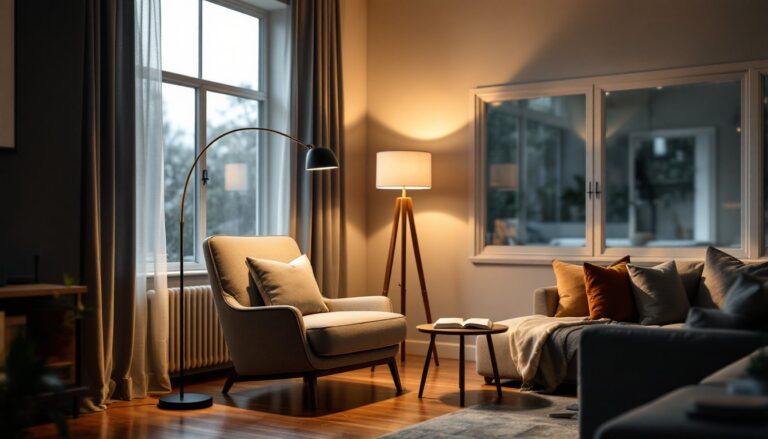
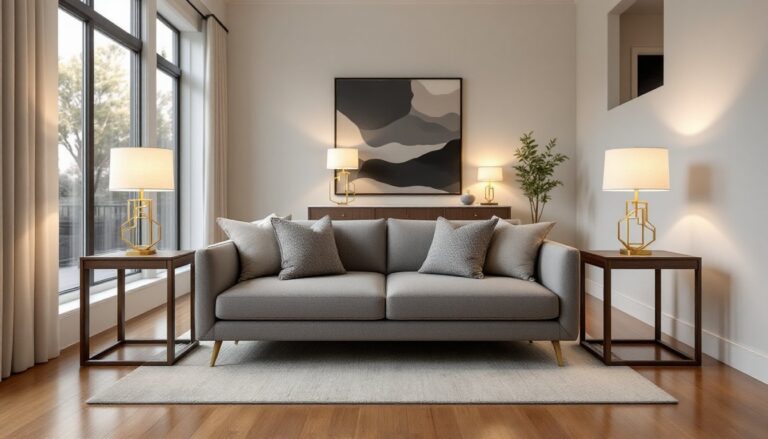
Ceiling lights do more than illuminate a room, they set the tone for how a living space feels the moment someone walks in. Whether the goal is a cozy reading corner or a bright entertaining hub, choosing the right lights ceiling living room setup makes all the difference. In 2026, homeowners have more options than ever, from smart LED flush mounts to sculptural chandeliers and adjustable track systems. This guide walks through fixture types, sizing rules, and layering techniques so the next lighting upgrade hits the mark on the first try.
Table of Contents
ToggleKey Takeaways
- Choosing the right lights ceiling living room fixture sets the overall mood and feel of your space, so prioritize fixtures that match your ceiling height and room size.
- Warm white bulbs at 2,700K–3,000K combined with dimmers let you adjust a single ceiling fixture from cozy movie nights to bright entertaining modes.
- Flush and semi-flush mounts work best for standard 8–9 foot ceilings, while chandeliers and pendants shine in rooms with 9+ foot ceilings where they have proper clearance.
- Layer your living room ceiling lights with ambient, task, and accent fixtures on separate switches or dimmers to create complete control over the room’s lighting and atmosphere.
- Smart LED ceiling fixtures can cut energy use by up to 75% compared to older halogen options while offering modern dimming and control features.
Why Ceiling Lighting Sets the Mood for Your Living Room
Ceiling fixtures are the workhorse of any room’s lighting plan. They cast the broadest light, define the visual center of the space, and often double as a design statement. A poorly chosen fixture can make a 12-foot ceiling feel cramped or wash a warm room in clinical light.
Color temperature matters here. Most living rooms feel best with bulbs in the 2,700K–3,000K warm white range, which mimics incandescent light and flatters skin tones, fabrics, and wood finishes. Pair that with a dimmer, and a single fixture can swing from movie night to morning coffee without breaking stride.
For homeowners exploring smart LED living room setups, the payoff is both aesthetic and practical, with energy savings of up to 75% over older halogen fixtures.
Popular Types of Living Room Ceiling Lights
Not every fixture suits every ceiling. Standard residential ceilings sit around 8 to 9 feet, while vaulted ceilings can climb past 12. That height, plus the room’s square footage, narrows the field quickly.
Flush and Semi-Flush Mounts
Flush mounts sit tight against the ceiling, making them the right call for rooms under 8 feet or any space where headroom is tight. Semi-flush mounts hang down 4 to 8 inches, adding a bit of visual depth without dominating the room. Both work well as the primary ceiling lights lounge room owners gravitate toward when they want clean, low-profile coverage.
Look for fixtures with frosted or opal glass diffusers, they spread light more evenly than clear glass and reduce harsh shadows on walls.
Chandeliers and Pendant Lights
Chandeliers and pendants are the showpieces. They thrive in rooms with 9-foot ceilings or higher, where the fixture can hang without anyone bumping into it. A common rule: the bottom of the fixture should sit at least 7 feet above the floor in walkways, higher over seating.
Pendants work especially well in pairs or threes over a sectional or coffee table, and adjustable pendant lighting options let homeowners fine-tune the drop height without rewiring. For drawing-room style spaces with high ceilings, a traditional chandelier still reads as the gold standard. When considering ceiling lights for drawing room layouts with formal seating, scale the fixture to roughly two-thirds the width of the largest piece of furniture below it.
Recessed and Track Lighting
Recessed cans, sometimes called downlights, disappear into the ceiling and provide even, ambient coverage. They’re ideal for rooms where a central fixture would feel out of place or where homeowners want lighting to fade into the background. A guide to different recessed fixture types is worth reviewing before buying, since trims, beam angles, and IC ratings vary.
Track lighting, particularly modern pendant track systems, offers flexibility that fixed cans can’t match, heads pivot to highlight art, shelving, or architectural details. Note: cutting into a ceiling without attic access is doable but requires patience and the right tools. A remodel can light, a stud finder, and a drywall saw are the basics.
How to Choose the Right Size and Placement
Sizing a fixture comes down to a few quick calculations. For a central ceiling light, add the room’s length and width in feet, then convert that number to inches, that’s the ideal fixture diameter. A 14 x 16-foot room calls for a fixture roughly 30 inches wide.
For ceiling height, allow 2.5 to 3 inches of fixture drop per foot of ceiling height. A 10-foot ceiling supports a fixture hanging 25 to 30 inches from the ceiling.
Placement is just as important:
- Center fixtures over the room or the main seating area, not necessarily the geometric center of the ceiling.
- Recessed cans should sit 24 to 36 inches from walls to avoid harsh wall scallops.
- Pendants over a coffee table should hang 30 to 36 inches above the table surface.
When retrofitting, installing recessed lighting without attic access is one of the trickier DIY jobs, expect to patch drywall and fish wire through bays. Always shut off the circuit at the breaker and verify with a non-contact voltage tester before cutting. Safety glasses and a dust mask are non-negotiable when sawing into ceilings.
Layering Light: Combining Ambient, Task, and Accent Fixtures
A single ceiling fixture rarely covers every need. Designers featured on HGTV and other home design outlets consistently recommend three layers: ambient, task, and accent.
- Ambient lighting: The general fill, usually a flush mount, chandelier, or recessed array.
- Task lighting: Focused light for reading, hobbies, or work, think floor lamps beside a chair or pendants over a side table.
- Accent lighting: Directional light that highlights artwork, plants, or texture, often handled by angled recessed fixtures or track heads.
A solid lounge room ceiling lights plan blends at least two of these layers. For example, a semi-flush in the center, paired with four recessed cans on a separate dimmer, gives complete control over the room’s mood. Detailed breakdowns of layered living room lighting strategies reinforce the principle: separate switches for each layer are what make the system work.
For inspiration on how higher-end homes pull this off, photo galleries on Home Bunch show layered ceiling lighting in real residential settings, useful reference before committing to a plan. Wiring multiple circuits is usually a job for a licensed electrician, especially when adding dimmers or smart switches that need a neutral wire. Permits may be required for new circuits, codes vary by jurisdiction, so a quick call to the local building department saves headaches later.