Pendant track lighting has become the go-to choice for homeowners who want flexibility, style, and smart functionality all in one fixture. Unlike old recessed ceiling lights or static chandelier setups, pendant track systems let you adjust brightness, angle, and positioning to match your space’s mood and purpose. Whether you’re illuminating a kitchen island, dining table, or living room accent wall, pendant track lighting delivers both form and function without the commitment of permanent wiring or the expense of calling an electrician for tweaks down the road. If you’re looking to modernize your home’s lighting in 2026, this adaptable solution is worth exploring.
Table of Contents
ToggleKey Takeaways
- Pendant track lighting offers unmatched flexibility, allowing you to reposition lights, adjust brightness, and swap shades without rewiring—making it ideal for kitchens, dining areas, and home offices.
- Modern pendant track systems are 75% more energy-efficient than older incandescent or halogen fixtures, especially when paired with LED bulbs rated for 25,000-50,000 hours of life.
- Proper spacing is critical: a 36-inch kitchen island works best with two pendants spaced 18-24 inches apart, mounted 24-30 inches above the counter to prevent glare.
- Always secure track brackets directly into ceiling joists or use heavy-duty toggle bolts rated for 25+ pounds—standard drywall anchors won’t safely support the 15-20 pound combined weight of a full system.
- DIY installation is achievable for homeowners comfortable with basic tools and wiring, but confirming circuit capacity and testing power thoroughly before work begins is non-negotiable for safety.
What Is Pendant Track Lighting and Why Homeowners Love It
Pendant track lighting combines two proven concepts: track systems (think of the electrical rail you might see in gallery lighting) and hanging pendant fixtures (decorative lights suspended from the ceiling). The track itself carries power and mounts directly to the ceiling via brackets. Individual pendant heads, housing LED bulbs, fabric shades, or other design elements, hang from movable trolleys or connectors that slide along the track. You can reposition pendants without rewiring, swap out shades in minutes, or add extra fixtures as your layout evolves.
Homeowners love this setup because it removes guesswork and regret. Install the track once, then live with the arrangement for weeks before deciding whether to shift a pendant 12 inches to the left or add a second light above the counter. Traditional pendant lights are hardwired to specific junction boxes in the ceiling, so relocating them means opening drywall and running new circuits, no fun. Track systems bypass that headache entirely. They’re also perfect for rental apartments where permanent installation isn’t an option: you can unscrew the whole system and take it with you.
Key Advantages Over Traditional Lighting Fixtures
The biggest win is flexibility. A pendant track system adapts to changes in furniture layout, home office setups, or growing kitchen islands without rewiring. If your sofa moves, the light follows. If you add open shelving to a wall, you can slide a pendant sideways to highlight it.
Second, pendant track lighting is often more energy-efficient than older fixtures. Most modern pendant track systems run on standard household circuits (typically 15-20 amps) and pair with LED bulbs rated for 25,000-50,000 hours of life. Compare that to incandescent or halogen systems from the 1990s, and you’ll see 75% lower power draw over time. The aesthetic advantage matters too. Track lighting feels contemporary, it’s what you see in upscale hotels, design studios, and homes featured in contemporary design inspiration. It looks intentional and modern, not like an afterthought.
Dimming and color temperature control are another game-changer. Many new pendant track systems integrate with smart bulbs or built-in dimmer switches, letting you dial brightness from 10% to 100% or shift from warm (2700K) to cool (4000K) tones depending on the time of day. Try doing that with a ceiling fan light or basic recessed fixture without replacing the whole assembly.
Choosing the Right Pendant Track Lights for Your Space
Design Styles and Finishes
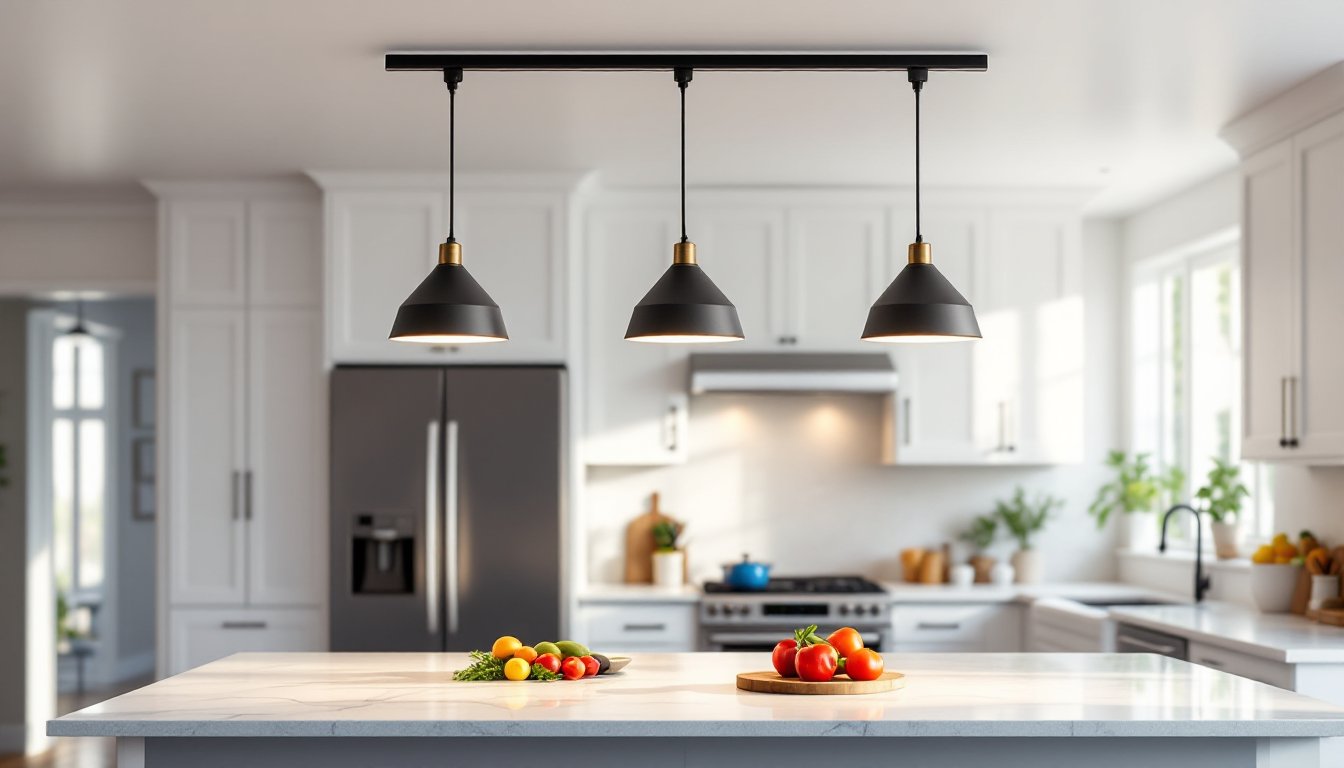
Pendant track systems come in dozens of styles, and the right choice depends on your overall aesthetic and room function. Matte black and brushed brass finishes dominate 2026 trends, they’re modern, durable, and hide fingerprints better than polished chrome or shiny nickel. If your kitchen or dining area leans industrial, look for track with Edison bulbs or cage-style metal shades. Minimalist spaces often pair best with slim tracks in white or black and simple cone or cylindrical shades.
Luxury home designers increasingly favor sculptural pendant heads, think ceramic, sculptural glass, or geometric metal designs**, mounted on sleek black or brass tracks. Elle Decor frequently showcases these upscale combinations in open-concept homes. Fabric shades (linen, cotton, or silk) work well for softer, warmer lighting in bedrooms or living rooms, but they collect dust faster than hard materials like metal or glass, so factor in cleaning time.
Size, Spacing, and Layout Considerations
Track length and pendant spacing drive the project’s success. A standard kitchen island measuring 36 inches wide typically handles two pendant track heads spaced 18-24 inches apart, with the track itself mounted 24-30 inches above the counter surface. (This height prevents glare and keeps sightlines clear across the counter.) A longer 48-inch dining table works well with three pendants spaced roughly 18 inches apart along a 4-foot track.
Always measure twice and account for where the electrical junction box sits in your ceiling. Most homes have boxes spaced 12-16 feet apart, so your track should terminate or connect near an existing box. Longer tracks may require an in-line junction or auxiliary power supply, which adds cost and complexity, something to flag before purchase. Weight matters too: a single pendant head typically weighs 1-3 pounds, but five pendants plus track can total 15-20 pounds. Standard 1/2-inch drywall anchors alone won’t hold this: you need to screw track brackets directly into ceiling joists or use heavy-duty toggles rated for at least 25 pounds each.
For room guidance, MyDomaine suggests pendant lighting works best in focused zones, over islands, desks, or bar areas, rather than replacing general ceiling light entirely. Pair track lighting with recessed lights or wall sconces to avoid dark corners.
Installation Tips and Best Practices for DIY Projects
Before you start, confirm that the circuit powering the intended junction box can handle the new load. Most kitchens run on dedicated 20-amp circuits, which safely handle a track system plus existing appliances. If you’re unsure, hire an electrician to inspect, it takes an hour and costs $100-150, far less than a fire risk or breaker overload.
Materials and Tools You’ll Need:
• Pendant track lighting kit (includes track, mounting brackets, electrical connectors, and hardware)
• Voltage tester (non-negotiable, always verify power is off)
• Drill with 1/4-inch and 3/16-inch bits
• Drywall anchors or toggle bolts rated for 25+ pounds
• Stud finder (optional but highly recommended)
• Needle-nose pliers and a wire stripper
• Protective gear: safety glasses, work gloves, and a dust mask (drywall dust and wire clippings)
Step-by-Step Installation:
- Turn off power at the breaker and use a voltage tester to confirm the junction box is dead. Test the outlet or existing light to be absolutely sure.
- Remove the old fixture (if replacing) and disconnect the wires carefully. Leave the junction box in place.
- Locate and mark the track path on the ceiling using a pencil and level. Ensure it runs as close as possible to the junction box to minimize wire runs.
- Install mounting brackets at 24-inch intervals along the marked line. Drill pilot holes first, then drive 3-inch wood screws into joists, or use toggles if joists aren’t available. Joists are preferred, they carry load without question.
- Slide the track onto the brackets and secure each bracket with its fastener (usually a set screw). The track should be level, use a 2-foot level to confirm.
- Connect electrical wires inside the track housing. This varies by manufacturer, but typically involves stripping 1/2 inch of insulation from black (hot), white (neutral), and bare copper (ground) wires, then using push-in connectors or wire nuts to join them to the track’s internal rails. Follow the kit’s diagram exactly.
- Install the end caps on the track and flip the breaker back on. Test the track with a multimeter before hanging any pendants.
- Attach trolleys or connectors to the track at your planned pendant locations. These slide along the track’s internal rails or hooks.
- Hang pendant heads onto the trolleys, hand-tighten any set screws, and install bulbs.
- Test all lights and adjust brightness if dimmer-compatible.
Common mistakes: forgetting to test the junction box for adequate capacity, skipping the level (a slanted track creates an awkward shadow pattern), and over-tightening fasteners (which can strip anchors or crack the mounting bracket). Take your time with steps 1-2: that 10 minutes of caution saves you hours of rework.
Conclusion
Pendant track lighting is a smart, modern upgrade that delivers style and adaptability without the permanence or complexity of traditional fixtures. Whether you’re lighting a kitchen island, home office, or dining area, the ability to reposition, adjust, and evolve your setup keeps your space feeling fresh and intentional. If you’re handy with basic tools and comfortable working with electricity, a DIY installation is absolutely doable, just verify power, secure the track to studs or heavy-duty anchors, and follow the manufacturer’s wiring diagram. When in doubt, call an electrician: the safety investment is always worth it.