Good lighting can completely change how a living room feels, and floor lamps are one of the simplest ways to get it right. Unlike overhead fixtures, living room floor lamps give you flexibility to layer light, create ambiance, and add visual interest without rewiring. Whether you’re filling dark corners, brightening reading nooks, or setting a mood for entertaining, the right floor lamp does heavy lifting on a modest budget. This guide walks you through everything from lamp types and key features to placement strategies, so you can choose and position floor lamps that actually work for your space.
Table of Contents
ToggleKey Takeaways
- Floor lamps for living room lighting provide flexible layering of task, ambient, and accent light without requiring ceiling modifications, making them ideal for renters and spaces that need instant upgrades.
- Arc lamps (with heavier weighted bases) extend 75–85 inches to direct light over seating, while tripod lamps are lighter and more portable, both offering adjustable positioning for shadows-free reading.
- Torchiere uplighting lamps bounce soft ambient light off ceilings for mood-setting, and pairing them with task-focused floor lamps creates a layered lighting system that overhead fixtures alone cannot achieve.
- LED bulbs are essential when choosing floor lamps: they last 25,000+ hours, run cool, and cost pennies yearly, while dimmable LEDs let you adjust brightness for different times of day and activities.
- Position floor lamps 16–20 inches above eye level when seated for reading, placing them beside and slightly behind seating at a 45–60 degree angle to minimize shadows and maximize comfort.
- Test floor lamp placement at different times of day to see how natural light interacts, using dimmers to transition from full brightness for entertaining to subdued ambient light for evening relaxation.
Why Floor Lamps Are Essential For Living Room Lighting
Floor lamps solve a problem that overhead lights often create: uneven, flat illumination that doesn’t match how people actually use a living room. You’re not sitting under a ceiling fixture reading a book or working on a laptop, you need light right where you’re seated. That’s where floor lamps shine.
They let you build a layered lighting system. Most design experts recommend combining ambient (overhead), task (reading), and accent lighting to avoid that sterile, single-source feel. Floor lamps handle task and accent duties beautifully. A good floor lamp near a reading chair eliminates shadows on pages, while an arc lamp behind a sofa adds dimension without glare directly overhead.
Floor lamps also work in spaces where you can’t install or don’t want to modify ceiling fixtures. Renters, in particular, benefit from the plug-and-position approach. You get instant lighting upgrades with zero construction. Plus, unlike table lamps, floor lamps don’t eat up furniture real estate, they tuck into corners or beside seating without crowding a side table.
Types Of Floor Lamps For Every Living Room Style
Arc And Tripod Lamps
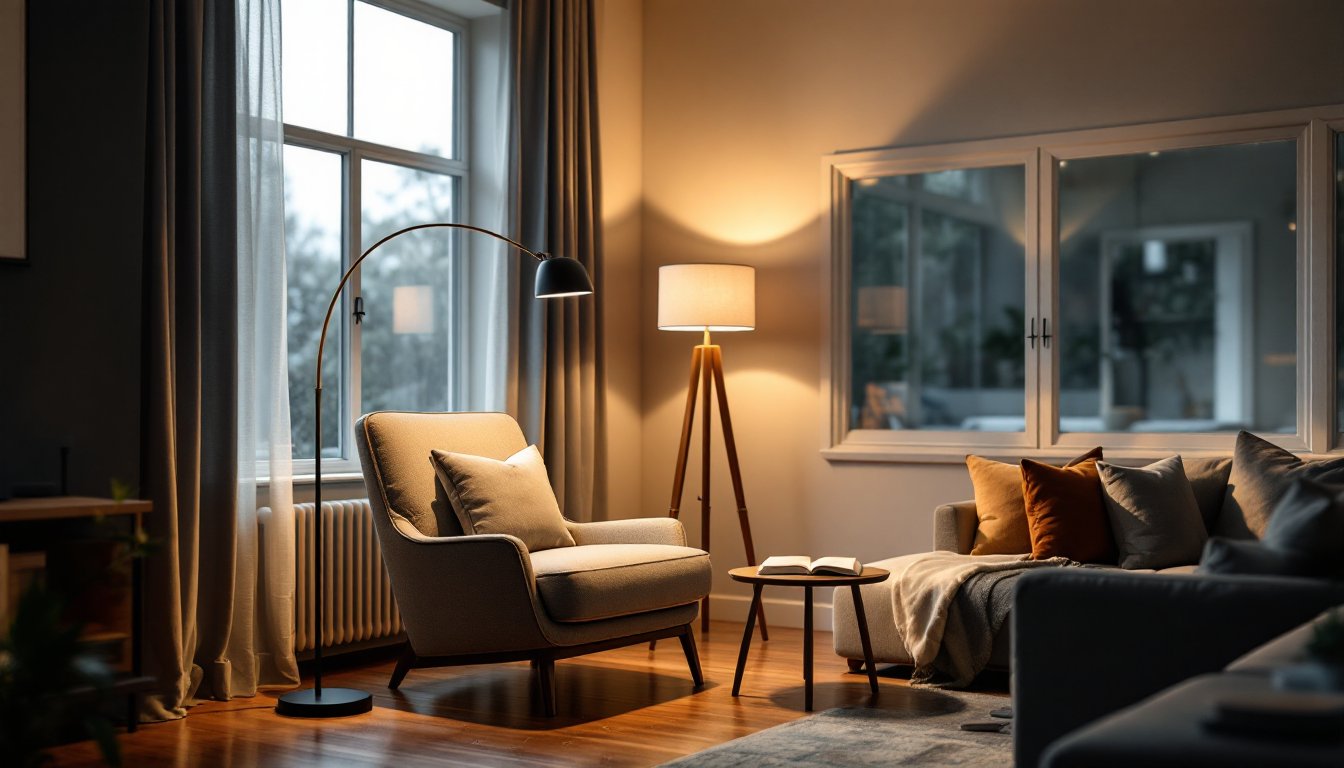
Arc lamps are workhorses in living room design. The fixture extends from a weighted base in a curve, positioning the light source over seating or a reading area. This overhead-but-mobile approach lights your lap without requiring ceiling installation. Arc lamps range from sleek minimalist models to sculptural brass or black finishes that double as decor.
Tripod floor lamps sit on three or four splayed legs and deliver light straight down. They’re easier to move than arc lamps (lighter base, more stable footprint) and feel less industrial. Tripods work particularly well in corners or beside furniture where an arc’s sweep might feel too dramatic. Both styles come in adjustable heights, typically 60 to 80 inches, so you can angle light exactly where needed.
Arc lamps require a heavier weighted base (usually 40–60 pounds) to prevent tipping when fully extended. Tripods are lighter and more portable. If you have kids or pets, or plan to rearrange furniture often, tripod stability matters. Modern designs in both categories now offer dimmable LED bulbs, so you’re not locked into one brightness level.
Torchiere And Uplighting Options
Torchiere lamps point light upward, bouncing it off the ceiling for soft, ambient illumination across the whole room. They’re excellent for creating evening mood without reading-level brightness. Traditional torchieres use halogen bulbs (now being phased out for efficiency), but LED versions deliver the same upward glow with lower heat and energy use.
If you’re layering light, a torchiere plus a task-focused floor lamp near seating gives you flexibility: use the torchiere for background atmosphere, switch on the task lamp for reading or detail work. Uplighting lamps tend to take up less visual space than arc models because the base is compact and the light disperses overhead rather than extending outward.
Key Features To Consider When Choosing A Floor Lamp
Bulb type matters more than most people realize. LED bulbs have become the standard for good reason: they last 25,000+ hours, run cool, and cost pennies per year to operate. If you’re buying a lamp today, avoid halogen torchieres (fire risk, inefficient) and old incandescent-only models. Look for lamps rated for LED A19 or similar bulbs, or verify the manufacturer offers compatible LED options. Dimmable LEDs aren’t universal, some cheap models flicker, so read reviews if dimming control matters to you.
Height and reach determine functionality. Standard floor lamps sit 60–72 inches tall. Arc lamps extend 75–85 inches. Measure your ceiling height and seating to ensure light lands where you need it. For reading, aim for the bulb 16–20 inches above eye level when seated. If you’re tall or sitting on a low sofa, a standard height might miss the mark entirely.
Base weight and stability are non-negotiable. A 30-pound base sounds heavy until you try to read under a lamp that shifts every time you move. Arc lamps especially need solid, weighted bases. Tripods should have feet that won’t slip on hardwood: look for rubber pads or non-skid feet. Kids and pets don’t think about stability, so safety is real.
Shade material affects light quality. Frosted, white, or linen shades diffuse light evenly and reduce glare, ideal for task work. Bare bulbs and clear glass cast harder shadows. If a lamp has a fabric shade, check whether it’s paper-thin or substantial: cheap shades yellowing in months. Metal shades direct light downward and are durable but more industrial-looking.
Cord length and outlet placement. A 6-foot cord sounds reasonable until you realize your outlets are across the room. Some lamps come with 8–10 foot cords, but you shouldn’t rely on extension cords for permanent setups. Before buying, know where your outlet is relative to where you want the lamp.
How To Position Floor Lamps For Optimal Light Distribution
Position matters as much as the lamp itself. A $200 arc lamp in the wrong spot delivers worse light than a $50 lamp in the right one.
For reading or detail work, place the lamp beside and slightly behind the seating (not directly in front). Light should hit the page or surface at an angle, casting minimal shadow from your hand. With arc lamps, angle the head so light comes from above and to the side, not straight overhead, direct overhead light creates shadows under your nose and chin. A 45–60 degree angle works best for most people.
In corners, a floor lamp adds visual balance and fills dark zones. Uplighting torchieres in corners bounce light across the ceiling, opening up tight spaces. Task-focused lamps (arc or tripod) angled toward a corner seating area light conversation or hobbies without throwing light directly into sightlines.
Avoid placing lamps directly behind seating if people sit there facing a TV or window. Light behind you reflects off screens and washes out contrast. If you need evening light while watching TV, use a lamp to the side or switch to an uplighting torchiere.
Layering multiple floor lamps creates depth. Consider pairing a task lamp near a reading chair with a torchiere in the opposite corner. This eliminates the flat, single-source look and lets you adjust mood by using one or both. But, don’t cram lamps into a small living room: too many fixtures create clutter and confusing shadows.
Test placement with dimmers if possible. Many living rooms benefit from full brightness for cleaning or entertaining, then dimmed ambient light for relaxing evenings. Walk the lamp around your space at different times of day and evening to see how natural light interacts. That reading lamp that seemed perfect at noon might compete harshly with sunset coming through west-facing windows.
Conclusion
Floor lamps are one of the fastest, cheapest ways to transform living room lighting. By choosing the right type, arc, tripod, or uplighting, and positioning it thoughtfully, you’ll eliminate shadows, improve readability, and set a mood that overhead lights alone can’t achieve. Start with one lamp where you spend the most time, then add a second if you want layered ambiance. Modern LED lamps cost very little to run and last years, so you’re making an investment that pays back immediately in both comfort and design impact.