Good lighting can transform how a living room feels, and ceiling lights for living rooms are the foundation of that transformation. Whether you’re replacing an outdated fixture, adding layered lighting to a newly renovated space, or starting fresh in a new home, choosing the right ceiling light matters more than most homeowners realize. The right fixture balances function, style, and room size while working with your ceiling height and décor. This guide walks you through the options, sizing, installation tips, and design strategies that’ll help you pick a ceiling light that actually works for how you live.
Table of Contents
ToggleKey Takeaways
- Choose ceiling lights for living rooms based on your ceiling height—flush mounts for 8-foot ceilings, semi-flush for 9 feet or higher, and chandeliers for spaces 10 feet or above with ample floor space.
- Size your ceiling light fixture by making its diameter roughly one-tenth of your room’s combined length and width, then adjust for your desired visual impact and existing décor.
- Layer multiple light sources including your main ceiling fixture, wall sconces, floor lamps, and table lamps to create depth and flexibility for different activities like movie nights, reading, or entertaining.
- Install ceiling lights with proper clearance—at least 7 feet above the floor for safety, and ensure fixtures over seating areas have 12 inches of clearance above the tallest person’s head when seated.
- Select dimmable fixtures with warm white LEDs at 2700K to 3000K for a welcoming living room atmosphere, and aim for 1,500 to 3,000 total lumens depending on room size and wall color.
- Plan fixture placement to work with your ceiling’s structural joists and existing electrical routes, and test how natural light interacts with your ceiling light at different times of day before finalizing installation.
Types of Ceiling Lights for Living Rooms
Not all ceiling lights are created equal. Your living room’s ceiling height, space dimensions, and intended use will determine which fixture style makes the most sense.
Flush Mounts and Semi-Flush Options
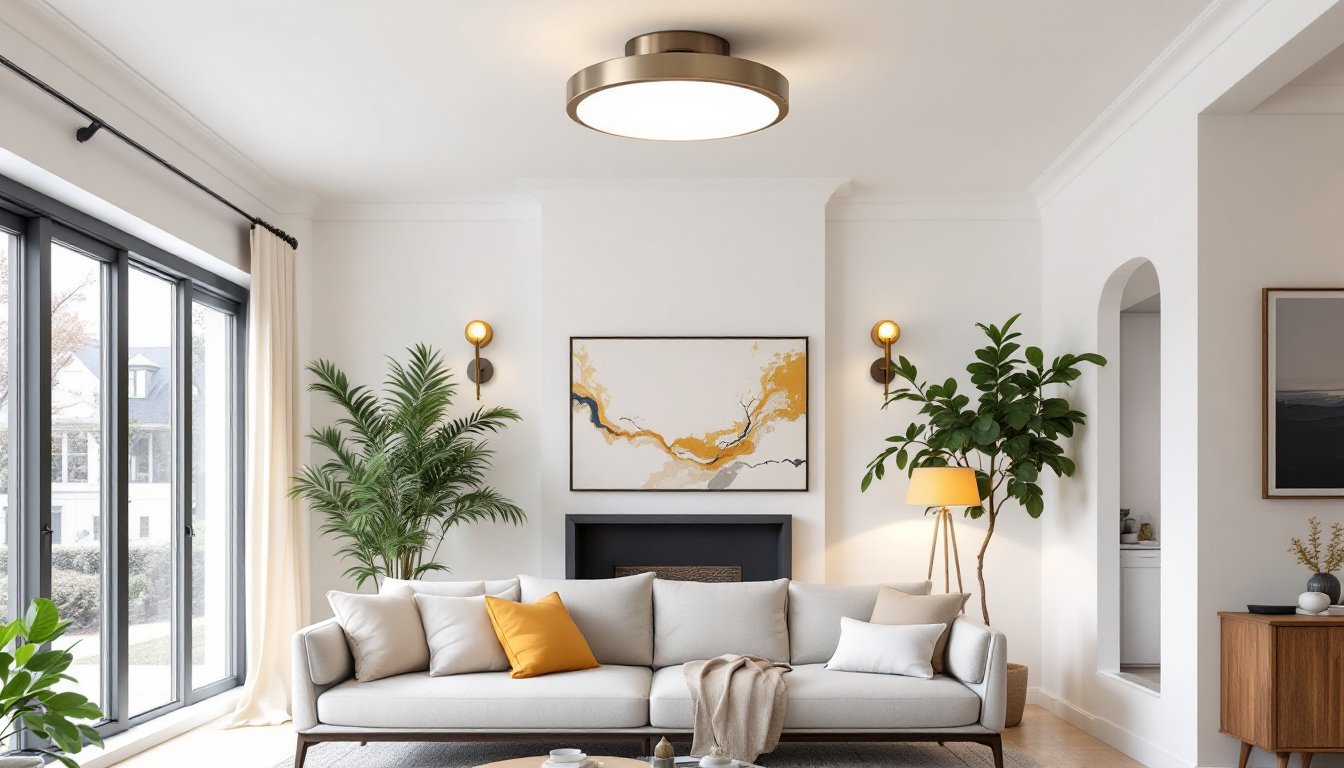
Flush mount lights sit directly against the ceiling and are your go-to choice when headroom is tight. These are ideal for living rooms with standard 8-foot ceilings or lower. They provide solid general ambient lighting without eating up clearance, handy when you’ve got vaulted ceilings you don’t want to obstruct or low soffits limiting your options.
Semi-flush mounts hang 8 to 12 inches below the ceiling, adding visual presence and breathing room. They work beautifully in rooms with 9-foot or higher ceilings and make a bigger design statement than flush mounts. Both types deliver even, general illumination across the room, though semi-flush fixtures often cast light more intentionally downward.
Chandeliers and Statement Fixtures
Chandeliers are the heavy hitters, they’re meant to catch the eye and serve as focal points in larger living rooms or open-plan spaces. Unlike flush or semi-flush mounts, chandeliers hang significantly lower (typically 30 to 40 inches from ceiling to lowest pendant), creating drama and style. They work best when your living room has high ceilings and enough floor space to avoid feeling cramped.
Statement fixtures, oversized drum lights, sculptural designs, or multi-arm pendants, serve a similar purpose. They’re not background lighting: they’re conversation pieces. If your living room is 18 feet or wider and your ceiling is 10 feet or higher, a statement fixture can anchor the entire aesthetic.
How to Choose the Right Size and Style
Picking the correct size and style requires measuring twice and thinking about how the room actually gets used.
Start with room dimensions. A general rule: your ceiling light’s diameter (in inches) should equal roughly one-tenth of the room’s combined length and width. A 16-by-20-foot living room calls for a fixture around 3.6 feet (or 36 inches) in diameter. That’s a starting point, adjust based on whether you want a subtle or dominant visual presence.
Ceiling height matters enormously. Low ceilings (8 feet or less) pair best with flush mounts or shallow semi-flush fixtures: anything hanging more than 12 inches creates awkward clearance issues and can make the room feel cramped. Lounge ceiling lights with higher ceilings can go bolder, semi-flush or chandelier styles at 10 feet or above won’t overwhelm the space.
Style and color should complement your existing décor. Are you working with modern minimalism, farmhouse, traditional, or eclectic mix? A sleek brushed-nickel fixture looks jarring in a room full of warm brass accents. Pull paint chips and fabric swatches when shopping, and see the fixture in your actual space’s lighting if possible, online photos lie.
Spacing and clearance prevent ugly surprises. Chandeliers and hanging fixtures should sit at least 7 feet above the floor (many building codes recommend 7.5 feet for safety). For fixtures over a sofa or seating area, aim for 12 inches of clearance above the tallest head when people sit. Never hang a chandelier so low that someone 6 feet tall brushes it when standing.
If your living room opens into a hallway or entryway, ceiling lamps for living. Low-hanging fixtures belong over tables or islands, not thoroughfares.
Installation and Placement Considerations
Installation location is just as important as the fixture itself. A beautiful light in the wrong spot wastes its potential.
Center is often, but not always, correct. For symmetrical rooms, a fixture centered on the ceiling delivers balanced lighting. But, if your living room has a focal point (fireplace, wall art, architectural feature), offsetting the fixture slightly can highlight that element. Open-plan spaces with multiple zones might benefit from two fixtures positioned to serve each area.
Consider your ceiling structure. Most residential ceilings are suspended drywall attached to wooden joists spaced 16 inches apart. Your light’s mounting bracket needs to anchor directly to a joist or, if your fixture is lightweight (under 10 pounds), to a adjustable brace spanning between joists. Anything heavier than 15 pounds really should go into a joist or use a specialized recessed lighting fixture designed for certain ceiling types.
Wiring routes matter before you break the drywall. If power doesn’t already run to your planned location, you’ll need to fish new cable through walls, doable, but tedious. Check whether existing ceiling power runs in an accessible path: if not, running new wiring is usually a permit job and often worth hiring an electrician for. Never assume DIY wiring is code-compliant without verifying local electrical codes.
Pendants and chandeliers over tables or islands should hang 30 to 36 inches above the surface. This is low enough to feel intentional without blocking sightlines across the room. Measure carefully before drilling, it’s cheap to verify twice.
Lighting Design Tips for Maximum Impact
A ceiling light alone rarely creates ideal living room lighting. The best spaces layer multiple light sources.
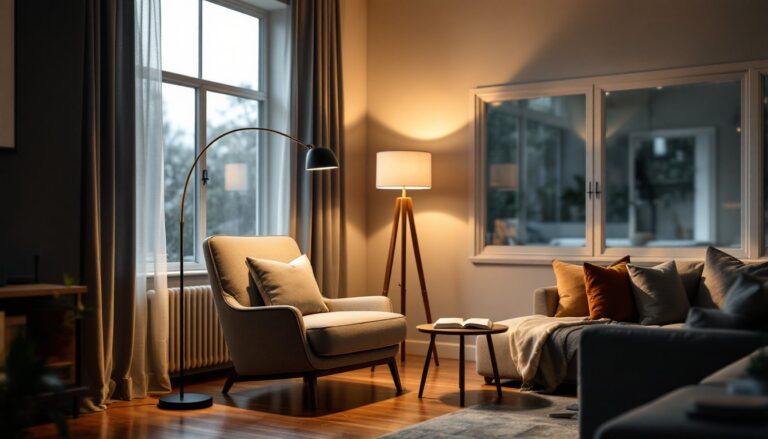
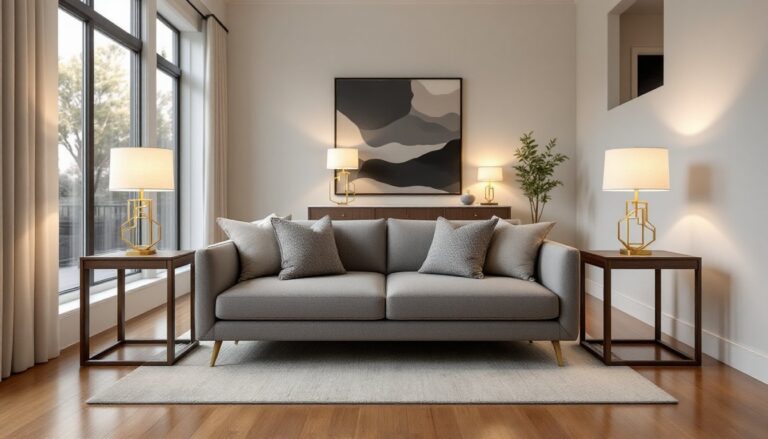
Build layers, not a single solution. Combine your ceiling fixture with floor lamps, table lamps, and wall sconces for living room to create depth and flexibility. Ceiling lights provide general ambient light, while sconces and floor lamps offer task and accent lighting. This layering lets you adjust brightness for movie nights, reading, or entertaining without relying solely on one overhead fixture.
Choose dimmable fixtures whenever possible. A dimmable LED bulb (or fixture with integrated LEDs) gives you control over brightness and mood. Brighten for cleaning or game nights: dim for relaxing or entertaining. Most modern fixtures work with standard dimmer switches, just verify compatibility when you buy.
Color temperature matters more than most homeowners realize. Warm white lighting at 2700K to 3000K feels welcoming and comfortable in living rooms: anything cooler (4000K+) can feel clinical or exhausting for everyday use. Check the bulb’s Kelvin rating, it’s printed right on the box or product page.
Size your total brightness appropriately. Most living rooms need between 1,500 and 3,000 lumens total, depending on size and wall color. Darker walls absorb light: lighter walls bounce it around. Your ceiling fixture might deliver 800 to 1,200 lumens: add sconces (200 to 400 lumens each) and floor lamps (600 to 800 lumens) to reach the right total. Lumens are listed on bulb packaging or fixture specs, use them, not wattage, to gauge brightness.
Don’t forget natural light interactions. A ceiling fixture that looks perfect at night might feel harsh against afternoon sun. Test dimmers during different times of day before finalizing installation. Wall sconces for living, so position them strategically around the room’s perimeter rather than clustering all lighting overhead.
Conclusion
The best ceiling light for your living room depends on your ceiling height, room size, the space’s function, and your design preferences. There’s no one-size-fits-all answer, a stunning chandelier overwhelms a small cottage living room, while a simple flush mount can’t anchor a sprawling 20-by-25-foot space. Measure first, think about how you actually use the room, and remember that layered, dimmable lighting almost always outperforms a single overhead fixture. Start with the right ceiling light as your anchor, then build around it with sconces, lamps, and natural light. The result is a room that’s both beautiful and practical.