Your lounge is where you unwind, entertain, and spend your evenings, and the right ceiling lighting makes all the difference. Whether you’re relaxing with a book or hosting friends, lounge ceiling lights set the mood and define how the space feels. Poor lighting leaves the room feeling flat and uninviting, while well-chosen fixtures create warmth, depth, and flexibility. This guide walks you through everything you need to know about selecting, installing, and perfecting lounge ceiling lights for your home in 2026, from understanding brightness levels to tackling DIY installation with confidence.
Table of Contents
ToggleKey Takeaways
- Lounge ceiling lights are the backbone of your room’s ambiance and should be paired with dimmers and complementary lighting sources to create flexibility across different moods and times of day.
- Choose lounge ceiling lights in warm white (2,700K) for evening relaxation or neutral white (3,000K) for daytime versatility, aiming for 1,500 to 3,000 total lumens depending on room size.
- Recessed lights offer clean modern aesthetics but require attic access, while flush mounts are easier for DIY installation and add more decorative variety to complement your lounge décor.
- Chandeliers and pendant fixtures make striking visual statements and should be sized proportionally—roughly one-third your room’s width—and paired with supporting accent lighting.
- Always prioritize dimmable fixtures with CRI 90+ rated bulbs to control brightness, warmth, and color accuracy, which cost only slightly more than fixed options but dramatically increase functionality.
- Before any installation, turn off power at the breaker, verify it with a non-contact voltage tester, and confirm your ceiling box is rated for your fixture’s weight to ensure safety.
Why Ceiling Lighting Matters in Your Lounge
Ceiling lighting isn’t just functional, it’s the backbone of your lounge’s ambiance. Unlike task lighting at a desk or accent lights on artwork, lounge ceiling lights provide the primary illumination that sets the tone for relaxation and socializing. When you walk into a room, your brain registers light quality before anything else. Harsh overhead lighting makes a comfortable lounge feel cold and institutional, while thoughtfully chosen sitting room ceiling lights create an inviting atmosphere where people naturally want to linger.
The best lounge lighting schemes layer multiple sources to adapt to different moods and times of day. Morning coffee calls for brighter, cooler light that won’t put you back to sleep. Evening gatherings benefit from warmer, dimmer settings that encourage conversation. This flexibility comes from having the right ceiling fixture paired with dimmers and complementary wall or accent lighting. A good lounge ceiling light should never be the only light in the room, it’s the anchor that works alongside other sources.
Beyond mood, ceiling fixtures affect how you perceive the space itself. A poorly placed or undersized light leaves corners dark and uninviting. The right fixture brightens the entire room evenly and can actually make a smaller lounge feel more spacious. Your lounge ceiling lights influence where guests sit, how long they stay, and whether the room feels energizing or restful.
Types of Lounge Ceiling Lights to Consider
Recessed Lights and Flush Mounts
Recessed lighting, also called can lights or downlights, offers clean, modern aesthetics without visual bulk. These fixtures sit flush with the ceiling, making the room feel higher and less cluttered. A recessed light uses a housing installed above the ceiling with a trim ring that sits at the ceiling surface. Standard recessed lights come in 4-inch, 5-inch, and 6-inch diameters: most lounges work well with 5-inch or 6-inch housings spaced 4 to 6 feet apart.
Flush mount fixtures sit directly against the ceiling and work especially well in rooms with 8-foot or lower ceilings where you need brightness without the depth recessed lights require. Types of recessed lighting fixtures offer both options, and flush mounts give you more decorative variety, shades, diffusers, and colorful finishes that complement lounge décor. Recessed lights feel sleeker but offer less visual interest: flush mounts add character while still staying relatively inconspicuous.
Both options work with dimmers and LED bulbs, making them energy-efficient and flexible for mood adjustment. Recessed lights require access above the ceiling, which complicates installation in finished rooms without attic access. Flush mounts mount directly to the ceiling box, making them easier for DIYers in most situations.
Chandeliers and Pendant Fixtures
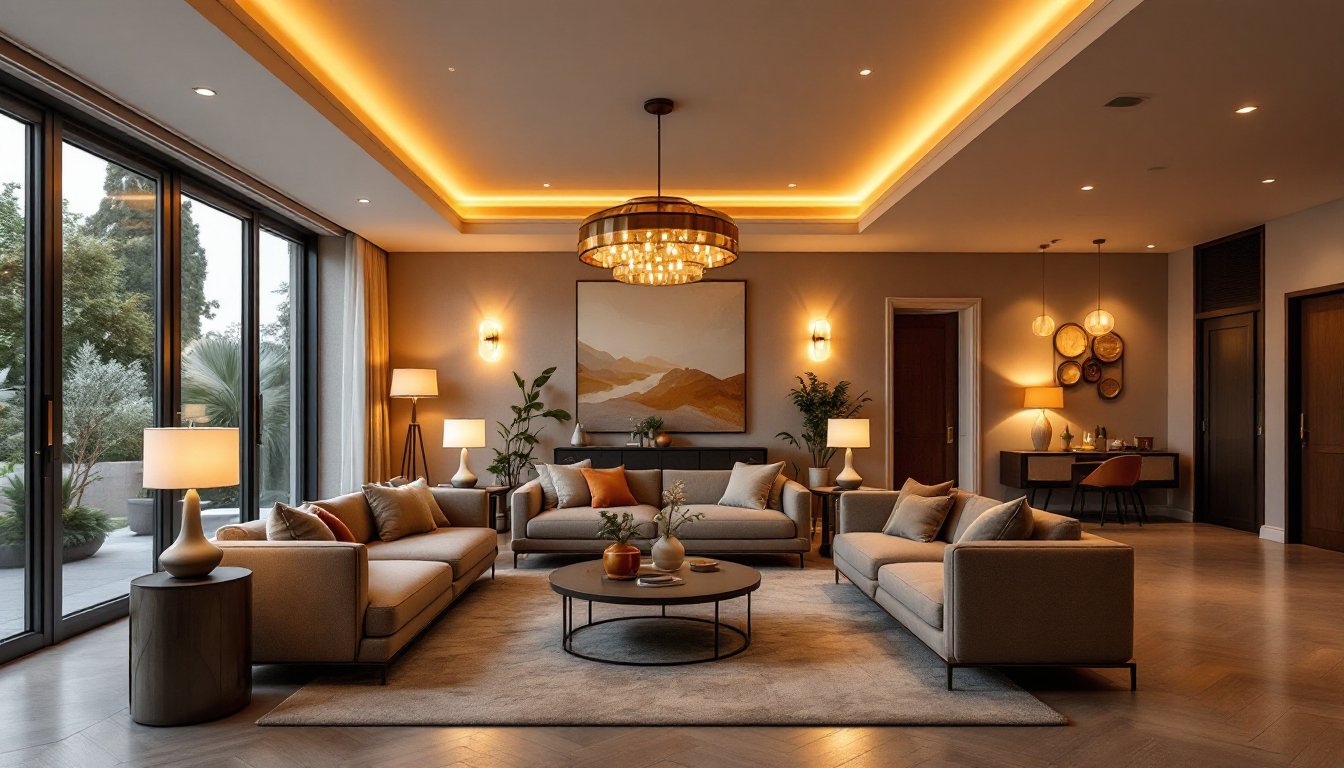
Chandeliers make a statement. They’re focal points that draw the eye upward and add personality to a lounge. Modern chandeliers range from minimalist geometric designs to traditional crystal or industrial-style fixtures. The key is proportional sizing: a chandelier should hang roughly one-third the width of your room. For a 14-by-16-foot lounge, choose a fixture around 28 inches in diameter.
Pendant fixtures offer similar visual impact with less bulk. A single statement pendant or a cluster of three to five smaller pendants can create dynamic, layered lighting while occupying less visual space than a chandelier. Adjustable pendant lighting solutions let you customize drop heights and aim light where you need it most, over a seating area, console table, or conversation zone.
Both chandeliers and pendants pair well with lounge lights ceiling that complement rather than compete. Install a dimmable chandelier or pendant as your primary lounge ceiling light, then add subtle recessed or wall lighting for balance. These fixtures add real architectural interest that simple recessed lights or flush mounts can’t match, though they require more careful planning around room layout and furniture placement.
Choosing the Right Brightness and Color Temperature
Brightness is measured in lumens, not watts. A 60-watt incandescent bulb produced roughly 800 lumens: today’s LED equivalent delivers the same output at about 8 watts. For lounge ceiling lights, aim for 1,500 to 3,000 lumens total depending on room size and existing windows. A 12-by-14-foot lounge typically needs 2,000 to 2,500 lumens from ceiling fixtures alone, plus additional task and accent lighting.
Color temperature, measured in Kelvins (K), defines whether light feels warm or cool. Warm white (2,700K) creates a relaxing, intimate atmosphere ideal for evening lounges. Neutral white (3,000-4,000K) feels balanced and works for daytime use. Cool white (5,000K and above) appears clinical and belongs in task-heavy spaces, not lounges. Choose sitting room ceiling lights rated at 2,700K for evening relaxation or 3,000K if you want flexibility across different times of day.
Dimmable fixtures give you control over both brightness and perceived warmth. When you dim warm white lights, the color shifts slightly warmer, amplifying the cozy effect. Non-dimmable fixtures lock you into one setting, limiting your ability to adapt the lounge to different moods. Always choose dimmable-compatible bulbs and fixtures, they cost only slightly more than fixed options but multiply the functionality of your lounge.
Consider color rendering index (CRI) as well. A CRI of 90 or higher means colors in your lounge, artwork, upholstery, paint, appear natural and true. Cheap LED bulbs with low CRI (70-80) can make skin tones look sallow and colors appear muted. Quality LEDs rated CRI 90+ cost a bit more upfront but reveal the true beauty of your space.
Installation Tips for DIY Projects
Before you buy or install anything, turn off power at the breaker and verify it’s off with a non-contact voltage tester. Working with live wires isn’t worth the risk, and testing takes 10 seconds.
Assessing Your Existing Electrical: Most lounge ceiling lights connect to an existing ceiling box installed during construction. Check what you have: a standard octagonal box (good for most flush mounts and light chandeliers), a fan-rated box (rated for heavier fixtures), or pancake box (very shallow, limits your options). If you’re upgrading to a heavy chandelier from a standard box, you need a retrofit fan-rated box. This requires cutting into drywall, running new support, and potentially involves structural considerations, hire an electrician if you’re unsure.
Installing Flush Mounts and Recessed Lights: Flush mounts are straightforward: remove the old fixture, connect wires (black to black, white to white, bare copper to ground), secure the mounting bracket to the ceiling box, and attach the fixture. Use wire nuts rated for the wire gauge (typically 14 or 12 gauge household wire). Recessed lights require more planning: you need access above the ceiling to run housing, cut drywall, and route wiring. Recessed lighting without attic access is possible using remodel housings that grab ceiling joists from below, but it’s trickier than standard installation.
Hanging Chandeliers and Pendants: These fixtures need secure support. A standard ceiling box rated for the fixture’s weight is essential, verify the manufacturer’s weight limit matches your fixture. Use the mounting hardware provided, not improvised solutions. A 15-pound chandelier pulling on a flimsy box can fail suddenly and dangerously. If you’re uncertain about weight ratings or structural support, get a second opinion from an electrician.
Tools and Safety Gear: Have a voltage tester, wire strippers, needle-nose pliers, a flathead screwdriver, and a power drill on hand. Wear safety glasses, ceiling work means gravity and debris. Use a sturdy ladder or step stool rated for your weight. Never stretch: if you can’t reach comfortably, your setup isn’t right.
Wiring Considerations: Most home circuits are 15 amps at 120 volts. A typical LED ceiling fixture draws 1 to 3 amps, so loading isn’t usually the problem. But, if you’re adding multiple new fixtures to an existing circuit, verify the circuit isn’t already overloaded. Older homes with fewer circuits may benefit from having a new dedicated circuit run, hire a licensed electrician for this work.
Conclusion
The right lounge ceiling lights transform how you experience the room every single day. Whether you choose recessed fixtures for clean minimalism, a statement chandelier for personality, or pendant track lighting for flexible task and ambient light, prioritize dimmable options in warm color temperatures. Measure your space, understand your existing electrical setup, and don’t skip the safety checks. Quality ceiling lighting paired with layered supplementary sources creates the flexible, inviting lounge where people actually want to spend time.