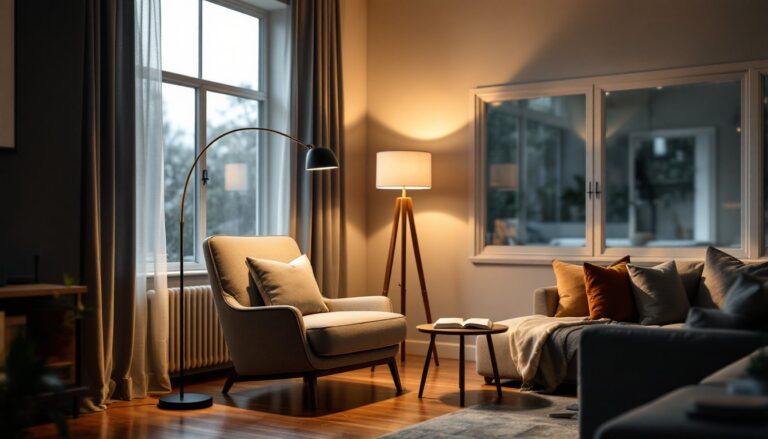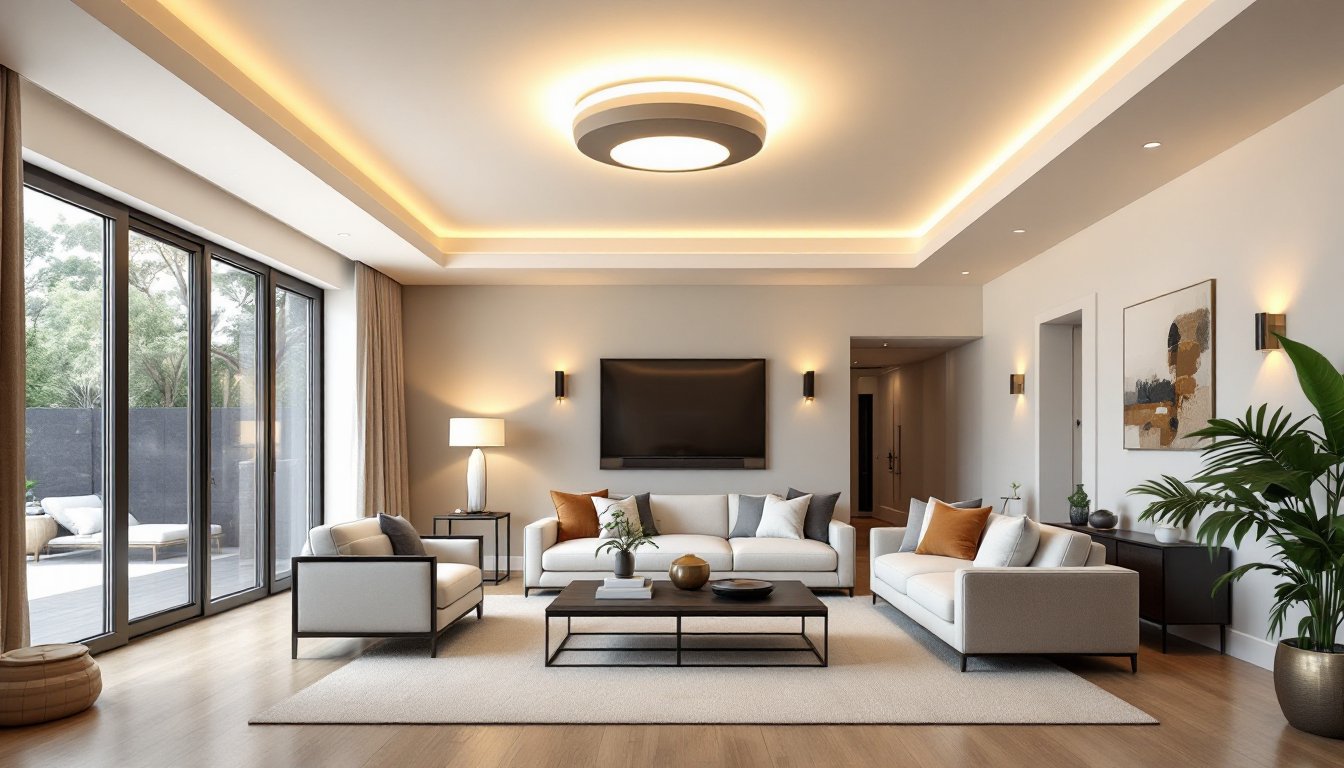
Your sitting room needs lighting that works as hard as you do, bright enough to read by, warm enough to feel welcoming, and stylish enough to match your décor. Whether you’re updating a cozy corner or reimagining an entire lounge, ceiling lights set the tone for how the whole room functions. From flush mounts that blend seamlessly into drywall to statement chandeliers that anchor a space, choosing the right sitting room ceiling lights means balancing brightness, size, and design. This guide walks you through the fixture types available today, how to size and layer your lighting, and the practical steps to get them installed correctly.
Table of Contents
ToggleKey Takeaways
- Sitting room ceiling lights range from unobtrusive flush mounts to dramatic chandeliers, with flush mounts ideal for standard 8-foot ceilings and chandeliers best suited for rooms 9 feet or taller.
- Size your ceiling fixture by adding your room’s length and width in feet, then using that total as a guideline for fixture diameter in inches to maintain proper visual balance.
- Brightness is measured in lumens, not watts—aim for 1,500 to 3,000 lumens with warm white bulbs (2,700K) to create a cozy, welcoming sitting room atmosphere.
- Layer your ceiling light with table lamps, wall sconces, or recessed lighting to create depth and give you flexibility to adjust illumination for different times of day and activities.
- Always turn off power at the breaker and test with a voltage tester before replacing or installing ceiling lights, and hire a licensed electrician if you’re uncertain about electrical work or your junction box is damaged.
Types of Ceiling Lights for Sitting Rooms
Flush Mounts and Semi-Flush Mounts
Flush mounts sit tight against the ceiling, typically 2 to 4 inches from the surface, making them ideal for rooms with standard 8-foot ceilings or smaller spaces where headroom matters. They distribute light evenly across the room and work well for lounge lights ceiling applications where you want unobtrusive, functional illumination. Semi-flush mounts drop 8 to 15 inches below the ceiling, giving you a bit more visual interest while still fitting rooms without high ceilings. Both styles come in countless finishes: brushed nickel, matte black, brass, and frosted glass are current favorites.
Flush mounts excel at providing general ambient light without drawing attention to themselves. You’ll find them rated for various wattages, check the fixture label for maximum bulb wattage and always use bulbs within that rating. Semi-flush options let you layer fixtures more effectively: they’re bright enough as a primary light source but won’t overwhelm a smaller sitting room. Installation is straightforward: mount to the ceiling box using the included bracket, connect wires to the junction box, and secure the shade. Most require a junction box rated for the fixture weight, which should already be in place if you’re replacing an old light. If you’re adding a new fixture where none existed, you’ll need to install one, this requires running wire through the ceiling cavity and often calls for professional help if you’re not comfortable with electrical work.
Chandeliers and Statement Fixtures
Chandeliers and statement ceiling lights bring personality and drama to a sitting room. Think of them as art that also happens to illuminate the space. They range from delicate 3-light fixtures to elaborate multi-arm designs and work best in rooms with high ceilings (9 feet or taller) where they won’t feel cramped. Front room ceiling lights that make a statement usually feature crystal, glass, or decorative metal arms. They’re bold but require thoughtful placement: typically hung 30 to 36 inches above a table surface or at least 7 feet above the floor in an open seating area.
Statement fixtures demand more installation planning because of their weight. A chandelier can weigh 20 to 50+ pounds, so your ceiling box must be rated for that load, standard boxes handle up to 50 pounds, but heavy fixtures need braced or heavy-duty boxes. Wiring is the same as a flush mount, but the visual impact is completely different. A brass or crystal chandelier transforms a room instantly. Living room lamp ceiling options range from minimalist pendant-style chandeliers to ornate designs: choose based on your décor and how much visual weight you want. Be honest about ceiling height and room size, a large chandelier in a small, low-ceilinged room feels oppressive rather than elegant. Conversely, a tiny fixture in a grand room gets lost. Measure your room’s width and add 12 inches to determine an appropriate fixture width: this prevents it from looking either undersized or overwhelming.
How to Choose the Right Lighting for Your Sitting Room
Sizing, Brightness, and Layering Considerations
Dimensions matter more than most people realize. Measure your sitting room length and width in feet, add those numbers together, and use that total as a rough guideline for fixture diameter in inches. A room that’s 14 feet by 16 feet (30 total) works well with a fixture roughly 24 to 30 inches wide. This prevents the light from feeling disproportionately small or overwhelming the visual balance.
Brightness is measured in lumens, not watts. Modern LED bulbs are efficient, so a 10-watt LED produces roughly 800 lumens, what an old 60-watt incandescent gave you. For general sitting room lighting, aim for 1,500 to 3,000 lumens depending on how much natural light your room gets and your color preferences. A room with large windows needs less artificial light during the day: a dark, north-facing room needs more. Warm white bulbs (2,700K color temperature) create a cozy atmosphere perfect for sitting rooms, while cool white (4,000K or higher) feels more clinical. Stick with warm for a lounge where relaxation is the goal.
Layering is the secret to professional-looking room lighting. Don’t rely on a single ceiling fixture for all illumination. Combine your ceiling light with table lamps, wall sconces, or floor lamps to create depth and flexibility. When you layer, you can dim or switch different sources depending on time of day and activity. Recessed lighting works beautifully as a base layer when you’re choosing between multiple options: recessed lighting provides unobtrusive ambient light that you build upon. LED living room lighting lets you adjust color temperature and brightness via smart bulbs, adding flexibility without rewiring. If you want focused task lighting for reading, consider pendant track lighting that lets you aim light where you need it.
Color temperature consistency matters, too. If your ceiling fixture is 2,700K warm white, keep table lamps and other ambient sources in that same range. Mixing warm and cool lights creates an unsettling, disjointed feel. Check the packaging of bulbs before buying, it’s clearly labeled. Dimmers are worth the small extra cost when installing new fixtures: they give you control over mood and energy use. Make sure your fixture and bulbs are both dimmable if you go this route, not all LED bulbs work with all dimmers, so verify compatibility before installation.
Installation Tips and Best Practices
Before you start, turn off power at the breaker and verify it’s truly off using a voltage tester. This is non-negotiable. Always test the junction box area with a tester even after switching off the breaker: old wiring can surprise you.
Most sitting room ceiling lights swap into existing junction boxes with minimal prep work. Start by removing the old fixture, which typically means unscrewing a collar or bracket and disconnecting three wires: hot (black), neutral (white), and ground (bare copper or green). Untwist the wire nuts and separate the wires. Before installing the new fixture, confirm the junction box is secure and won’t move when you install a 20+ pound load. If it’s loose, you’ll need to access it from the attic or the room above to brace it, this is work for someone comfortable in tight spaces or worth hiring out.
With the old fixture removed, dry-fit your new one. The mounting bracket should sit flush against the ceiling with no gaps. If there are gaps, your drywall may be uneven or the box wasn’t perfectly flush-mounted. Shim it if you can reach the back: otherwise, you might need to enlarge the hole slightly. Once the bracket is seated, connect the wires: twist the hot wires together (black to black), the neutral wires (white to white), and the ground wires (copper to copper). Use wire nuts appropriately sized for the wire gauge and number of wires, too loose and connections fail, too tight and you risk breaking the wire. Tuck the connections into the box, screw the fixture to the bracket, attach your shade or cover, and install bulbs. Flip the breaker back on and test.
For fixtures in rooms with difficult layouts, adjustable pendant lighting offers flexibility if your original plan doesn’t work. If you’re uncertain about electrical work or your ceiling box is damaged, call a licensed electrician, the cost is small compared to a fire risk or damage. New junction boxes, running wire through walls, or converting from one circuit to another definitely requires professional help. Be honest about your skill level: electrical work isn’t the place to learn by trial and error.
Finish with a final brightness and safety check. Ensure the fixture is stable, all fasteners are tight, and the bulbs produce even light across your sitting room. Check for any exposed wires or loose connections inside the cover, everything should be secure. If you installed dimmers, test them at full brightness and dimmed levels to confirm smooth operation and no flickering.
Conclusion
Selecting and installing the right ceiling light transforms how you experience your sitting room. Whether you choose a simple flush mount or a dramatic chandelier, the fundamentals remain the same: measure carefully, choose warm, adequate brightness, and layer your lighting for flexibility. Proper installation starts with safety, always kill power and test before touching wires. Your sitting room ceiling lights are an investment in both function and aesthetics: take time to get the details right, and you’ll enjoy the results for years to come.