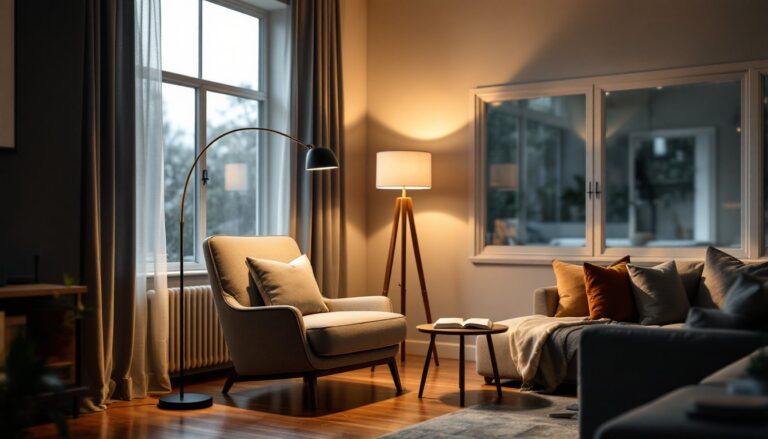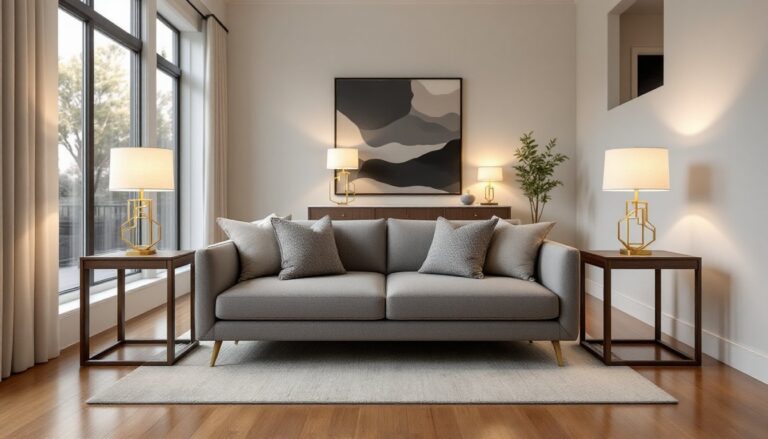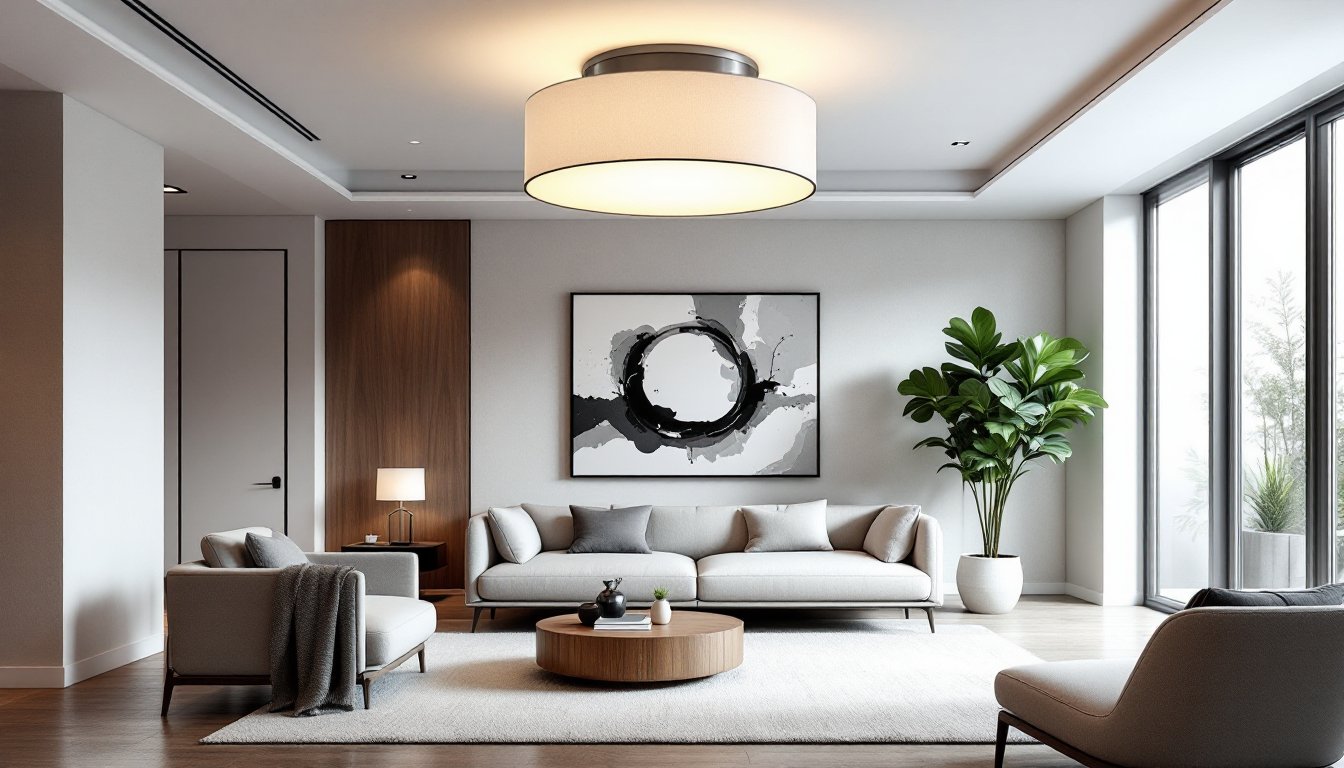
Ceiling lamps do more than just push back the dark. They anchor a living room, set the mood, and often dictate how the rest of the décor reads. Picking the right one isn’t just a style decision either, it’s a question of scale, wiring, bulb temperature, and how the space actually gets used day to day. This guide walks through the practical side of choosing lamps for living room ceiling installations in 2026, from fixture types to placement, sizing, and bulb selection, with honest notes on what most homeowners can DIY and what calls for an electrician.
Table of Contents
ToggleKey Takeaways
- Ceiling lamps provide the ambient lighting foundation for living rooms, delivering 60–70% of total lumens and creating visual balance that makes a space feel intentional.
- Fixture sizing follows a simple formula: add room length and width in feet, then convert to inches for diameter—a 12 x 14 ft room needs roughly a 26-inch fixture.
- Flush and semi-flush mount lamps work for standard 8–9 foot ceilings and are beginner-friendly DIY installs, while chandeliers and pendants suit ceilings 9 feet or taller with a minimum 7-foot clearance from the floor.
- Choose LED bulbs with 2700K–3000K color temperature for warm, relaxing light, and calculate brightness at 10–20 lumens per square foot—a 200 sq ft living room typically needs 2,000–4,000 total lumens.
- Always kill power at the breaker before installation, use a voltage tester, and hire a licensed electrician for fixtures over 50 lbs, new circuits, or dimmer additions to ensure safety and code compliance.
Why Ceiling Lamps Are the Foundation of Living Room Lighting
Lighting designers usually talk about three layers: ambient, task, and accent. Ceiling lamps handle the ambient layer, which is the general fill of light that makes a room usable. Without solid overhead lighting, floor and table lamps end up doing work they weren’t built for, leaving dark corners and uneven pools of light.
A well-chosen ceiling fixture also doubles as a design anchor. It draws the eye upward, balances tall furniture, and helps a room feel intentional. For most spaces, overhead lighting fixtures for living rooms deliver roughly 60–70% of the total lumens, with lamps and sconces filling in the rest.
Skip this layer and the room will feel flat no matter how nice the sofa is.
Popular Types of Ceiling Lamps for Living Rooms
Not every fixture suits every ceiling. Height, joist layout, and existing junction boxes all narrow the options before style even enters the conversation. Here’s how the main categories stack up.
Flush Mount and Semi-Flush Mount Fixtures
Flush mounts sit tight against the ceiling with no gap. They’re the go-to for ceilings under 8 feet because they don’t intrude on headroom. Semi-flush mounts drop down 4 to 12 inches, giving a bit of decorative breathing room while still working in standard 8- to 9-foot rooms.
Both are beginner-friendly swaps. If a junction box is already in place and the circuit is dead at the breaker, most homeowners can handle the install in under an hour with a voltage tester, a screwdriver, and wire nuts. Editors at Decoist’s modern interior coverage often feature semi-flush drum shades because they read clean in transitional spaces.
Chandeliers, Pendants, and Track Lighting
For ceilings 9 feet and taller, chandeliers and pendants earn their keep. They create vertical interest and can be hung lower over a coffee table or reading nook without becoming a hazard. A general rule: the bottom of the fixture should sit at least 7 feet off the floor in walk-through areas.
Track lighting is the flexible cousin. It’s ideal when ceiling lights lounge room layouts need to spotlight art, bookshelves, or a fireplace. Style-forward picks regularly appear in MyDomaine’s room design features, especially low-profile linear tracks.
How to Choose the Right Size and Style for Your Space
Sizing a fixture is mostly math, not guesswork. A common formula: add the room’s length and width in feet, then convert that sum to inches for the fixture’s diameter. A 12 x 14 ft living room lands at roughly a 26-inch fixture.
For hanging length on chandeliers, allow 2.5 to 3 inches of drop per foot of ceiling height. A 10-foot ceiling can handle a 25- to 30-inch fixture height without crowding.
Style should echo, not match. A farmhouse sofa doesn’t need a farmhouse light, it needs something that shares a material or finish. Mixing metals is fine as long as one tone dominates. For more inspiration on pairing fixtures with furnishings, the best lighting for living rooms covers style matching in depth, and trend-forward galleries at Domino’s home design coverage show how designers layer modern and vintage pieces.
Smart Placement and Installation Tips for Maximum Impact
Center matters, but not always the way people think. A ceiling lamp should center over the primary seating arrangement, not necessarily the geometric center of the room. In open-concept layouts, this often means the fixture sits off-center relative to the walls.
For recessed cans paired with a central fixture, planning the layout in advance prevents the dreaded “runway” effect. Guides on recessed lighting placement in living rooms and a solid recessed lighting layout plan walk through spacing math (typically ceiling height ÷ 2 = distance between cans).
Safety first: kill power at the breaker, not just the switch. Use a non-contact voltage tester before touching wires. Fixtures over 50 lbs need a fan-rated brace box anchored to a joist, not just the drywall. Anything beyond a like-for-like swap, new circuits, dimmer additions on LED loads, recessed retrofits, generally falls under NEC Article 410 and may require a permit. Codes vary by jurisdiction, so check locally before cutting drywall.
Wear safety glasses when working overhead. Drywall dust and old insulation are unkind to eyes.
Bulb Selection, Brightness, and Energy Efficiency
Lumens, not watts, measure brightness. A living room typically needs 10–20 lumens per square foot for ambient light. A 200 sq ft room lands around 2,000–4,000 total lumens, often split across the main fixture and supplemental lights.
Color temperature shapes mood:
- 2700K–3000K: warm white, best for relaxing living rooms
- 3500K–4000K: neutral, good for multipurpose spaces
- 5000K+: daylight, usually too clinical for lounge spaces
LEDs dominate in 2026 for good reason, they pull about 75% less energy than incandescents and last 15,000–25,000 hours. For deeper specs on driver compatibility and dimming, energy-efficient LED living room options break down what to look for.
If the fixture will share a circuit with other rooms, like ceiling lighting for small kitchens or bathroom ceiling fixtures, confirm the dimmer is rated for LED loads. Old TRIAC dimmers cause flicker and buzz with modern bulbs.
One last tip: buy bulbs from the same batch when possible. Color consistency varies even within the same product line, and mismatches show up fast in a lights ceiling living room setup with multiple sockets.
Final Thoughts
Lounge room ceiling lights aren’t just a finishing touch, they’re the structural backbone of how a living room feels after sundown. Get the size right, layer warm LEDs, and don’t skip the breaker check before installing. Most fixture swaps are a weekend project: anything involving new circuits or load-bearing brackets is worth a licensed electrician’s time and a quick permit call.