A small kitchen doesn’t mean settling for dim, uninspiring light. The right ceiling lighting can transform a cramped cooking space into something that feels open, functional, and genuinely pleasant to work in. Whether you’re dealing with low ceilings, limited square footage, or a tight budget, there are proven solutions that deliver both style and practicality. This guide walks you through seven ceiling lighting approaches, from sleek recessed fixtures to statement-making pendants, each with honest advice on installation, cost, and trade-offs so you can pick what actually works for your space.
Table of Contents
ToggleKey Takeaways
- Small kitchen ceiling lighting ideas work best when layered—combine overhead ambient light with task lighting like under-cabinet strips to eliminate shadows and improve functionality.
- Recessed lighting offers sleek, space-saving appeal by sitting flush with the ceiling, but requires proper ceiling access and spacing of 4–6 feet apart for even coverage without dark spots.
- Pendant lights deliver both style and function, working well over islands or sinks when hung 12–18 inches below the fixture in kitchens with 8-foot or lower ceilings.
- Flush and semi-flush mount fixtures are ideal for low ceilings as they don’t steal headroom, with fixture diameter (in inches) matching roughly to kitchen width (in feet) for balanced proportions.
- Under-cabinet LED strip lighting mounted on wall cabinets provides focused task light exactly where you need it—for chopping, reading recipes, and spotting spills—with warm white 2700K LEDs for a cozy feel.
- Track lighting offers flexible, adjustable ceiling solutions that let you reposition lights without rewiring, making it easy to highlight different work zones and accent features in small kitchen spaces.
Recessed Lighting for Sleek, Space-Saving Appeal
Recessed lights sit flush with the ceiling, which means they don’t eat up visual real estate in a small kitchen. They also scatter light evenly across work surfaces when spaced properly, making them a workhorse for task lighting. A standard 4-inch recessed fixture (the most common residential size) uses 65–75W equivalent LED bulbs and produces roughly 600–800 lumens depending on the bulb choice. Space them about 4 to 6 feet apart in a grid pattern for consistent coverage without dark spots.
The catch: recessed lights require ceiling access above (attic space or crawl space) for wiring and trim ring installation. If you’ve got drywall or plaster ceilings with no attic above, retrofitting is possible but messier, you’ll cut holes and route wiring through walls, which takes planning. For a typical 100–120 square foot kitchen, expect to install 4 to 6 fixtures. LED retrofit kits and IC-rated (insulation-contact) housings make modern installs safer and more energy-efficient than older halogen versions. Building codes vary by location, but most jurisdictions require the work to be permitted if you’re running new circuits. If you’re uncomfortable with electrical wiring, hire a licensed electrician: this isn’t a casual DIY task if you’re running new lines from the breaker panel.
Pendant Lights: Statement-Making and Functional
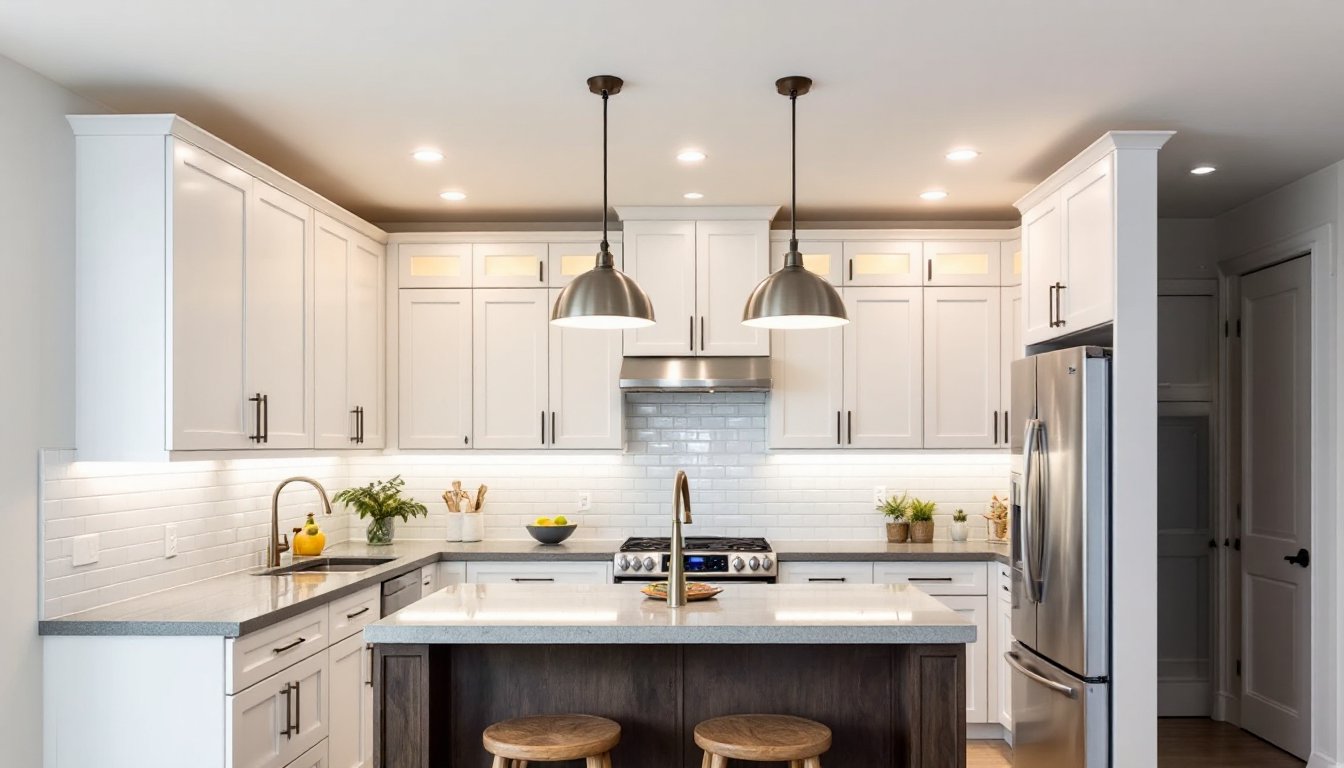
Pendant lights hang from the ceiling on a cord, chain, or rod and come in hundreds of styles, from industrial metal shades to fabric drum shapes. They deliver both form and function: overhead task lighting plus visual interest that recessed lights can’t touch. A single 12- to 16-inch pendant works well as a focused light over an island or bar, while multiple smaller pendants strung in a line give a designer vibe without the designer price tag.
Electrically, they’re straightforward: most plug into an existing ceiling fixture box (meaning minimal wiring hassle). Look for pendants rated 60W equivalent LED or higher if they’re your primary task light: anything less feels dim over work surfaces. The trade-off is headroom: if your ceiling is 8 feet or lower, hang the pendant 12 to 18 inches below the fixture to avoid bonking your head. For island lighting, aim for the pendant bottom to sit about 30 inches above the counter.
One design note: pendant cords and chains show dust, so factor in occasional cleaning. Fabric shades diffuse light more warmly than glass or metal, but they collect grease and cooking soot faster in a kitchen, choose washable or wipeable shades if you can.
Single Pendant vs. Multiple Cluster Layouts
A single pendant over a sink or island is classic and keeps visual clutter minimal. It works best for kitchens under 150 square feet where one overhead point casts enough light to the surrounding counter. Multiple pendants strung in a line (typically 3 or 5, spaced 18 to 24 inches apart) suit longer islands or galley kitchens. They distribute light more evenly and add playful rhythm, just ensure each pendant is wired to the same ceiling box (or you’re running additional circuits, which requires a licensed electrician). For even clusters, buy pendant kits designed to hang together: mismatched heights and chain lengths look sloppy fast. LED Strip Lighting Ideas: can complement pendant layouts by adding accent light along under-cabinet shelves or open shelving edges.
Flush and Semi-Flush Mount Fixtures for Low Ceilings
If your kitchen ceiling sits at 8 feet or below, flush and semi-flush mounts are your friends. These fixtures sit directly against the ceiling (flush) or drop down 4 to 8 inches (semi-flush), so they don’t steal precious headroom. They’re also dead-simple to install: most screw directly into an existing ceiling box with no added wiring if you’re replacing an old fixture.
Look for 40W to 60W equivalent LED bulbs in flush mounts: they focus light downward effectively in confined spaces. Semi-flush versions give a touch more visual depth without the bulk of a hanging pendant. Both styles come in modern finishes, brushed nickel, matte black, brass, so you won’t feel like you’re stuck with grandma’s dated dome light. Cost runs $40 to $150 per fixture depending on materials and brand reputation.
A common mistake: choosing a flush mount that’s too small for your kitchen square footage. If your kitchen is 12 feet wide, a 12-inch diameter fixture looks lost. Match the fixture diameter (in inches) roughly to your kitchen width (in feet): a 20-foot-wide kitchen wants a 16- to 20-inch fixture. For a small galley kitchen around 100 square feet, a 14-inch semi-flush usually balances proportion well. Where to Place Recessed discusses fixture placement principles that apply equally to kitchens, consider sight lines and task zones as you choose where to mount.
Under-Cabinet Lighting for Layered Illumination
Under-cabinet lights mounted on the underside of wall cabinets shine directly onto countertops, exactly where you need light to chop, read recipes, and see spills before they stain. They’re almost always LED strip lights (thin, flexible strips with built-in diodes) rather than separate fixtures, so they’re hidden from view and deliver bright, focused task light. Most run 12V or 24V low-voltage systems, which means safer installation than standard 120V circuits.
Popular options include plug-in strips (simplest, plug into an outlet under the counter) and hardwired strips (cleaner look, but requires running wire and flipping a switch or adding a dimmer). Under Cabinet Kitchen Lighting: covers full installation steps and trim options. Aim for warm white LEDs (2700K color temperature) to match the cozy feel of most kitchen decor: cool white can feel clinical in a small space.
Under-cabinet light works best layered with overhead fixtures, one handles ambient light, the other handles task. Together, they prevent harsh shadows and squinting. A small kitchen with a flush mount overhead plus under-cabinet strips feels far more comfortable than either alone. Installation usually takes 2–4 hours if you’re hardwiring and hiding channels. If you’re renting or want zero permanent work, Installing Under Cabinet Lighting: discusses adhesive-backed strips that peel off cleanly.
LED Track Lighting for Flexible, Modern Design
Track lighting mounts to the ceiling and holds adjustable lights that swivel and rotate along a rail. It’s incredibly flexible: tilt lights to highlight a backsplash, shine on the sink, or bounce off a wall for ambient glow. Modern track systems are sleek, slim rails in black or brushed nickel, compact fixtures that don’t feel industrial unless you want them to.
Electrically, track systems plug into an existing ceiling fixture box or hardwire directly to a junction box (again, permits may apply if running new circuits, check local code). The beauty is you can add or reposition lights without rewiring: just slide fixtures along the track and lock them in place. Look for LED track heads rated 30W equivalent or higher: they run cooler than halogen and last 25,000+ hours. A single 4-foot track with 3 or 4 adjustable heads costs roughly $80–$180 depending on finish and build quality.
One real consideration: tracks look best when spaced at least 12 inches from cabinets so light doesn’t graze the cabinet faces awkwardly. They also show dust more than recessed lights, so budget for occasional wiping. For a small kitchen, a single track along the centerline of the room or perpendicular to upper cabinets works better than multiple overlapping tracks, less visual noise. Living Room Recessed Lighting and Lighting Dining Room: Transform explore layered lighting principles that extend well to kitchens, particularly if your kitchen opens to dining or living areas.
Conclusion
Small kitchen lighting isn’t about choosing one magic fixture, it’s about layering the right types to match your space and budget. Recessed lights handle even overhead coverage: pendants add style and focused task light: flush mounts respect low ceilings: under-cabinet strips illuminate work surfaces: and track lights give flexible accent potential. Start with your ceiling height, measure your work zones, and ask yourself what frustrates you most about your kitchen light right now (shadows? darkness at the stove? glare?). Pick one primary solution, then add a secondary layer for depth. Your kitchen will feel larger, more functional, and genuinely inviting, no remodel required.