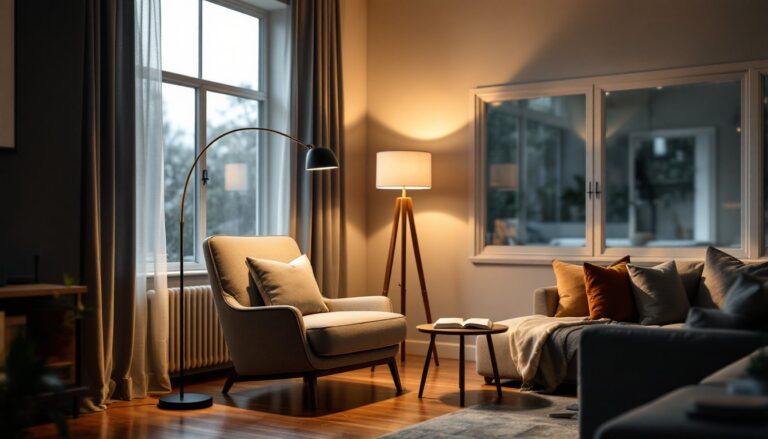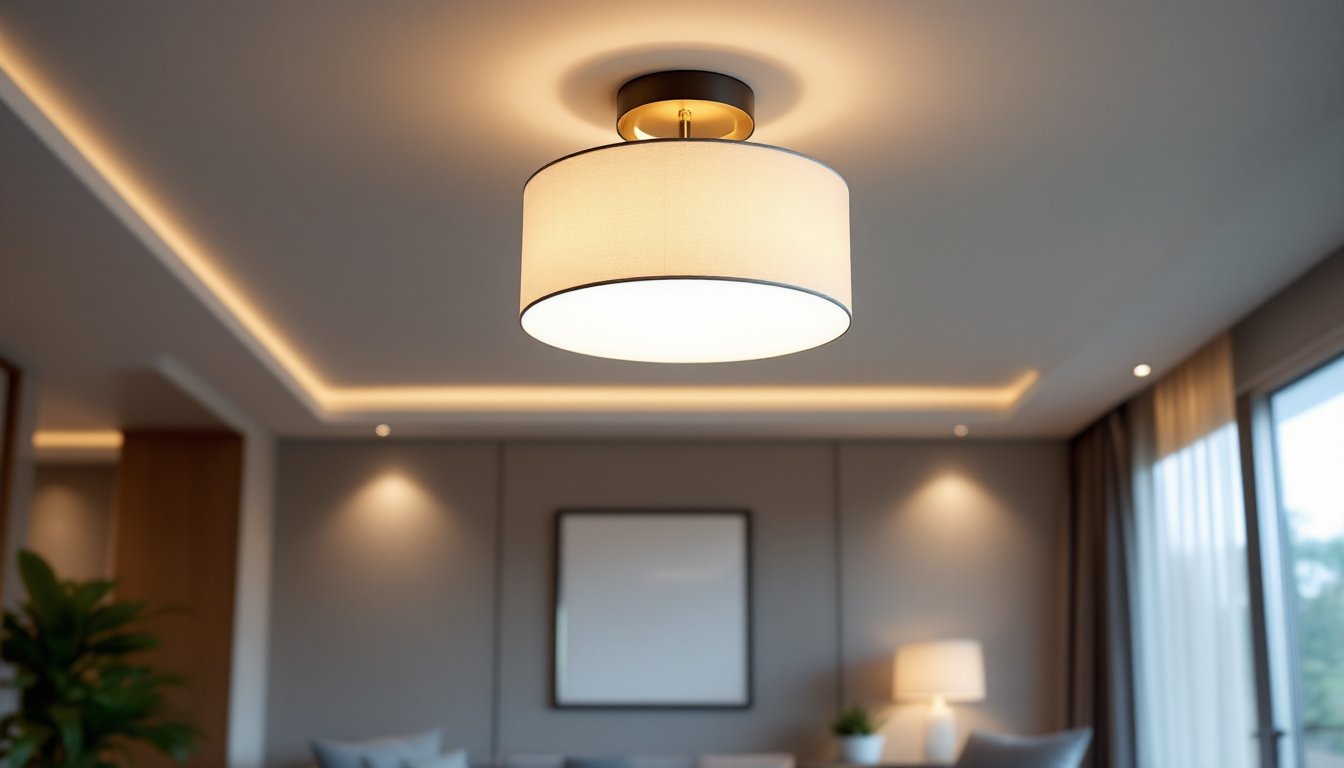
Good lighting can completely transform how your living room feels, from a space where you entertain guests to a cozy retreat after a long day. But too many homeowners treat ceiling lamps as an afterthought, defaulting to whatever’s cheapest or easiest to install. The truth is, your choice of ceiling lighting shapes everything: mood, functionality, energy costs, and how your décor actually looks when people are in the room. Whether you’re shopping for front room ceiling lights, lounge lights ceiling, or sitting room ceiling lights, understanding what’s available and how to pick the right fixture will save you money and prevent the frustration of swapping out the wrong choice six months in. This guide walks you through the types of ceiling lamps available today, how to size and style them for your space, and what you actually need to know about installation.
Table of Contents
ToggleKey Takeaways
- Ceiling lamps set the tone for your entire living room by illuminating the space and affecting how colors and textures appear, making them essential to both mood and functionality.
- Size your ceiling lamp fixture by adding your room’s length and width in feet, then converting to inches—a 16 × 20 room needs roughly a 36-inch fixture—and aim for 1,500–3,000 lumens depending on whether you’re layering with other light sources.
- LED living room lighting cuts energy use by 75% compared to incandescent bulbs and lasts 15–25 years, making them the most cost-effective choice for long-term savings.
- Choose warm white (2,700–3,000K) color temperature for most living rooms to create a cozy, inviting atmosphere, while cool white (4,000K+) works better for a crisp, modern look.
- Always turn off power at the breaker before installation and confirm it’s off with a voltage tester; hire a licensed electrician if your ceiling box is rated for less than 15 pounds or if you’re uncomfortable with wiring.
- Flush mounts and semi-flush options are practical for standard ceilings, while chandeliers require proper clearance (30 inches from ceiling, 7–8 feet to floor) and often need a reinforced ceiling brace.
Why Ceiling Lighting Matters in Your Living Room
Ceiling lamps set the tone for your entire living room. They’re the workhorse, the first light you flip on when you walk in, the anchor of your whole lighting scheme. Unlike task lights or accent pieces, overhead fixtures do the heavy lifting: they illuminate the entire space, allow you to navigate safely, and support whatever activities happen in the room, from watching TV to playing board games.
Proper ceiling lighting also affects how colors and textures actually appear in your space. A warm, dim fixture in a room painted cool gray will feel cozy but dingy. The same fixture in a warm beige room feels intentional and inviting. LED living room lighting, because you can now dial in brightness and color temperature without burning through your utility bill.
Energy efficiency matters too. A single ceiling lamp in an average living room might run 3–5 hours daily. Over a year, that adds up. LED fixtures cut energy use by 75% compared to incandescent and last 15–25 years instead of 1–2. Good lighting for living rooms also means layering, ceiling lamps work best alongside wall sconces, floor lamps, or recessed lighting to create depth and flexibility.
Types of Ceiling Lamps to Consider
Flush Mounts and Semi-Flush Options
Flush mounts attach directly to the ceiling, sitting just 2–4 inches from the surface. They’re the most common choice for living rooms with standard 8-foot ceilings because they don’t intrude into the space. Semi-flush mounts drop 8–12 inches, giving you a bit more visual interest and slightly better light distribution without the drama of a full chandelier.
Flush mounts work well in smaller living rooms, apartments, or homes where ceiling height is limited. They’re straightforward to install, usually just a center nut and two mounting brackets, and come in hundreds of styles, from minimalist drum shades to sculptural geometric designs. Semi-flush options give you more flexibility if you like the idea of a statement piece but need something more practical than a chandelier. Both types come in all price ranges, from $40 fixtures at big-box retailers to designer pieces north of $500.
Chandeliers and Statement Fixtures
Chandeliers make a visual statement. They demand attention, add layers of light through multiple bulbs, and can completely reshape how a living room feels. A crystal chandelier reads formal and elegant: a modern black chandelier reads industrial: a mid-century brass piece reads warm and retro.
The catch: chandeliers need clearance. You want at least 30 inches from the top of the chandelier to ceiling if your living room is average height, and ideally 7–8 feet from the bottom of the fixture to the floor or furniture below so people don’t bump their heads. Proper design often involves layered lighting strategies, so a chandelier usually works alongside recessed lights or wall sconces, not as your only source of overhead light. They also require more careful installation because of their weight, most need a ceiling brace rated for at least 15–20 pounds beyond the standard lightweight box. If you’re not comfortable with wiring or your ceiling box feels flimsy, this is a job for a licensed electrician.
How to Choose the Right Size and Style for Your Space
Size matters more than most people think. A tiny flush mount in a cavernous living room disappears: a massive chandelier in a cozy 12 × 14 room overwhelms the space. Use this simple rule: add the room’s length and width in feet, then convert that number to inches. A 16 × 20 living room would get a fixture roughly 36 inches in diameter. This isn’t gospel, just a starting point.
Brightness is measured in lumens, not watts. An LED bulb marked 800 lumens produces the same light as an old 60-watt incandescent, but uses only 10 watts. For living rooms, aim for 1,500–3,000 lumens for general lighting, depending on how bright you like things and whether you’re layering with other light sources. If your main ceiling fixture is the only light in the room, push toward 3,000. If you’ve got wall sconces and floor lamps, 1,500–2,000 is often enough.
Color temperature, measured in Kelvin (K), affects mood dramatically. Warm white (2,700K) feels cozy and intimate: cool white (4,000K+) feels crisp and modern. For most living rooms, 2,700–3,000K is the sweet spot. Small living room lighting.
Style should complement your furnishings, wall color, and overall aesthetic. But don’t overthink it, a good lounge lights ceiling fixture should work for years, so pick something you genuinely like looking at, not a trend that’ll feel dated in two years. Brass, matte black, and natural wood finishes tend to age well because they’re versatile.
Installation Tips for Homeowners
Before you buy, check what you’ve got in your ceiling. Most living rooms have a standard single-gang electrical box rated for 15 pounds of fixture weight, fine for a flush mount or small semi-flush, but not enough for a heavy chandelier. If you’re upgrading to something substantial, you may need to install a ceiling brace or fan-rated electrical box, a reinforced box rated for 50+ pounds. This isn’t difficult, but it requires cutting into the drywall above or accessing the attic, and building codes in most jurisdictions require a licensed electrician for this work.
Turn off power at the breaker before touching anything. This isn’t negotiable, electricity kills. Flip the breaker, test the existing fixture to confirm power is off (a voltage tester costs $10 and takes the guesswork out), then proceed. Most ceiling lamp installations follow this sequence: disconnect the old fixture, remove the mounting bracket, connect the new fixture’s wires to your ceiling wires using wire nuts (the old fixture’s mounting bracket usually comes off and the new one goes on), then secure the fixture to the box and install your bulbs and shade or trim ring.
The physical process usually takes 30 minutes to an hour if you’re comfortable with a ladder and basic wiring. If you’re not, or if your ceiling box feels loose or damaged, hire an electrician, roughly $150–300 for a straightforward swap, more if the box needs upgrading or new wiring.
For hanging something heavy or installing a chandelier, get a second pair of hands. Even lightweight fixtures are awkward to hold overhead with one hand while you’re fumbling with wire nuts. Bathroom ceiling lighting installation follows similar principles, and the same safety rules apply: kill power, test it, and don’t hesitate to call a pro if you’re unsure. After installation, test the fixture with all bulbs before declaring the job done, confirm there are no loose connections that might cause flickering or intermittent failures.
Conclusion
Choosing the right ceiling lamp for your living room isn’t complicated, but it does require thinking about size, brightness, color temperature, and how the fixture fits your space and style. Start with what you need functionally, brightness, durability, and a box that can support the weight, then layer in aesthetics. Whether you’re looking for sitting room ceiling lights, front room ceiling lights, or lounge lights ceiling, the principles are the same: good design is practical first, beautiful second. Install safely or hire help, and you’ll have a fixture that works for years without regret.