A well-placed floor lamp can transform your living room from ordinary to inviting, and it’s one of the easiest upgrades you can make. Whether you’re filling a dark corner, adding task lighting for reading, or layering light to create ambiance, living room floor lamps offer flexibility that overhead fixtures simply can’t match. Unlike built-in overhead lighting, floor lamps let you adjust brightness and position without calling an electrician. They’re also portable, affordable, and come in countless styles to match any décor. If you’re shopping for a living room floor lamp or want to understand how to layer lighting effectively, this guide walks you through the key considerations, from lamp type and height to brightness levels and design cohesion, so you pick the right fixture for your space.
Table of Contents
ToggleKey Takeaways
- Living room floor lamps solve uneven lighting problems by providing adjustable, localized light in dark corners and seating areas without requiring permanent installation.
- Floor lamps excel at layering light for professional room design by delivering task and accent lighting, especially arc lamps for reading and torchieres for soft ambient effects.
- Choose living room floor lamps based on three factors: height (40–50 inches for reading lights, 72–84 inches for arc lamps), brightness in lumens (400–600 for reading, 200–400 for ambiance), and style coherence with your existing décor.
- LED technology makes modern floor lamps 80% more energy-efficient than incandescent models while lasting 25,000+ hours, offering tunable color temperatures for flexibility.
- Arc, cantilever, tripod, and torchiere styles each serve different spaces—arc lamps for larger rooms and statement pieces, tripod styles for compact areas, and torchieres for relaxation zones.
- Well-chosen floor lamps often outperform expensive ceiling lighting upgrades at a lower cost while giving you complete control over light positioning and brightness.
Why Floor Lamps Are Essential for Living Room Design
Floor lamps solve a problem that most living rooms face: uneven lighting. Overhead fixtures cast harsh shadows in corners and may leave seating areas darker than you’d like. Living room floor lamps fill those gaps by providing localized, adjustable light where you actually spend time.
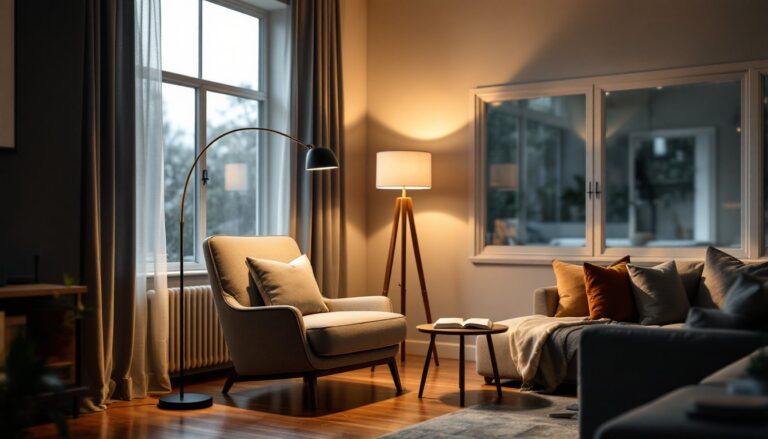
Beyond function, floor lamps for lounge areas add visual interest to your space. They create layers of light, which is the cornerstone of professional room design. Designers layer three types of lighting, ambient (general), task (for specific activities), and accent (for mood), and floor lamps excel at providing task and accent light. A sleek arc lamp behind a sofa gives you adjustable task light for reading without annoying wall sconces, while a simple torchiere in a corner softens harsh overhead lights.
Floor lamps also give renters and homeowners alike the freedom to adjust lighting without permanent installation. You can move them between rooms, experiment with placement, and swap them out as your taste evolves. They’re also budget-friendly compared to rewiring or installing new ceiling fixtures.
LED technology has made floor lamps even more practical. Modern LED floor lamps use 80% less energy than incandescent models, last 25,000+ hours, and come in tunable color temperatures so you can warm up a space in the evening or brighten it for daytime tasks.
Types of Living Room Floor Lamps to Consider
Arc and Cantilever Floor Lamps
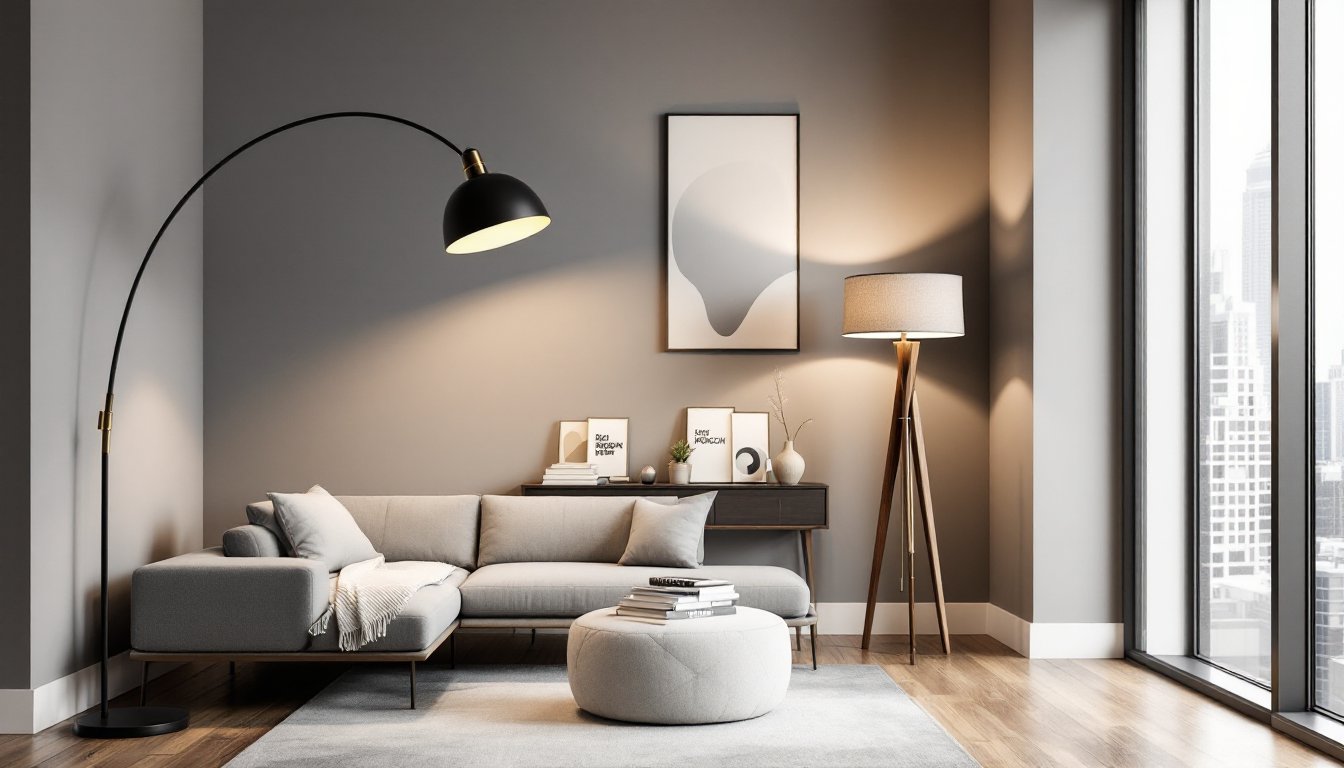
Arc lamps sweep outward from the base and position the light head over seating, ideal for reading or creating a modern focal point. The arch typically extends 60–84 inches from the base to the bulb, allowing you to cast light directly over a sofa or armchair without needing a side table. Cantilever styles (rigid arms that extend horizontally) work well in mid-century and contemporary spaces. Both types require a heavier base, usually 30–50 pounds, to counterbalance the weight of the arm and fixture.
These lamps work best in larger living rooms with space to spare. A 6-foot arc lamp needs about 18 inches of clearance on each side of the base to avoid feeling cramped. They’re excellent for creating a statement piece while solving real lighting problems.
Tripod and Torchiere Styles
Tripod floor lamps stand on three legs (usually 9–12 inches apart) and take up minimal floor space, making them perfect for smaller living rooms or tight corners. The lightweight design means they’re easy to reposition, and many tripod models fold flat for storage or moving. Heights range from 48 to 70 inches, so you can find one that suits your seating arrangement.
Torchieres direct light upward toward the ceiling, which reflects soft, diffused light back into the room. This indirect lighting is gentler on the eyes than direct downlighting and works especially well in living rooms where you’re entertaining or relaxing. LED living room lighting has made torchieres even more energy-efficient, and many now include dimmer switches built into the base or pole.
Both styles come in diverse materials, brass, wood, ceramic, fabric, so they integrate easily into any décor palette.
Choosing the Right Height, Size, and Brightness
Floor lamps range from 40 to 85 inches tall, but height depends on your furniture and the lamp’s purpose. If you’re placing a lamp next to a seated person for reading, aim for 40–50 inches so the light source sits slightly behind and above their shoulder. Arc lamps typically reach 72–84 inches at the tip: measure from your sofa seat height up to ensure the arc clears your head comfortably.
For room size, a lamp’s visual weight matters. In smaller living rooms (under 150 square feet), choose slimmer tripod or torchiere styles with thin poles. Larger rooms can accommodate bulkier arc lamps or sculptural bases. A quick test: if the lamp takes up more than 5% of your visible floor space from the seating area, it may feel oversized.
Brightness is measured in lumens, not watts. A typical living room reading lamp should deliver 400–600 lumens (equivalent to a 40–60-watt incandescent bulb). For ambient/accent light, 200–400 lumens is plenty. Living room lights floor brightness depends on your existing overhead lighting and the mood you want. If your ceiling fixture already provides strong ambient light, a dimmer floor lamp works well for evening relaxation. If overhead lighting is weak, choose a brighter model or pair two lamps.
Always check the lamp’s maximum wattage or lumens rating before buying bulbs. Many modern lamps accept LED bulbs rated for 9–15 watts (equivalent to 60–100-watt incandescent), which gives you flexibility in adjusting perceived brightness.
Matching Floor Lamps to Your Living Room Decor
Style coherence matters more than matching perfectly. A floor lamp should complement your room’s overall aesthetic without blending invisibly into the background.
Modern and Contemporary: Sleek arc lamps in matte black, brushed brass, or chrome work well here. Look for clean lines, minimal ornamentation, and geometric bases. A tall arc lamp with a single-stem design becomes a sculptural focal point.
Mid-Century Modern: Tapered wooden legs, skinny metal poles, and warm brass finishes are signatures of this era. Tripod lamps and cantilever arcs in walnut or teak feel at home alongside vintage furniture. Pair them with fabric shades in warm whites or soft colors.
Traditional and Classic: Fabric shades, turned wooden bases, and warm finishes (bronze, oil-rubbed bronze, warm brass) feel period-appropriate. Torchieres with pleated linen shades fit seamlessly into formal living rooms. Floor lamps for lounge areas should echo other fixtures in the room, if your overhead is bronze, choose bronze for the floor lamp too.
Industrial and Rustic: Exposed metal, concrete bases, and Edison-style bulbs complement this look. Arc lamps in raw steel or powder-coated iron feel authentic. Pair them with reclaimed wood shelving or vintage metals elsewhere in the room.
Color coordination: If your walls are neutral, the lamp base can be a subtle accent (warm brass against gray walls, matte black against cream). If your walls are bold, choose a neutral lamp base so it recedes. Shade color should either match your wall tone (for cohesion) or contrast gently with it (a cream shade against pale blue walls, for example).
Don’t overcomplicate it. One or two well-chosen floor lamps create visual flow: too many styles fight for attention and clutter the space. A good rule: limit yourself to two lamp styles per room, and let them share at least one material or finish.
Conclusion
Picking the right living room floor lamp comes down to balancing three things: function (does it solve a lighting problem?), fit (does it match your room’s height and style?), and feel (does it enhance the mood you’re after?). Whether you go with an arc lamp as a sculptural statement piece, a tripod style for tight spaces, or a torchiere for soft ambient light, a well-chosen floor lamp pays dividends in both comfort and style. Start by assessing your current lighting, where are the dark spots? What tasks need task light?, then measure your space and browse styles that align with your décor. You’ll find that one or two quality floor lamps often outperform expensive ceiling upgrades, cost far less, and give you the flexibility to adjust light exactly how you want it.