Proper dining room lighting transforms how a space feels and functions. It’s the difference between a room that looks flat and uninviting versus one that draws people in for conversation and meals. The right fixture above your table isn’t just about visibility, it sets the mood, anchors your décor, and can actually make food look better. Whether you’re working with a tight budget or planning a full renovation, understanding your lighting options helps you avoid costly mistakes. In 2026, homeowners have more flexibility than ever to mix styles, combine multiple sources, and achieve the exact ambiance they want without very costly.
Table of Contents
ToggleKey Takeaways
- Dining room table lighting should be mounted 30 to 36 inches above the tabletop to avoid glare and maintain sightlines, whether using pendants, chandeliers, or track systems.
- Pendant lights are ideal for focused elegance, with a single large fixture or two to three smaller ones clustered together working best for most dining tables.
- Warm white (2700K) LED bulbs create the most flattering light for food and dining ambiance, while dimmable options give you full control over mood and brightness.
- Layered lighting combining task (overhead), ambient (general brightness), and accent (decorative) sources offers the most sophisticated and flexible dining room table lighting solution.
- Always hire a licensed electrician for installation if fixtures exceed 15 pounds or ceiling work feels uncertain, and verify local electrical codes and permitting requirements before starting.
- Visit showrooms and test fixtures at different times of day before committing, as proper dining room table lighting depends on your specific space, ceiling height, and style preferences.
Pendant Lights: Creating Focused Elegance Above Your Table
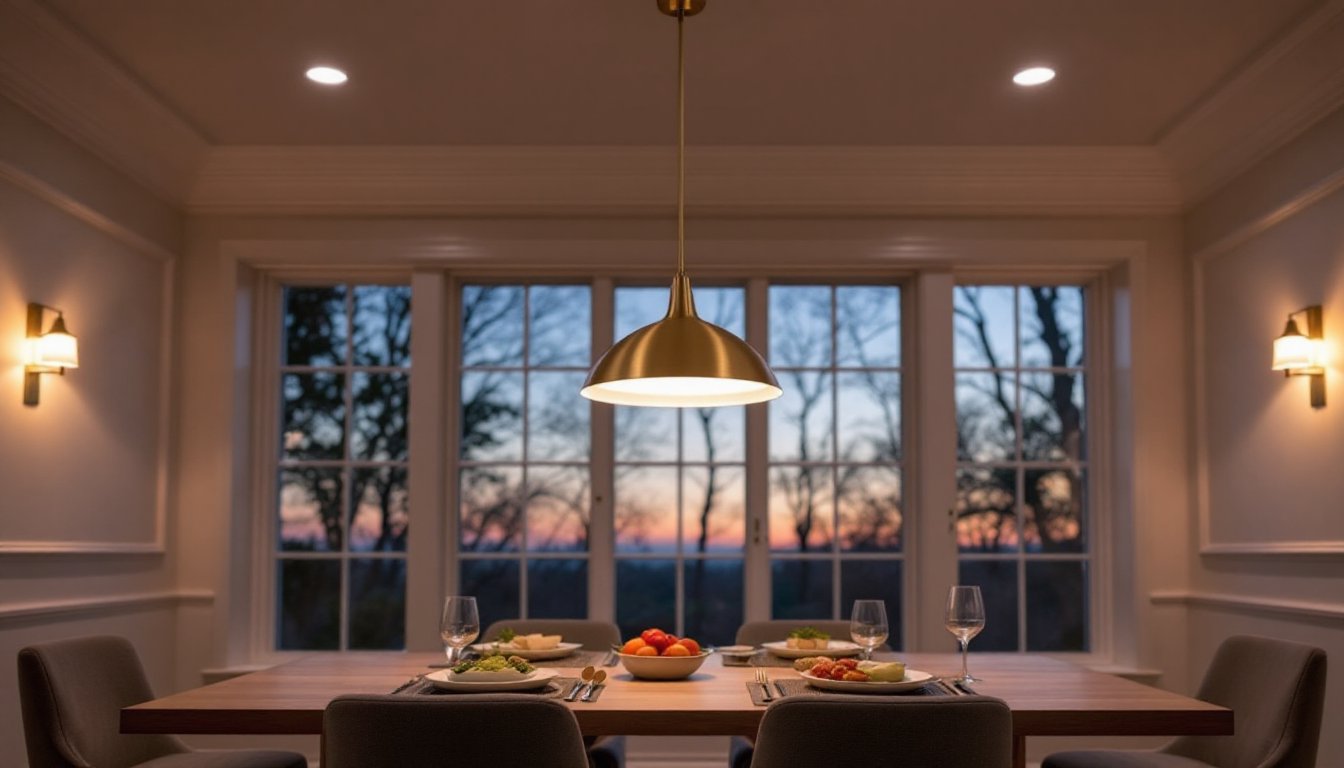
Pendant lights are the workhorse of dining room lighting. A well-chosen pendant focuses light directly onto your table, making food look appetizing and creating an intimate gathering spot. Most dining tables work best with a single large pendant or two to three smaller ones clustered together.
The height matters: mount pendants 30 to 36 inches above the tabletop to avoid glare and keep sightlines open across the table. If your ceilings are higher than 8 feet, adjust upward proportionally. For a standard 36-inch-wide table, choose a fixture roughly 15 to 18 inches in diameter.
Material and style options range from simple glass or ceramic shades to industrial metal cages. Metal pendants with exposed Edison-style bulbs suit modern and farmhouse aesthetics, while frosted or fabric shades soften light and work in traditional or transitional rooms. Consider fixtures with dimmable LED bulbs rated 2700K (warm white) for dining, this color temperature flatters food and creates a relaxing atmosphere.
One overlooked detail: ensure the pendant’s rod or chain can be shortened or lengthened during installation. Many homeowners need adjustments after first hanging, and a quality fixture will accommodate that.
Chandeliers: Statement Fixtures That Define Your Dining Space
A chandelier commands attention and sets the formal tone of a dining room. Classic crystal, transitional multi-arm designs, or sleek modern sputnik styles all work depending on your home’s character. The key is proportion: a chandelier should be about one-half to two-thirds the width of your table. An oversized fixture overwhelms: a tiny one looks out of place.
For installation, you’ll likely need an electrician unless you’re replacing an existing fixture and the box is rated for the chandelier’s weight. Most residential ceiling boxes support up to 50 pounds, but always check your fixture’s specs. Some heavier chandeliers require a reinforced outlet box and may need modification to your electrical setup, this is not a DIY shortcut.
Chandeliers with adjustable arms or drooping crystals can interfere with sight lines if hung too low. Stick to your pendant rule: 30 to 36 inches above the table. If your chandelier has a very long chain, you can trim it during installation (many come with extra chain links).
Budget-conscious shoppers often find quality chandeliers at secondary markets, estate sales, or online, then have them professionally rewired with modern LED candelabra bulbs. This keeps the vintage charm while ensuring safe, efficient operation.
Track Lighting: Flexible and Modern Illumination Solutions
Track lighting suits dining rooms with varied furniture layouts or spaces where you want to adjust light direction without rewiring. A linear track mounted to the ceiling holds multiple adjustable heads, letting you aim light where you need it. This approach works especially well in open-concept homes where the dining table isn’t in a fixed location.
Installation requires ceiling access and typically an electrician’s help. The track connects to standard ceiling junction boxes and runs along studs or across joists for support. Modern tracks integrate into many design styles, brushed nickel for contemporary, matte black for industrial, or even brass for transitional looks.
One practical advantage: you can swap bulb types and wattages without replacing fixtures. Going from incandescent to LED bulbs with a 2700K color temperature takes minutes and cuts energy use by 75 percent. Dimmable LED tracks work with smart home systems, so you can adjust brightness and even color temperature from your phone.
Track systems require more planning than a single pendant. Sketch your table position, measure ceiling depth and joist locations, and decide if you want one continuous run or two staggered tracks. This planning prevents installation headaches and ensures balanced light distribution.
Adjustable Options for Different Activities and Moods
Railed tracks with rotating or swiveling heads let you spotlight the table during meals, then redirect light to a sideboard or buffet during entertaining. Some premium tracks include integrated ambient lighting, soft, indirect glow from the track itself, creating layered illumination without additional fixtures.
Pairing track fixtures with wall-mounted dimmers (often called three-way or four-way switches) gives you full control. Brighten the space for cooking and eating, dial down the intensity for background music and wine, then go moody for after-dinner conversation. This flexibility costs a bit more upfront but pays dividends in usability.
Layered Lighting: Combining Multiple Light Sources for Ambiance
The most sophisticated dining rooms use layered lighting, a combination of task (over the table), ambient (general room brightness), and accent (highlighting artwork or architectural details) fixtures. This approach mimics natural daylight and gives you precise control over mood and function.
Start with your primary task light: the pendant or chandelier over the table. Then add ambient light via recessed cans or wall sconces positioned 6 to 8 feet from the table, or flush-mount fixtures in adjoining areas. A professional designer often uses the 60-30-10 rule: 60 percent ambient, 30 percent task, 10 percent accent.
Wall sconces on either side of a doorway or buffet area provide supplemental light without creating glare on the table. Position sconces around 60 to 66 inches above the floor, typically at eye level when standing. This height avoids harsh shadows on faces and keeps light even across the room.
Accent lighting, spotlights on a gallery wall, uplighting along crown molding, or hidden LED strips, adds depth and sophistication. LED strip lighting works beautifully tucked under floating shelves or along baseboards, creating subtle background glow without overwhelming the primary fixtures.
Control all layers with separate dimmer switches. A master switch for ambient light, individual dimmers for task and accent, means you’re never stuck in just one mode. Many newer homes run 3-way switches (one switch controls the same light from two locations), which is handy in open layouts where diners and kitchen areas blend.
Installation Tips and Design Considerations
Before buying any fixture, measure your space and check your ceiling. Note the distance from the nearest joist, the depth of your ceiling cavity (plaster, drywall, or open rafter), and whether you have existing junction boxes nearby. A quick visit to the attic or crawlspace saves hours of frustration later.
For pendants or chandeliers, the electrical box must support the fixture’s weight. Most standard boxes handle up to 15 pounds: heavier pieces need reinforced boxes. If you’re unsure, hire a licensed electrician for the rough-in work. They’ll verify the box is secure, run conduit if needed, and ensure connections meet contemporary dining room and local electrical codes (National Electrical Code, or NEC).
Material matters for longevity. Brass tarnishes over time but develops character (use brass cleaner for touch-ups): stainless steel and brushed nickel stay cleaner longer. For families with young kids or pets, avoid delicate glass shades in favor of sturdy ceramic or metal, broken glass is a bigger headache than fewer style options.
Always use LED bulbs rated for damp locations if you’re near a kitchen with steam or humidity. Standard LEDs fail faster in moist air. Look for the “damp” or “wet” listing on the bulb packaging.
Color temperature affects the room’s feel. Warm white (2700K) suits traditional, farmhouse, and transitional styles: neutral white (3000–4000K) works in contemporary and modern rooms. Cool white (5000K+) is too clinical for dining and belongs in task-heavy spaces like workshops.
Once installed, test your light at different times of day. Morning sunlight differs from evening ambiance, and you want your fixture to look good both ways. If you’re unsure about placement or style, visit showrooms or check Modern Farmhouse Dining Room inspiration online for real installations.
Permitting rules vary by jurisdiction. Some areas require permits for electrical work over a certain amperage: others don’t. Check with your local building department before starting. Avoiding permits to save money often backfires at resale or insurance claim time.
Conclusion
Great dining room table lighting doesn’t happen by accident. It starts with honest assessment of your space, budget, and style, then moves into thoughtful selection of fixtures that match both your aesthetic and your practical needs. Whether you’re installing a single striking pendant, a dramatic chandelier, or a flexible track system, the principles stay the same: proper height, adequate brightness, warm color temperature, and controls that let you shift mood and function. Don’t rush the decision. Visit showrooms, test dimmers, check real-world photos, and if electrical work intimidates you, call an electrician. The few hundred dollars you spend on proper installation pays back in years of meals, conversations, and moments made better by light that actually works.