A living room with floor lamps transforms not just the space itself, but how you actually use it. Unlike ceiling fixtures alone, floor lamps offer flexibility, layered light, and the chance to shift the mood without rewiring. Whether you’re reading, entertaining guests, or unwinding after work, the right floor lamp in the right spot makes all the difference. This guide walks you through assessing your needs, picking fixtures that match your space, and placing them strategically so your living room feels both functional and inviting.
Table of Contents
ToggleKey Takeaways
- A living room with floor lamps provides layered lighting that creates flexibility and sets mood without requiring rewiring, transforming both functionality and ambiance.
- Assess your actual activities—reading, TV watching, entertaining—to determine the right light levels and positioning before selecting floor lamp fixtures.
- Choose floor lamps based on style categories: arc lamps for modern aesthetics, tripod lamps for tight spaces, torchieres for ambient glow, and swing-arm lamps for task lighting.
- Strategic placement behind reading chairs, in dark corners, flanking TVs, and along traffic edges maximizes impact while maintaining safety and visual balance.
- Coordinate floor lamp finishes, style, and scale with existing décor—warm metals complement traditional rooms, while matte black suits contemporary spaces—and use multiple lamps on separate switches for maximum lighting control.
- LED bulbs and smart bulbs in floor lamps offer durability, energy savings, and the ability to adjust brightness and color temperature to match different activities and moods.
Assessing Your Living Room’s Lighting Needs
Before you shop for a floor lamp, take a hard look at what you actually do in your living room. Do you read often? Watch TV? Host movie nights or dinner conversations? Each activity demands different light levels and positioning.
Start by checking your current lighting setup. Most living rooms rely too heavily on a single overhead fixture, which creates harsh shadows and limited flexibility. Layered lighting, combining overhead, ambient, and task light, is the foundation of good room design. Floor lamps fill the “ambient” and “task” layers perfectly.
Next, measure your room dimensions and note problem areas: dark corners, seating clusters without good light, or glare on your TV screen. Walk through at night and where you squint or reach for a table lamp. Those spots are your floor lamp candidates.
Consider color temperature too. Warm light (2700K–3000K) suits relaxation and conversation. Cool light (4000K+) works better for reading or detailed tasks. Many homeowners find a mix works best, warm overhead light paired with cooler task lighting at a reading chair. The LED living room lighting solutions available today make this layering easier than ever, with dimmable and color-adjustable options becoming standard.
Choosing the Right Floor Lamp Style and Design
Floor lamp styles fall into a few broad categories, each with trade-offs in light output, style, and footprint.
Arc lamps sweep out from a base and hang over seating. They deliver soft, indirect light and look modern. Downside: they need floor space and can feel top-heavy if the base isn’t solid.
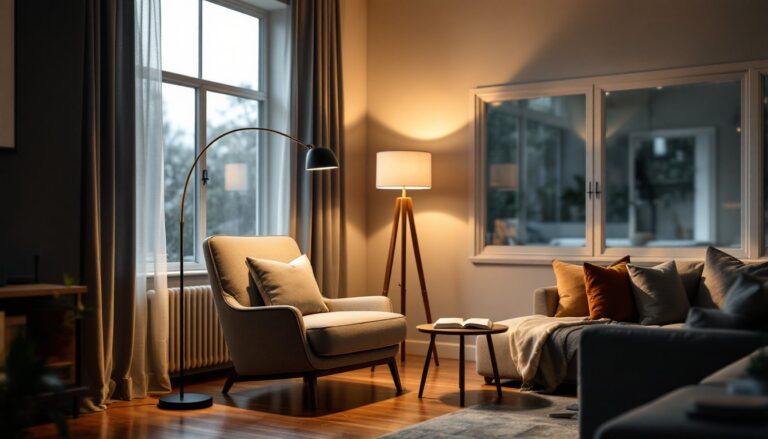
Tripod and stick lamps stand upright with a narrow footprint, perfect for tight corners or beside a reading chair. They’re often adjustable, letting you angle the shade for direct task light or bounce it off the ceiling for ambient glow.
Floor torchieres point light upward, bouncing it off the ceiling for gentle, diffuse illumination. They don’t cast shadows well and are best as accent or ambient fixtures, not primary task light.
Pharmacy and swing-arm lamps extend out from a tall pole, giving you directional control. Excellent for reading or hobbies but require sturdy bases.
Popular Floor Lamp Types and Materials
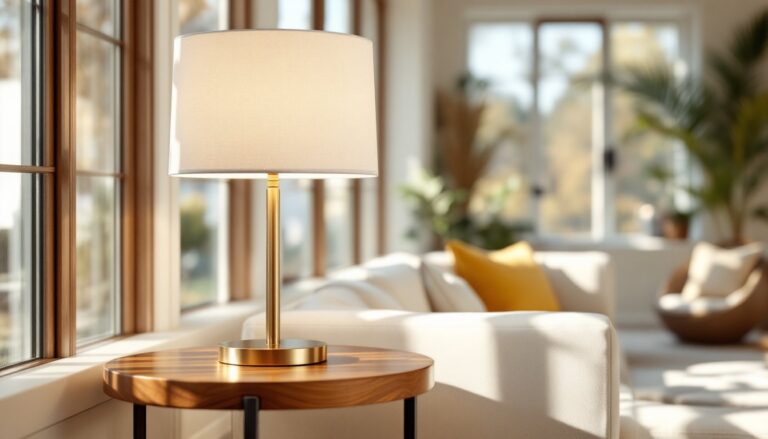
Metal bases (brass, brushed nickel, matte black) pair well with most décor. Brass adds warmth and feels upscale: black suits contemporary spaces: brushed nickel works in transitional rooms. Wood bases bring organic texture and warmth but require more care in humid climates.
Shade materials affect light quality. Linen and fabric shades diffuse light softly, ideal for ambient or living spaces. Paper shades are affordable and lightweight but less durable. Glass or acrylic shades transmit more light and work well for task lamps. Drum and cone shades direct light downward and to the sides, reducing glare on screens.
Bulb type matters. LED bulbs last 25,000+ hours and use 75% less energy than incandescent. They run cooler, so fabric shades won’t yellow or degrade. Smart bulbs let you adjust brightness and color temperature from your phone, a practical touch for a living room with multiple lamps. Modern floor lamps from design resources showcase how material and finish choices dramatically shape a room’s personality.
Strategic Placement Ideas for Maximum Impact
Placement is where floor lamps earn their value. A well-positioned floor lamp solves lighting problems a ceiling fixture can’t reach.
Start with reading zones. If you have a favorite armchair, place a floor lamp behind or beside it at shoulder height when seated. The light should fall on your book or phone without shining in your eyes or creating glare on screens. Arc lamps work beautifully here, they swing over the chair without blocking sightlines.
Next, target dark corners. Most living rooms have one corner that feels shadowy and uninviting. A tall tripod or torchiere here lifts the whole room’s brightness without needing rewiring. Pair it with a warm bulb to make the corner feel cozy rather than interrogation-room harsh.
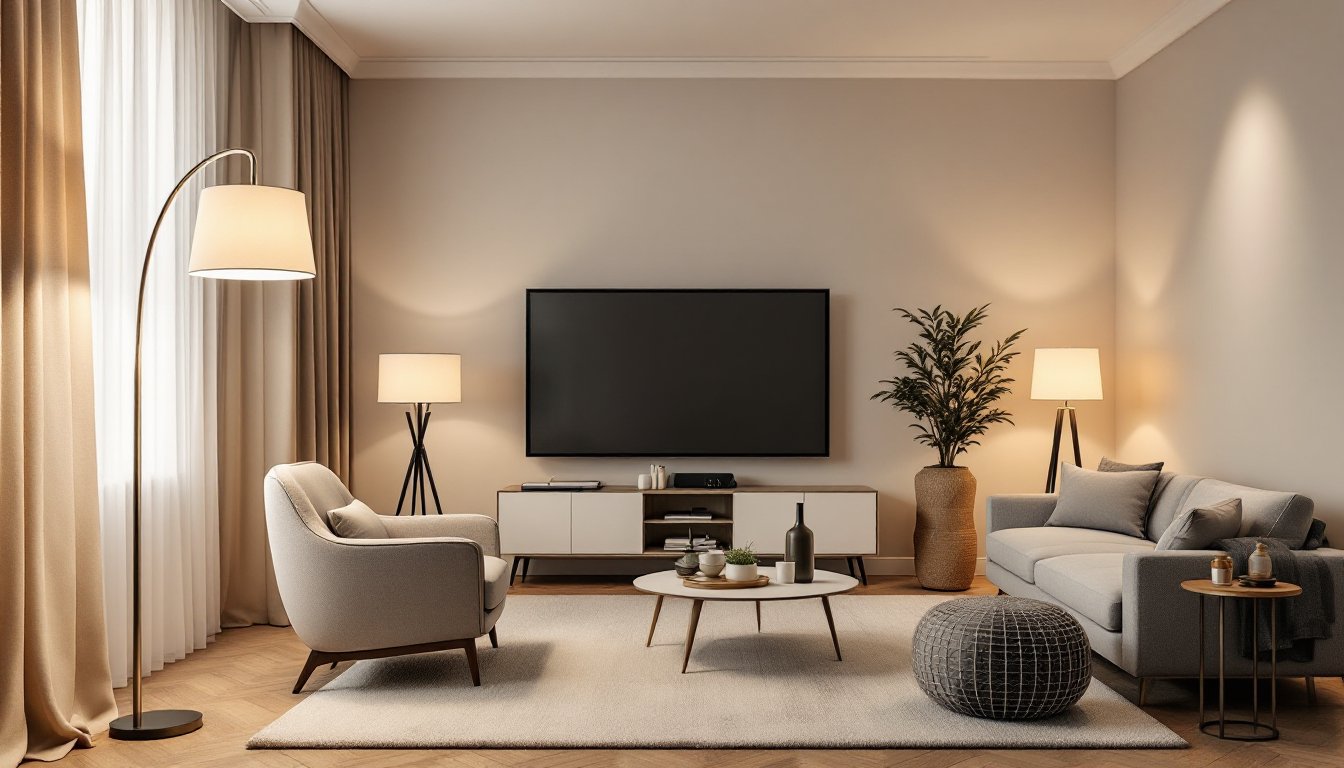
For TV viewing areas, avoid placing lamps directly behind the screen: that creates backlight glare. Instead, flank the TV with lamps on either side at a slight angle, or place them off to the side at the edge of your seating group. Expert living room lighting design ideas emphasize this offset approach for balanced, screen-friendly illumination.
High-Traffic Placement Zones
Consider traffic flow. Lamps in walkways become tripping hazards and obstruct movement. Keep them tucked into corners, against walls, or clustered with furniture. A floor lamp beside an end table is stable and unobtrusive. One in the middle of an open floor plan is a lawsuit waiting to happen.
Entryways and transitional spaces benefit from a floor lamp too. If your living room opens to a hall or kitchen, a lamp near the threshold helps guests navigate and creates visual interest as they enter. Tall stick or arc lamps work well here because they don’t eat up precious edge space.
Conversation areas, where multiple seating pieces cluster, benefit from even light. Position lamps so their glow touches multiple seats without casting shadows across someone’s face. Two smaller lamps often work better than one large one because they distribute light more evenly and allow guests to control their own brightness if lamps are on separate switches.
Be realistic about lamp height and base stability. A heavy floor lamp with a solid base tolerates a tap from a vacuum or a child’s bump better than a spindly design. In active households, stability matters.
Harmonizing Floor Lamps With Your Existing Décor
Your floor lamps should feel like part of the room’s design, not afterthoughts. This doesn’t mean everything has to match, it means thoughtful coordination.
Color and finish: If your living room favors warm metals (gold, brass, copper), choose lamps with similar finishes. Cool-toned rooms (chrome, brushed nickel, stainless steel) pair well with glass or matte bases. Matte black works nearly everywhere but especially in contemporary, industrial, or transitional spaces. Don’t overthink it, a little contrast is fine, but one or two lamps in wildly different finishes will look scattered.
Style cohesion: A sleek modern arch lamp looks out of place in a traditional room stuffed with wingbacks and florals. Conversely, an ornate brass tripod with a pleated fabric shade feels fussy in a minimalist space. Scan your existing furniture, wall color, and accent pieces. Are your lines clean and geometric, or curved and organic? Do you see lots of texture (rugs, pillows, wall art) or mostly smooth surfaces? Match the lamp’s visual weight to the room.
Scale and proportion: In a large living room with high ceilings, a short squat lamp disappears. In a cozy room with 8-foot ceilings and modest furniture, an oversized torchiere overwhelms. The lamp’s height and shade diameter should feel proportional to nearby seating and the wall space it occupies.
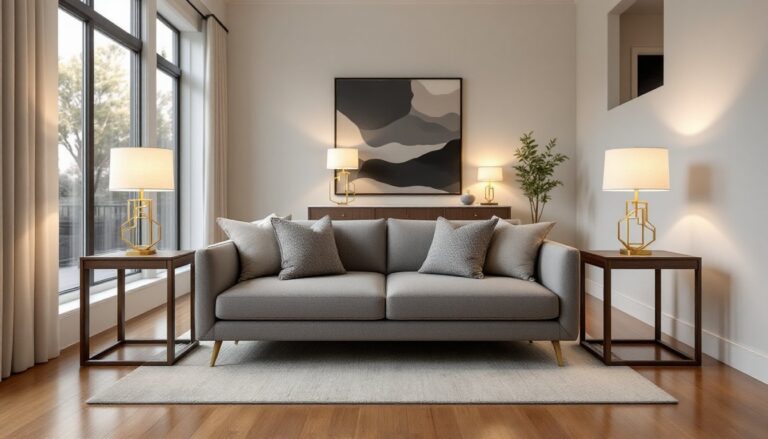
Table lamps for living rooms often work alongside floor lamps. A floor lamp in one corner and a tabletop lamp on a side table create balanced, layered light without redundancy. If your room feels sparse, adding a few table lights for living room corners rounds out the lighting plan. The best living room lighting strategies combine multiple fixture types for maximum flexibility.
Final check: Step back and view the room at night with all lamps on. Do hot spots exist, areas that are too bright? Are there dead zones? Can you reach switches easily, or do you fumble in the dark? If lamps are on separate circuits or dimmer switches, you control ambiance. That flexibility is one of the biggest perks of a living room with floor lamps.
Conclusion
Floor lamps are among the most practical and forgiving décor investments you can make. They add light where you need it, adapt to your lifestyle, and cost far less to install than new fixtures or rewiring. Take time to assess your space, choose designs that fit your aesthetic, and position them thoughtfully. The result, a living room that feels brighter, more functional, and genuinely yours, is worth the effort.