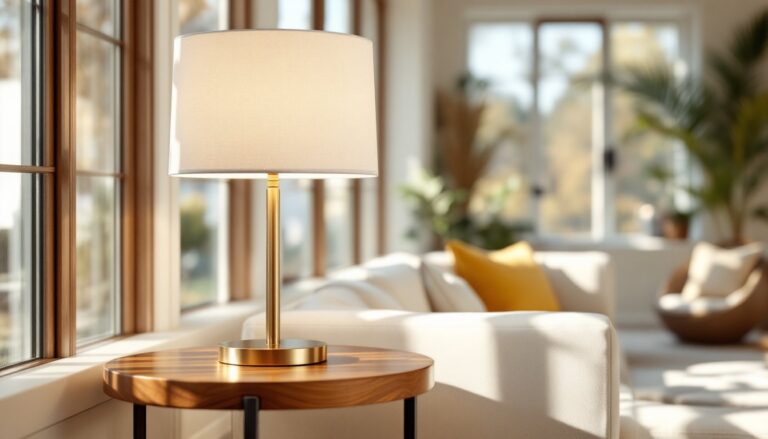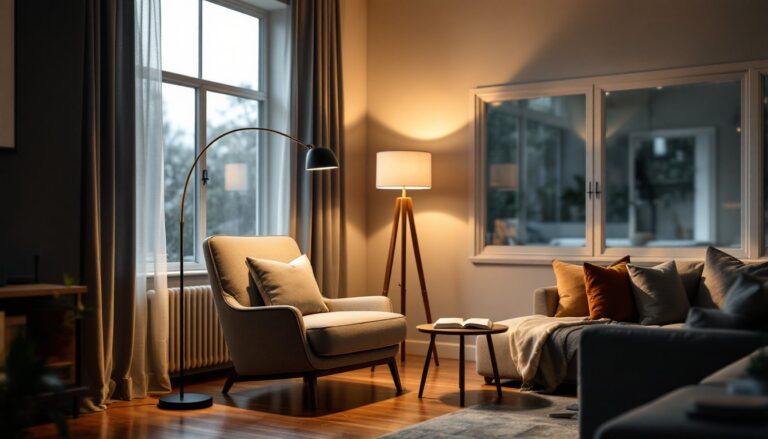
A lamp on a side table does more than fill a dark corner, it shapes how a room feels and functions. Whether you’re reading in bed, working at a desk, or settling into your living room after a long day, the right side table lamp transforms a space from dim and claustrophobic to warm and inviting. But choosing one isn’t just about grabbing whatever fits. Height, style, brightness, and placement all matter. This guide walks you through everything you need to know to pick and position a lamp that looks great and actually does its job.
Table of Contents
ToggleKey Takeaways
- A lamp on a side table provides essential task and ambient lighting that transforms a room from dim to warm and inviting, while also defining zones in open-plan spaces.
- Proper height matters: aim for 42–48 inches total for living rooms and nightstand height plus 2–3 inches for bedrooms, ensuring your eyes are level with the lamp shade’s bottom when seated.
- Lamp shade width should match your table width minus a few inches on each side (roughly 18–22 inches for a 30-inch table) to leave functional space while maintaining visual balance.
- Choose warm white bulbs (2200–2700K) with 450–800 lumens for bedside and living areas, and position your lamp to avoid glare by keeping the bulb hidden behind the shade.
- Coordinate your lamp’s style and finishes with existing furniture—wood bases with brass accents, matching textures, and intentional color coordination—to create a polished, cohesive room design.
- Position bedside lamp switches within arm’s reach and route cords safely along baseboards to ensure both comfort and practicality without creating trip hazards.
Why Side Table Lamps Are Essential for Home Lighting Design
Most people rely on a single overhead fixture to light an entire room. That’s a mistake. Professional lighting designers know that layered lighting, combining ambient, task, and accent sources, creates spaces that feel balanced and comfortable.
A lamp on a side table provides task lighting for reading, writing, or hobbies without forcing you to depend on harsh overhead lights. It also adds ambient glow that softens shadows and reduces the contrast that makes your eyes work harder. In open-plan homes, side table lamps define zones: a reading corner here, a conversation area there. They’re unobtrusive zone markers that actually work.
Beyond function, these lamps highlight textures and finishes in nearby furniture. A wood nightstand’s grain or the weave in upholstery becomes visible under warm lamplight in ways that ceiling lights never achieve. If you’ve ever noticed how a room looks different in evening versus daylight, you’ve experienced the power of well-placed lighting. A side table lamp is often the easiest way to get that control.
Finding the Right Lamp Size and Style for Your Space
Scale matters more than most people realize. A lamp that’s too short disappears visually and throws light downward only. One that’s too tall dominates the table and casts light above eye level, missing the job entirely.
Measuring Your Side Table and Lamp Proportions
Start with your side table height. Most living room end tables sit around 24–26 inches tall: bedroom nightstands typically range from 22–30 inches. Once seated on your couch or in bed, your eyes should be roughly level with the bottom of the lamp shade. This usually means the total height (base plus shade) should be 42–48 inches for a living room lamp and closer to nightstand height plus 2–3 inches for bedroom setups.
Shade width matters too. It should be roughly equal to the table width minus a few inches on each side. A 30-inch table works well with a shade around 18–22 inches wide. You’re aiming to leave room for a book, remote, or glass without the lamp crowding everything.
Don’t ignore the visual weight of the base. A heavy sofa or substantial wooden table pairs better with a lamp that has a solid base or textured shade. A delicate side table suits a slimmer, more refined design. The lamp should feel like it belongs on that particular table, not like it wandered over from somewhere else.
Popular Lamp Styles and Design Aesthetics
The functional type matters first. A standard downward-light lamp with a shade works for most bedside and side-table situations, it’s the workhorse. A torchiere bounces light upward for accent or ambient lighting, useful if you want to add glow without direct task light. Tripod lamps are visually lightweight and fit minimalist or Scandinavian interiors well. A buffet lamp is tall and slender, perfect for narrow consoles or sideboards where space is tight.
Now for aesthetics. Contemporary lamps feature clean lines, metal or glass, and neutral colors, they suit modern furniture. Traditional designs have ornate bases and fabric shades with classic proportions. Mid-century modern pieces combine organic shapes with warm wood and metal, often in bold or muted tones. Industrial lamps expose the bulb and use darker metal finishes. Farmhouse and coastal styles use natural materials and textured bases in light or earthy tones.
Your choice should coordinate with existing furniture and finishes. If your nightstands are walnut wood with brass hardware, a lamp with a wood base and brass accents makes sense. Mismatched aesthetics aren’t always wrong, intentional mixing can work, but lazy mixing reads as an afterthought. Lamp design is one of the easiest ways to either tie a room together or make it feel scattered.
Practical Tips for Installing and Positioning Your Lamp
Bulb choice shapes the entire feel of your lamp. Warm white bulbs, around 2200–2700K color temperature, support the relaxed atmosphere most people want in bedrooms and living spaces. Brighter, cooler light (4000K and above) belongs in kitchens or work areas. For a side table lamp in a bedroom, aim for 450–800 lumens depending on room size and what other light sources you have.
Glare is the silent killer of good lighting. Position the lamp so the bulb isn’t directly visible when you’re seated. The shade exists to shield your eyes: if you can see the light source, it’s positioned wrong or the shade is too shallow. This is especially important for bedside reading lamps, you shouldn’t squint when reaching for the switch.
Switch placement deserves attention. Bedside lamps should have switches within arm’s reach so you can turn them off without getting out of bed. A switch on the socket or cord works, but a switch on the base is often more reliable. Verify the cord has enough slack to reach the outlet without stretching tight, but loop or clip excess cord to avoid trip hazards.
For living room and bedroom lamp ceiling fixtures paired with side tables, ensure wiring runs cleanly. If the cord is visible, use cord covers or run it along the baseboard. Interior designers explain specific to help avoid common mistakes.
Styling Your Side Table Lamp with Complementary Decor
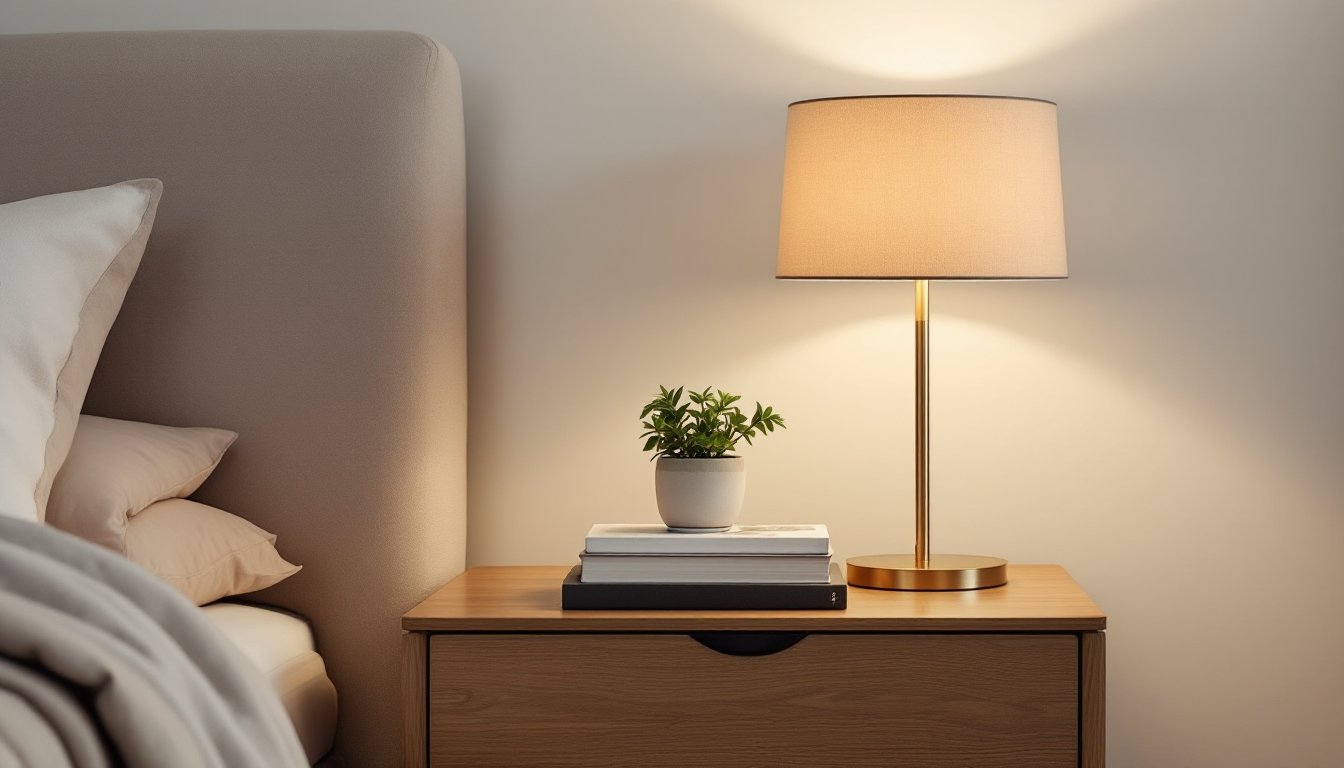
A lamp doesn’t live in isolation, it’s part of a whole surface composition. Balance heights by pairing the lamp with objects of varying heights: a stack of books, a small sculpture, a potted plant. Varying heights create visual interest without clutter.
Keep some empty surface area. A nightstand crammed with objects feels chaotic and makes the lamp harder to use. The point of a side table is function as much as display. Design professionals at Apartment Therapy often feature small-space solutions that show how less really can mean more.
Coordinate finishes with nearby elements. If your lamp has a brass base, echo that in picture frames or drawer hardware. Wood tones should match or complement the table and other furniture. This doesn’t mean everything must match perfectly, that reads as sterile, but intentional coordination makes a space feel designed, not random.
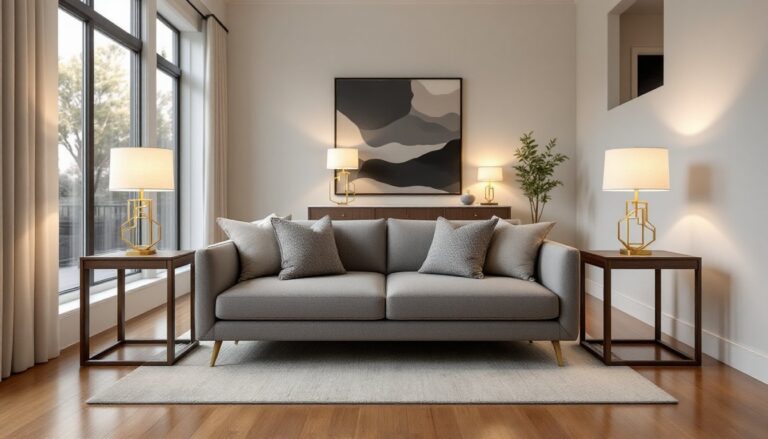
For shared beds or sofas, matching lamps on both sides create symmetry and even light distribution. It’s a classic approach that works because it’s balanced. Mismatched lamps can work beautifully too, but they usually require a higher design hand and a clear reason for the difference. Luxury interiors often showcase thoughtful lamp pairing as part of cohesive bedroom and living room designs. If you’re unsure, matching pairs are the safer, more polished choice.
For dining room scenarios with side tables, consider dining room table lighting ideas that complement your space for a complete lighting strategy.
Conclusion
A well-chosen side table lamp isn’t a detail, it’s a foundation of comfortable, functional living spaces. Get the height right, match the scale to your table, and pick a style that coordinates with your room. Position it to avoid glare and pair it with complementary decor. Do that, and you’ve got layered lighting that works as hard as it looks good.