Your patio isn’t just an extension of your home, it’s where memories happen. Whether you’re hosting a dinner party, enjoying a quiet evening, or reading with a cup of coffee, the right lighting transforms the space from dull concrete into an inviting retreat. Patio LED lighting has become the go-to choice for homeowners looking to add ambiance without draining the electric bill. LEDs last longer, use less power, and come in countless styles to match your outdoor aesthetic. This guide walks you through the best patio LED lighting ideas for 2026, from string lights to accent spotlights, plus the practical know-how to install them yourself.
Table of Contents
ToggleKey Takeaways
- Patio LED lighting uses 75–80% less energy than incandescent bulbs and lasts 25,000 to 50,000 hours, making it the most cost-effective and durable choice for outdoor spaces.
- Layer your patio LED lighting with ambient (mood setting), task (functional areas), and accent (focal points) lighting to create depth, function, and visual appeal.
- String lights, spotlights, recessed deck lights, and flexible strip lights offer versatile options for different patio styles, from festive to modern minimalist designs.
- Always use GFCI-protected outlets and outdoor-rated extension cords for safety; permanent hardwired installations beyond DIY scope should be handled by a licensed electrician.
- A typical 200–300 square-foot patio needs 20–30 watts of LED lighting equivalent to 150–200 watts of incandescent, with placement planned in advance for best results.
Why LED Lighting is the Best Choice for Your Patio
LED lights have fundamentally changed outdoor lighting. They’re efficient, durable, and affordable in ways incandescent and halogen lights simply can’t compete with. A typical LED bulb uses 75–80% less energy than an incandescent equivalent and lasts 25,000 to 50,000 hours, that’s roughly 17 years of nightly use.
For patios, that durability matters. Your lights face temperature swings, moisture, and UV exposure. LEDs handle these conditions far better than older technologies. You won’t be replacing bulbs every season, and your electric bill will thank you. Plus, LED fixtures now come in warm white (2700K), neutral white (4000K), and cool white (5000K) color temperatures, so you can dial in the exact mood you want.
RGB (color-changing) LED options have also become mainstream and affordable, letting you adjust colors for different occasions, warm amber for dinner, cool blue for a late-night gathering. Smart LED patio lights with app control and automation are no longer a luxury: they’re standard on many mid-range fixtures. If you’re upgrading an existing patio or building from scratch, LED is the obvious choice for long-term value and low maintenance.
Types of Patio LED Lighting Fixtures
Understanding your fixture options helps you layer light properly, a combination of ambient, task, and accent lighting creates depth and function.
String Lights and Fairy Lights
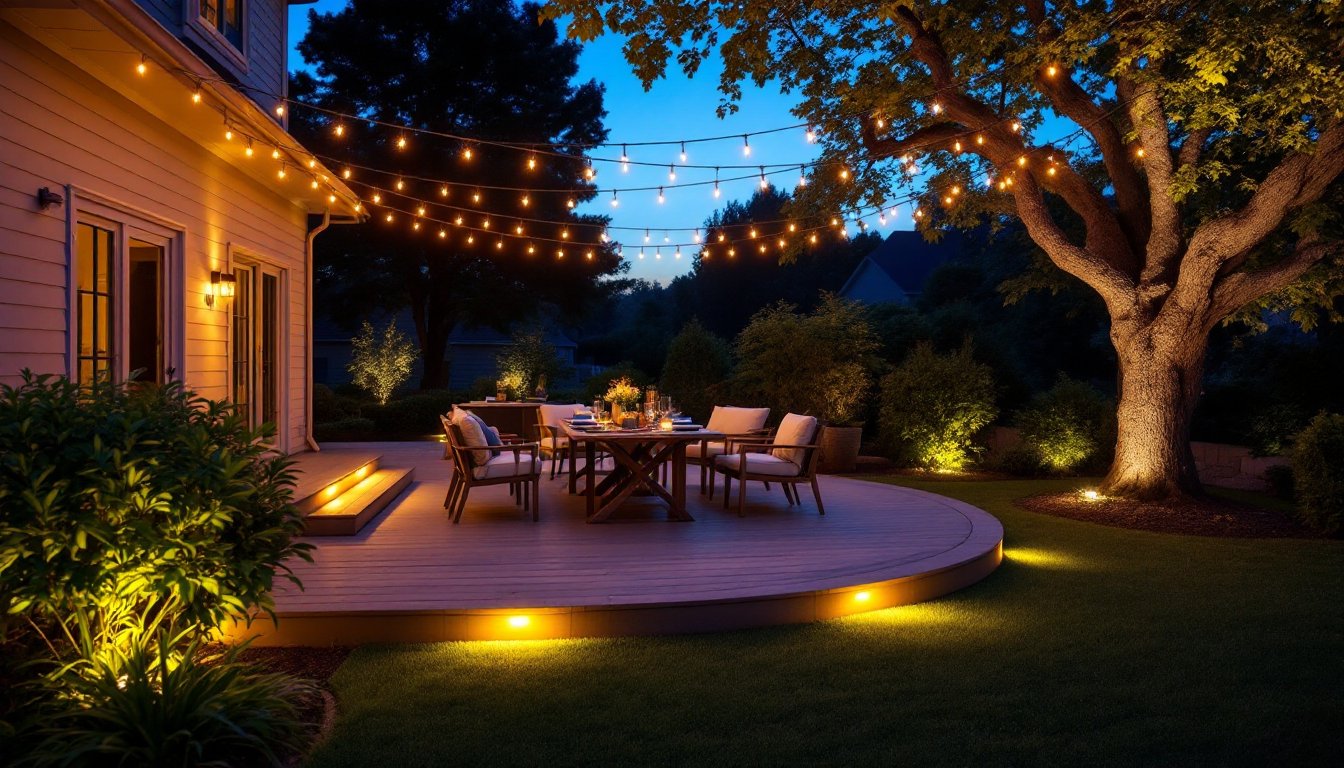
String lights are the quickest way to add festive ambiance without installing permanent fixtures. Globe string lights (with oversized acrylic or plastic bulbs) are popular for patios and gardens. Edison-style string lights mimic vintage incandescent filaments and pair well with industrial or farmhouse aesthetics. Fairy lights are thinner, with tiny LED capsules, and work great for draping over pergolas or garden beds.
When shopping, look for outdoor-rated fixtures (IP65 rating minimum for wet environments). Most string lights come on spools of 20–100 feet, so measure your space first. You’ll need a weatherproof outlet or an outdoor extension cord rated for damp locations. Some homeowners run string lights on solar-powered stakes or hang them from poles: others wire them to junction boxes for permanent installation. If you’re wiring them permanently, that falls under electrical code and may require a permit depending on your jurisdiction, check local building department guidelines.
String light spacing depends on the look you want. For dense ambient lighting, space bulbs 4–6 inches apart. For a sparser, more dramatic effect, 12–18 inches works. Test the layout by hanging one line first before committing to the full install.
Spotlights and Accent Lighting
LED spotlights and uplights are workhorses for highlighting landscape features, architectural details, or focal points. A well-placed 15–50 watt LED floodlight can illuminate a section of fence, shrubs, or a water feature without overwhelming the space. These fixtures come with adjustable mounting brackets and are usually rated for ground or wall mounting.
Recessed deck lights (also called step lights or puck lights) are flush-mounted into deck stairs or walls and provide both safety and subtle accent lighting. They draw very little power and create clean sightlines. Installation requires drilling into the deck or cutting holes in siding, so plan this during construction or a major renovation for easiest fit.
Strip lights (flexible LED tape) can run along under-railing, soffit edges, or around pergola frames for indirect illumination. Unlike string lights, strip lights create a continuous glow rather than individual points of light, which works well for modern or minimalist patios.
Planning Your Patio LED Lighting Layout
Good lighting design starts on paper, not with impulse purchases. Sketch your patio and mark fixed features: seating areas, dining table, walkways, and focal points like trees or water features.
Consider three layers of light:
- Ambient lighting sets the overall mood (string lights, overhead fixtures, wall-mounted spotlights).
- Task lighting illuminates functional areas (dining table, grill station, pathway for safe navigation).
- Accent lighting highlights landscape features (uplighting a tree, highlighting stonework, framing a pergola).
For a typical 200–300 square-foot patio, 20–30 watts of LED lighting (equivalent to roughly 150–200 watts of incandescent) is a good starting point. If your patio is a gathering hub, lean toward more light: if it’s a quiet reading nook, dial it back.
Determine your power source before designing. Do you have an existing outdoor outlet? Does it run on a dedicated 15-amp or 20-amp circuit? Solar-powered lights eliminate wiring but provide weaker illumination and depend on daily charging. Battery-powered LED lights offer flexibility but require regular maintenance. Hardwired fixtures demand planning and potentially professional installation, but they’re the most reliable long-term.
Measure distances from your power source to planned fixture locations. Most outdoor extension cords are rated for 50–100 feet: exceeding that risks voltage drop and reduced brightness. If you’re planning permanent fixtures far from existing outlets, running an outdoor-rated wire and installing a weatherproof junction box is cleaner than trailing an extension cord.
Installation Tips for DIY Enthusiasts
Most patio LED installations don’t require a licensed electrician, but there are important safety and code considerations.
For string lights and temporary fixtures:
String lights mounted on hooks, poles, or pergolas are usually straightforward. Use stainless steel eye bolts and lag screws for wood structures, and concrete anchors for masonry. Drill pilot holes first to prevent splitting wood or cracking concrete. Check that your mounting points are secure: string lights can experience wind load, especially in exposed patios.
Run power from a GFCI-protected outlet (Ground Fault Circuit Interrupter). This is non-negotiable for outdoor electrical work, GFCI outlets detect leaks and kill power in milliseconds, preventing electrocution. If you don’t have an outdoor GFCI outlet, hire an electrician to install one, or use a portable GFCI adapter plugged into an indoor outlet (less ideal but workable for temporary setups).
Use outdoor-rated extension cords rated for wet or damp locations (look for the “W” marking). Don’t use indoor cords outdoors, UV and moisture break down the insulation. Secure cables with clips or conduit so they don’t lie loose on the ground where someone might trip.
For hardwired fixtures (spotlights, recessed lights, permanent installations):
If you’re installing spotlights or uplights on permanent mounts, start by planning the circuit. Most local codes allow a single 15-amp outdoor circuit to power roughly 10–15 typical LED spotlights (at 10–15 watts each). Exceeding that requires a second circuit.
For deck step lights or recessed fixtures, you’ll need to run wire behind walls or under decking. Run outdoor-rated cable (NM-B or UF-rated) through conduit if exposed. Conduit protects the wire from UV damage and physical wear.
If any of this involves running new wire from your breaker panel, shutting off a breaker, or creating new circuits, bring in a licensed electrician. Electrical codes vary significantly by jurisdiction, and mistakes can be dangerous.
General prep and safety:
Wear safety glasses when drilling overhead or into masonry. Use a stud finder before drilling into walls, hitting a hidden pipe or wire ruins your day. Dust from drilling into masonry contains fine silica: wear a N95 mask and eye protection if you’re drilling more than a few holes.
Test all fixtures before final installation. A dead or flickering bulb is easier to fix on the bench than after mounting. Check that connector types match (many LED strings use proprietary connectors, so buy all components as a kit rather than mixing brands).
When mounting fixtures, step back and view the space from different angles, seated at the table, standing by the grill, looking from inside the house. Overlighting is a common mistake: you can always add more fixtures later if needed, but tearing them down is tedious.
Also consider your neighbors. Upward-facing spotlights can spill light over the fence and annoy adjacent properties. Angle lights downward or toward your own space, and use shields or diffusers to control light spillage. A well-designed patio respects property lines.
Conclusion
Patio LED lighting transforms your outdoor space from an unused slab into a place you’ll actually use and enjoy. Start with a plan, choose fixtures that match your style, and take time with installation, good prep prevents callbacks and headaches. Whether you go with simple string lights or a layered scheme of accent and task lighting, LEDs deliver long life, low energy costs, and the flexibility to change your setup seasonally. Your patio’s potential is waiting: it’s time to light it up.