Tampa’s warm climate and year-round outdoor living make landscape lighting a practical investment, not just a luxury. Whether you’re highlighting mature palms, creating safe pathways, or boosting curb appeal after sunset, outdoor lighting transforms how your property looks and functions. The challenge isn’t whether to add landscape lighting in Tampa, it’s figuring out what works for Florida’s humidity, salt air, and intense afternoon sun. This guide walks you through design ideas, lighting types suited to the climate, and installation tips that stick around through Tampa’s wet summers and mild winters.
Table of Contents
ToggleKey Takeaways
- Landscape lighting in Tampa serves both practical safety and aesthetic purposes, improving pathways, security, and property value year-round without requiring permits.
- Choose corrosion-resistant LED fixtures made from stainless steel or powder-coated aluminum to withstand Tampa’s humidity and salt air, avoiding bare copper or untreated steel.
- Design your system in three layers: 40–60% task lighting (paths and security), 30–40% accent lighting (uplighting and spotlighting features), and 10–20% ambient lighting for overall cohesion.
- Use low-voltage systems (12 volts) with a 150–300 watt transformer for safe, DIY-friendly installation, burying cable 6–8 inches deep and wiring fixtures in daisy-chain series to reduce costs.
- Incorporate dusk-to-dawn photocells and motion-sensing timers to automate operation and extend LED bulb life, while performing annual maintenance to inspect for corrosion and trim plants around fixtures.
- LED technology consumes far less electricity than halogen lights, offsetting Tampa’s year-round operating season while providing 25,000–50,000 hours of durability in a humid subtropical climate.
Why Landscape Lighting Matters For Tampa Homes
Landscape lighting serves practical and aesthetic purposes that matter year-round in Tampa. Safe pathways prevent trips on uneven pavers or tree roots, especially important when guests arrive after dark. Uplighting architectural features and mature trees creates visual interest that extends your living space into the evening hours. Security lighting around entry points and property lines acts as a passive deterrent.
Beyond function, outdoor lighting in Tampa amplifies property value. A well-lit exterior reads as maintained and intentional, which matters whether you’re enjoying your own home or preparing to sell. The humid Florida climate means landscape features mature quickly, palms reach height, shrubs fill in, hardscaping ages, and strategic lighting showcases these changes. Unlike interior remodels, landscape lighting requires no permits in most Tampa jurisdictions, making it an accessible DIY project with immediate visual impact.
Cost-effectiveness matters too. Modern LED fixtures consume a fraction of the electricity older halogen lights demand, offsetting Tampa’s year-round operating season. A thoughtfully designed system runs nightly without spiking your utility bill.
Key Landscape Lighting Types For Florida’s Climate
Florida’s landscape lighting needs differ from cooler regions. High humidity and salt air (especially near coastal Tampa areas) demand corrosion-resistant materials. Opt for stainless steel, powder-coated aluminum, or marine-grade fixtures on first purchase: avoid bare copper or untreated steel, which oxidize quickly in salt-laden air. LED technology is non-negotiable, halogens generate heat that attracts insects and speeds fixture degradation in humidity.
Lighting Archives page covers broader lighting topics, but landscape-specific types deserve detail.
Path And Accent Lighting Options
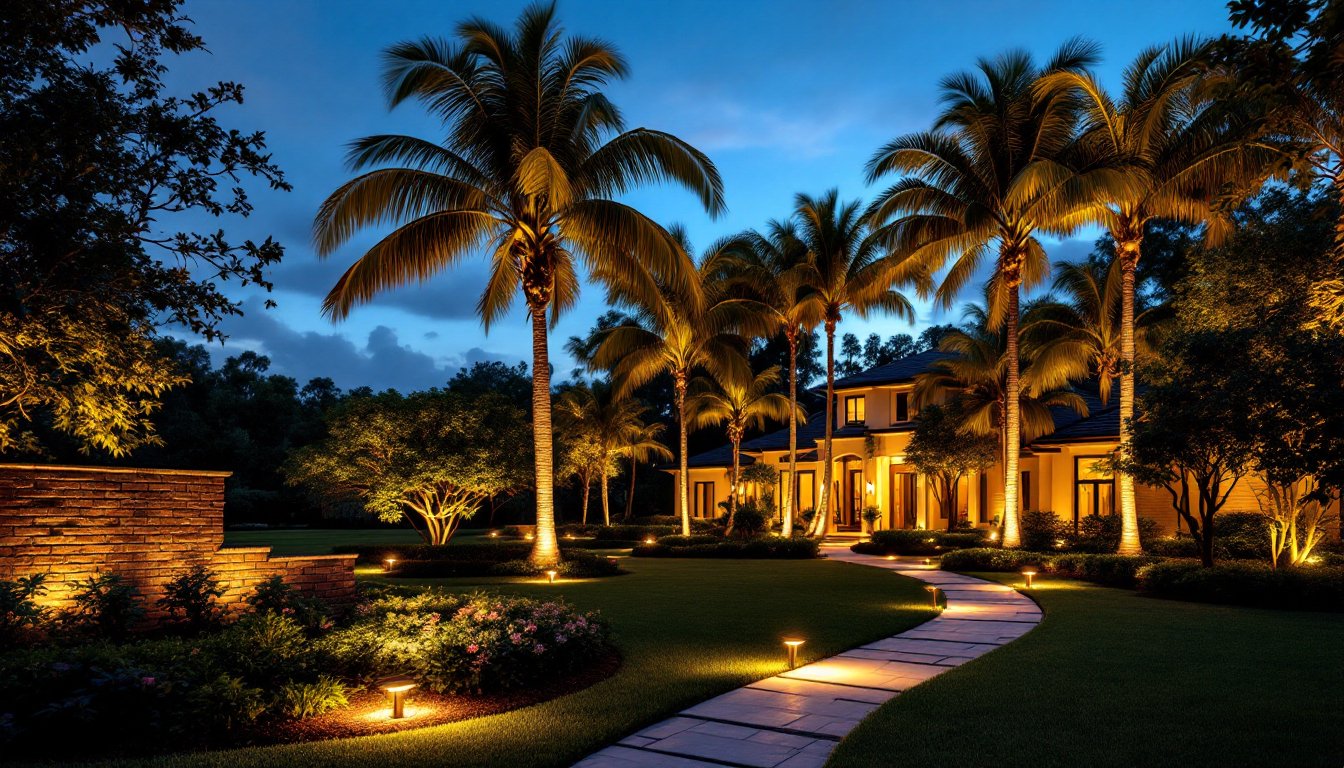
Path lights sit 12–18 inches tall and mark walkways, stairs, and transitions. In Tampa’s landscape, they prevent trips on root-heaved sidewalks and uneven flagstone. Low-voltage LED path lights (about 2–3 watts each) draw minimal power and stay cool around plants. Install them 4–6 feet apart along walkways: closer spacing looks polished, wider gaps save wiring runs.
Accent lights highlight specific features: foundation plantings, specimen trees, or architectural trim. A 50–100 watt equivalent LED flood light (actual wattage: 8–12 watts) throws enough light to graze a brick wall or underlight a palm canopy. Position accent fixtures 3–5 feet from the feature, angled slightly upward: this prevents glare while showcasing texture and shadow.
String lights and bistro bulbs add warmth and social atmosphere but demand weatherproofing. Use only outdoor-rated Edison or vintage-style LED bulbs, interior decorative bulbs fail quickly in Tampa’s moisture. Mount strings 8–10 feet high between posts or trees: sag allowance prevents water pooling on wire.
Uplighting And Spotlighting Techniques
Uplighting places a light source at ground level, aiming upward to silhouette or graze a tree, wall, or architectural detail. It’s the single most dramatic landscape lighting technique. For a 25-foot palm, a 15–20 watt LED uplighter positioned 2–3 feet from the trunk creates a tropical anchor. Farther subjects need brighter wattage: close features allow subtlety.
Spotlighting uses directional light to isolate and emphasize a small area, a planter, water feature, or address numbers. A narrow-beam LED spotlight (6–12 watts) creates definition without washing out surrounding landscape. Angle spotlights from behind or to the side of the subject to reduce glare and add depth.
Both techniques require careful positioning. Tampa’s dense planting means light placement competes with foliage. Test fixture positions during dusk: what looks right at ground level may be hidden behind a shrub at eye level. Move fixtures slightly until shadow and highlight balance. Avoid pointing lights directly at neighbors’ windows or the street, courtesy matters, and glare wastes energy.
Designing A Landscape Lighting Plan For Your Property
Start with a sketch (paper or digital photo markup works fine). Mark entry points, walkways, specimen plants, and architectural features. Identify what you want visible at night: Is security lighting your priority, or ambiance? Does a front porch serve social gatherings, or is it mainly a transition zone?
Walk the property after dark and note existing light spill from street lamps, porch fixtures, or neighbors’ homes. Landscape lighting should complement, not fight, existing ambient light. Overlit yards feel garish: underlit yards feel unsafe.
Design in layers. Task lighting (path lights, security floods) addresses safety and visibility. Accent lighting (uplighting trees, spotlighting architectural details) creates visual interest. Ambient lighting (softer overall glow) ties zones together. Most Tampa homes need 40–60% task, 30–40% accent, and 10–20% ambient.
Low-voltage systems dominate DIY landscape lighting because they’re safer (12 volts, not 120), easier to wire, and forgive small mistakes. A 150–300 watt transformer powers most residential systems, stepped down from standard household current. Line-voltage (120-volt) systems offer higher wattage but demand licensed installation and permits. Stick with low-voltage unless you’re lighting large commercial properties.
Research examples on garden design inspiration sites to see how uplighting, path lights, and accent fixtures combine in real landscapes. Tampa’s tropical planting, palms, live oaks, flowering shrubs, photographs beautifully when lit thoughtfully.
Installation And Maintenance Considerations For Tampa’s Climate
Installation prep matters more than the wiring itself. Mark transformer location (usually near a garage outlet or patio) before running cable. Use outdoor-rated low-voltage cable (12/2 or 14/2 gauge), never interior speaker wire. Bury cable 6–8 inches deep along walkways to prevent tripping and foot traffic damage. In areas with hard substrate (concrete, pavers), run cable under mulch edges or along landscape beds, Tampa’s sandy soil is easy to excavate, but avoid existing irrigation lines.
Wire fixtures in daisy-chain series (one cable feeds multiple lights) rather than running individual cables to each. This simplifies trenching and reduces cable costs. Most low-voltage systems tolerate 6–8 fixtures per run without voltage drop: if adding more, a second transformer circuit handles the load.
Timers and photocells make operation automatic. A dusk-to-dawn photocell turns lights on at sunset and off at sunrise, matching Tampa’s seasonal daylight changes. Spring forward, fall back, your timer adapts without manual adjustment, unlike seasonal time-clock changes. Pairing photocells with timers that reduce brightness after midnight (motion-sensing fixtures are also available) stretches LED bulb life and saves energy.
Maintenance in Tampa’s climate is straightforward but necessary. Salt spray (coastal areas), humidity, and intense sun degrade fixtures faster than inland cooler regions. Inspect connections annually for corrosion, a white or green residue on brass or copper terminals signals oxidation. Clean with a wire brush and apply a light coat of dielectric grease (an automotive product that seals out moisture).
LED bulbs last 25,000–50,000 hours, roughly 5–10 years of nightly operation. They rarely fail suddenly: instead, output dims gradually. When dimming becomes noticeable, replace bulbs before they fail completely. Keep spares on hand.
Florida’s afternoon thunderstorms are intense but brief. Surge protection on your transformer isn’t strictly necessary but adds peace of mind. A whole-home surge protector addresses most lightning risk more effectively than isolated fixture protectors.
Trimming plants around fixtures prevents shadows and reduces maintenance. A palm frond drifting in front of an uplighter changes the whole effect: prune proactively. Likewise, mulch buildup around path lights can block their beam, rake annually and reposition lights if they sink into decomposing mulch.
If DIY wiring feels daunting, hiring a licensed electrician for transformer installation and low-voltage wiring adds $200–400 to the project but guarantees code compliance and proper grounding. Many Tampa electricians offer landscape lighting as a sideline service.
Conclusion
Landscape lighting in Tampa transforms your property from dusk onward, improving safety, security, and curb appeal. Start with a practical plan, identify task and accent zones, choose corrosion-resistant LED fixtures, and design in layers. Low-voltage systems are accessible to DIYers, forgiving of minor mistakes, and cost-effective to operate. Tampa’s humid subtropical climate demands quality materials and seasonal maintenance, but LED technology and proper weatherproofing make outdoor lighting in Tampa a lasting investment. Your landscape looks best when lit intentionally, so map it out, install thoughtfully, and enjoy year-round curb appeal.