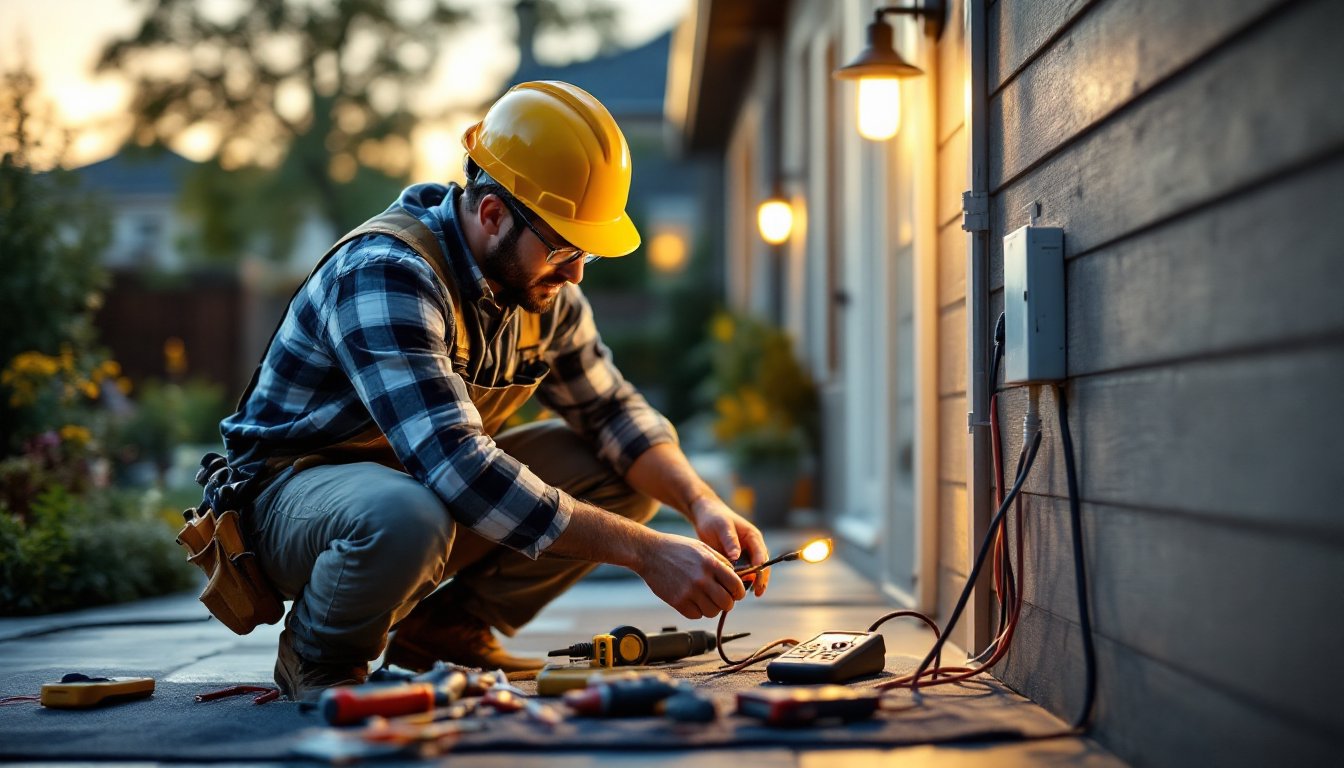
Outdoor lighting transforms a backyard from dark and unusable after sunset into an inviting extension of your living space. But wiring fixtures safely requires more than screwing in a bulb, you’re working with 120-volt circuits, potential moisture exposure, and code-compliance requirements. While some lighting work falls within the DIY range, knowing when to hire an electrician for outdoor lighting installation protects both your home and family. This guide walks you through the decision points, what to expect from a professional visit, and how to maintain your outdoor lighting system long-term.
Table of Contents
ToggleKey Takeaways
- Hiring an electrician to fix outdoor lighting is essential for safety, as outdoor circuits face moisture, UV exposure, and fire hazards that DIY installations often mishandle.
- Simple tasks like replacing bulbs are DIY-safe, but running new circuits, installing GFCI protection, and burying underground conduit require a licensed electrician and permits.
- A professional electrician ensures code compliance (NEC standards), proper grounding, weatherproof sealing, and handles all inspections and paperwork for liability and insurance coverage.
- Outdoor lighting installation costs range from $300–$600 for a single outlet to $2,000–$5,000+ for hardwired landscape systems, with permits and materials factored separately.
- Monthly GFCI testing, quarterly fixture inspections for moisture and corrosion, and regular caulking maintenance prevent costly repairs and extend your outdoor lighting system’s lifespan.
Why Professional Help Matters for Outdoor Lighting
Outdoor lighting operates in a harsh environment. Fixtures face UV exposure, temperature swings, moisture infiltration, and ground contact, all things that will corrode wiring and create fire hazards if installation cuts corners. A licensed electrician understands local electrical codes (the National Electrical Code, or NEC, plus jurisdiction-specific amendments) that govern outdoor circuit requirements, including proper grounding, GFCI protection, and burial depths for underground wiring.
Moisture is the silent killer of outdoor electrical systems. Water finds tiny gaps in connections, corroding copper wire and creating arcing (dangerous sparks inside junction boxes). A professional installs weatherproof boxes, marine-grade connectors, and proper conduit sealing, details that seem small until they prevent an electrical fire. They also know whether your outdoor circuit needs a dedicated breaker, how to size wire gauge correctly, and when to upgrade your panel capacity. DIY mistakes here aren’t just code violations: they’re fire and electrocution risks that your homeowner’s insurance won’t cover if something goes wrong.
When to Call an Electrician vs. DIY Solutions
Here’s where honesty matters. Replacing a existing outdoor light bulb or swapping a fixture that’s already wired and GFCI-protected? You can do that. Installing a new outdoor circuit from your breaker panel, running underground conduit to a distant patio, or wiring recessed deck lights? Call a pro.
The line sits at circuit creation and wiring work. If your electrician has already run the wire, installed the outlet, and protected it with a GFCI breaker, then plugging in a solar light stake or low-voltage landscape lighting kit is fair game. But if you’re extending power, routing new wire through walls or underground, or modifying the breaker panel, you need a licensed electrician. Most jurisdictions require permits for outdoor electrical work and inspections upon completion, your electrician handles this, absorbing the compliance burden and liability.
Small solar lights or battery-powered LEDs? No electrician needed. Battery strings powering pathway lights? Safe bet. Hardwired outdoor outlets, ceiling fans on a patio cover, or recessed soffit lighting? Get a professional. The distinction matters because failed DIY wiring doesn’t just fail, it fails dangerously and often invisibly until someone gets hurt.
What to Expect During an Electrician Visit
A professional electrician arrives with a plan. They’ll first assess your existing electrical panel, breaker capacity, and proximity to where you want outdoor lighting. They’ll walk your property, note distance, terrain, and exposure, then discuss three key things: the circuit type (dedicated breaker vs. shared), the wiring method (underground conduit, aerial cable, or surface-mounted), and the outlet/fixture locations and voltage requirements.
During installation, they’ll run weatherproof conduit or direct-burial cable, install GFCI-protected breakers or outlets, seal all connections with waterproof silicone or caulk, and bury wire at the proper depth (typically 12–18 inches for direct-burial cable, per local code). They’ll test everything with a multimeter to confirm proper voltage and grounding, then apply for a municipal inspection if required. The visit typically takes 4–8 hours depending on circuit distance and complexity. They’ll pull permits, schedule the inspection, and provide you with a completion certificate, proof of work for insurance and resale purposes.
Ask your electrician to photograph the wiring and junction boxes before they’re buried or covered. This record helps future repairs and proves professional installation to your insurer.
Selecting the Right Electrician for Your Outdoor Project
Not all electricians are equal, especially for outdoor work. Start by checking licensing (verify through your state’s licensing board) and asking for proof of liability insurance, at least $1 million coverage. Request three references from recent outdoor projects and actually call them. Ask whether they’ve hit any snags, if the electrician was punctual and clean, and if the work passed inspection on the first try.
Get written quotes from at least two electricians. The quote should itemize labor, materials, permits, and inspection fees. If one quote is dramatically cheaper, ask why, are they using thinner wire gauge, skipping conduit, or assuming a simpler route? Beware the electrician who discourages permits or suggests “cash deals” to avoid paperwork: that’s a red flag for cutting corners. Platforms like HomeAdvisor can help you find vetted professionals and compare quotes, though local referrals from neighbors often yield the best results. Finally, confirm they’re familiar with GFCI requirements and local outdoor code amendments before you shake hands.
Cost Considerations and Budget Planning
Outdoor lighting installation costs vary wildly based on distance, complexity, and whether you’re adding a new circuit or using an existing one. A single outlet near your breaker panel might run $300–$600: running a new 20-amp circuit 50 feet out to a patio and installing three recessed lights could be $1,200–$2,500. Underground burial adds labor and conduit cost. Hardwired landscape lighting systems can run $2,000–$5,000+ depending on fixture count.
A detailed cost breakdown is available through resources like Angi’s outdoor lighting installation guide, which breaks down regional variations and material grades. Always factor in permit fees (typically $50–$300) and inspection fees. Material costs also fluctuate, copper wire prices swing seasonally, so ask your electrician whether materials are included in the quote or billed separately. Request a payment schedule (typically 50% deposit, 50% upon completion) rather than full prepayment. If the project exceeds budget, you can phase it: install the main circuit now, add fixtures later as budget allows.
Maintenance Tips for Long-Lasting Outdoor Lighting
Once your electrician finishes, your work isn’t over, proper maintenance extends the life of outdoor lighting and prevents costly repairs. Inspect fixtures and connections quarterly, especially after storms. Look for cracks in weatherproof seals, loose connections, or visible corrosion on metal components. If you spot moisture inside a fixture, have an electrician re-seal it immediately: don’t assume it’ll dry out on its own.
Test GFCI outlets monthly using the test button (it should trip: reset it to confirm power returns). Replace bulbs with the correct wattage and type for each fixture, oversized bulbs overheat fixtures and can melt insulation inside the housing. Keep vegetation trimmed away from buried cable routes and conduit: roots and hardware can damage wire. If you’re upgrading to smart outdoor lighting or adding fixtures, consult your electrician rather than DIYing new circuits. Regular caulking of conduit entry points and junction boxes every 2–3 years keeps water out. Small preventive maintenance costs far less than replacing corroded wiring or paying for an electrical emergency in the middle of summer.
Conclusion
Hiring an electrician for outdoor lighting isn’t a luxury, it’s the smart way to add safe, code-compliant lighting that lasts. You’ll enjoy your backyard evenings knowing the system is grounded, protected, and inspected. Stay on top of maintenance, and your outdoor lighting will serve you reliably for years to come.