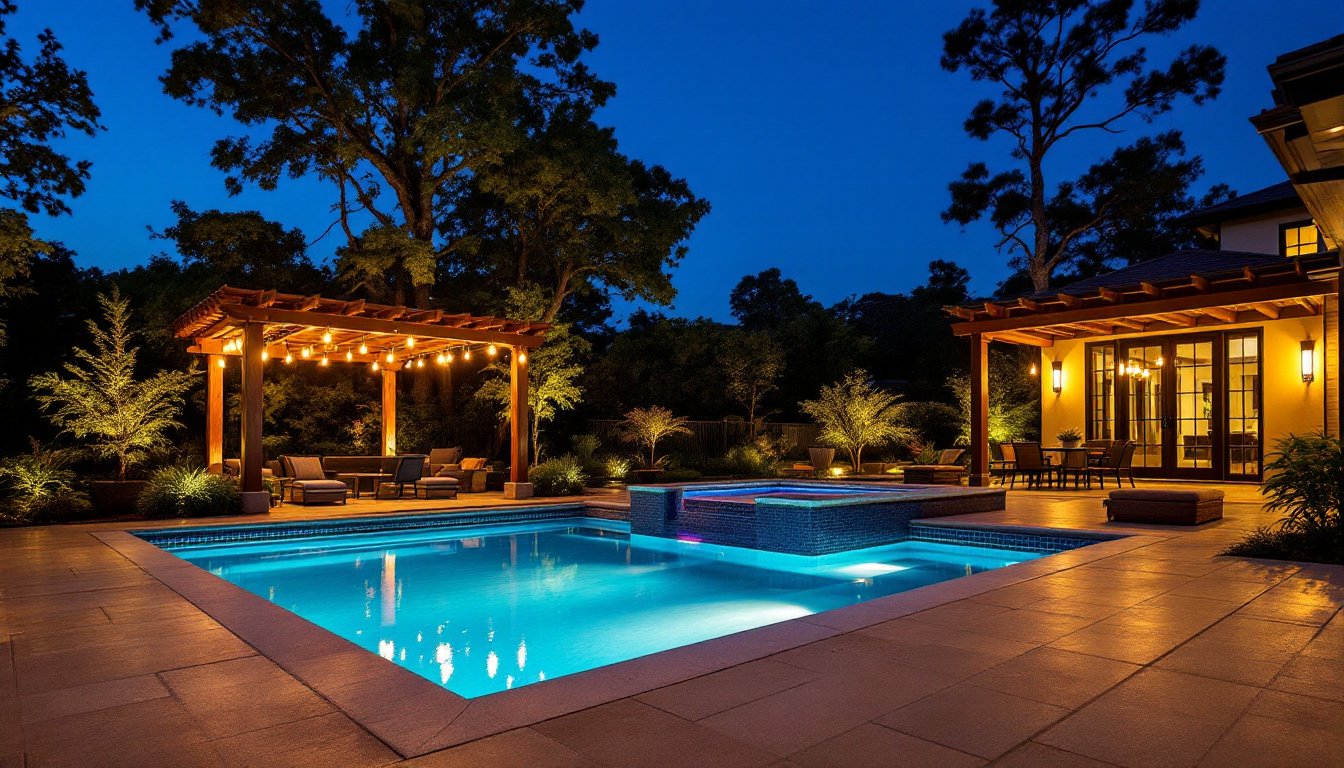
A well-lit pool transforms from a daytime activity zone into an evening focal point, the kind of space where neighbors genuinely envy what you’ve built. Backyard lighting ideas with pool work best when they layer different light sources: underwater glow, deck illumination, and accent lighting that guides the eye around the entire landscape. The result isn’t just safer swimming and cleaner sight lines: it’s an outdoor living area that feels intentional and inviting after sunset. This guide walks through seven proven strategies to light your pool and surrounding space like a pro, with practical recommendations on equipment, placement, and budget-conscious alternatives.
Table of Contents
ToggleKey Takeaways
- Layer multiple light sources—underwater, deck, and accent lighting—to transform your pool into a visually stunning and safe evening focal point.
- LED underwater pool lights use 75% less energy than halogen and last 10,000+ hours, while color-changing RGB options let you adjust mood on demand via remote or app.
- Low-voltage deck lighting (12-volt) is DIY-friendly and safer to install than high-voltage alternatives, requiring roughly 8–12 fixtures for a 12 x 16 foot deck.
- String lights and solar lanterns create ambient atmosphere poolside without task lighting, costing $40–120 per set and requiring only basic outdoor power setup.
- Smart pool lighting systems pay for themselves in 2–3 years through energy savings alone, while motion sensors and automation eliminate manual switching and enhance convenience.
- Pathway and landscape uplighting safely guide foot traffic and highlight architectural features, with solar pathway lights being the easiest DIY installation option.
Underwater Pool Lighting for Maximum Visual Impact
LED Pool Lights and Color-Changing Options
Underwater lighting is the hero move in any backyard lighting setup. Modern LED pool lights have replaced halogen fixtures in most residential pools because they run cooler, last longer (10,000+ hours), and cost roughly 75% less to operate annually. A typical 12-watt LED pool light produces the same brightness as a 250-watt halogen unit, which matters both for your electric bill and heat load in smaller pools.
Color-changing options, often called RGB or RGBW lights (red, green, blue, white), let you shift mood on demand. Some pair with wireless remotes or smartphone apps, though the basic ones use a simple three-button controller you’ll never need to replace. Installation requires cutting into the pool shell, so if your pool is older, hire a licensed pool contractor for this job: it’s not a weekend DIY task. Retrofit kits exist for existing niches, and they’re considerably cheaper than new construction.
For budget-conscious setups, single-color white LED pool lights deliver crisp visibility at 40–60% the cost of color-changing units. Aim for 3,000–4,000K color temperature (warm white) unless you prefer cooler tones. Place lights every 8–12 feet around the pool perimeter, slightly below the waterline for even coverage. If your pool is 15 x 30 feet, two to three lights are usually enough: a small 12 x 24 foot pool works fine with just one. Brighter pools are safer pools, but you don’t need to turn night into noon.
Deck and Surround Lighting Strategies
Deck lighting is where most DIYers can roll up their sleeves themselves. The safest approach uses low-voltage (12-volt) deck lights, which run on a transformer stepping down standard 120-volt household power, no special permit required in most jurisdictions, and far safer to install. Recessed deck lights mount flush into deck boards or are installed post-mount into the deck railing itself.
A typical deck light setup uses 4–6 watts per fixture and covers a 3–4 foot diameter when mounted 12 inches above the deck surface. Space them roughly 6–8 feet apart along the perimeter and around stairs. If your deck is larger, like 12 x 16 feet, expect 8–12 fixtures: the exact count depends on how much ambient light you want and existing landscape lighting.
For concrete pool decks, surface-mounted stainless steel fixtures clamp or bolt to the decking, keeping installation simple. Install them during deck construction if possible: retrofitting requires a good surface and some fastening. Avoid clustering lights near the pool edge, they’ll create glare on the water and reduce the underwater lighting effect. Stagger them in a checkerboard pattern instead.
LED deck lights pull 4–6 watts and last 30,000+ hours, so replacement is rare. Halogen deck lights are cheaper upfront (30–50% less) but run hotter and need replacing every 2–3 years. For a 200-square-foot deck, LED deck lights cost roughly $300–500 installed: halogen setups run $150–300 but will cost more over five years. LED Strip Lighting Ideas: can also work for under-railing accents if you want a sleek, modern look.
Ambient Accent Lighting With String Lights and Lanterns
String lights and lanterns create the atmosphere that makes people actually want to sit poolside for hours. Bistro-style string lights, also called Edison bulbs or café lights, drape overhead in a zigzag or tent pattern between posts, trees, or freestanding poles. They’re warm, forgiving of shadows, and work especially well if your pool sits in a partially shaded yard.
These come in LED and incandescent versions. LED bistro strings last 25,000+ hours, run about 0.4 watts per bulb, and cost $40–80 per 20-foot string. Incandescent versions are cheaper ($15–30 per string) but draw more power and need replacing annually. Install them 8–10 feet above seating areas or walkways, spacing bulbs roughly 12–18 inches apart. Use a commercial-grade outdoor power cord rated for wet environments and always plug into a GFCI (ground-fault circuit interrupter) outlet, non-negotiable for poolside safety.
Lanterns, solar or battery-powered, scatter around seating clusters and along pathways. They don’t provide task lighting, but they anchor the design and feel intentional. A set of six solar lanterns runs $60–120 and needs no wiring: just stake them in mulch or group them on tables. They’ll run 8–12 hours per full charge in summer, less in winter or cloudy climates.
Hanging pendant lights from pergolas or gazebos over the pool area also work well: just ensure they’re rated for damp locations (wet-rated fixtures, not standard indoor lights). Keep them at least 6 feet above standing height to avoid head-bumping and accidental contact.
Landscape and Pathway Lighting Integration
Pathway lighting serves double duty: it safely guides foot traffic away from the pool edge in darkness and extends the visual design beyond the water. Solar pathway lights are the easiest install, stake them 4–6 feet apart along walkways leading to the pool. Most output 20–50 lumens, which is enough to see the ground and spot hazards without creating glare.
For a more polished look, run low-voltage in-ground uplights along planting beds and toward accent trees. These sit flush with the ground, aren’t a trip hazard, and highlight landscaping or architectural features (like stone walls) dramatically. An in-ground uplight pulls about 5 watts and throws light 8–12 feet upward depending on wattage and reflector design. Space them 8–10 feet apart and angle them to graze across foliage or stonework rather than shine directly at observers, grazing light is subtle and professional-looking.
Spoilights mounted on posts or building eaves wash large areas with light for broader, softer coverage. Use them to backlight trees, illuminate a pergola, or light wide-open lawn areas. A typical 50-watt halogen or 15-watt LED spotlight covers 15–25 feet and costs $40–80 to mount.
Small Living Room Lighting that apply outdoors too: use a mix of task, accent, and ambient light. Don’t rely on one overhead source. The pool itself becomes the task light for swimmers: string lights are your ambient layer: and pathway and uplighting are the accents that tie everything together.
When planning layout, note that code typically requires pathway lighting if the pool is separated from the house by distance or elevation changes. Most municipalities also require deck lighting if the pool is adjacent to the deck (check your local jurisdiction’s building code or ask your inspector). Installation of most low-voltage systems is DIY-friendly, but 120-volt circuits running to pool areas often need permits and licensed electrician involvement.
Smart Lighting Control and Energy-Efficient Solutions
Smart pool lighting systems let you schedule, dim, and change colors from your phone, which sounds fancy but also solves real comfort problems. If you set color-changing underwater lights to white for task lighting during swim time, then shift to blue or purple once everyone’s in the hot tub, you’ve just improved the experience without manual fiddling.
Bluetooth and WiFi controllers retrofit to most LED pool lights made in the last five years. They cost $100–250 and integrate with voice assistants (Alexa, Google Home), app-based automation, and scene creation. Schedule lights to come on at sunset and fade off at 11 p.m., a convenience that adds up if you’re using the pool often.
Energy efficiency is the real win. Replacing a halogen underwater light (250 watts) with LED (12 watts) saves about 1 kilowatt-hour per day at full brightness. Over a 200-day summer season, that’s 200 kWh, roughly $20–30 in lower utility costs depending on your rate. A typical LED pool light retrofit pays for itself in 2–3 years just on energy savings, before factoring in longer lifespan and reduced maintenance.
For outdoor spaces more broadly, Laundry Room Lighting Ideas, and the same logic applies to pools. Programmable outdoor systems cost upfront ($500–1,500 for a whole-yard setup) but eliminate the guesswork and nightly manual switching. Some systems include motion sensors for pathways, so lights activate only when needed.
When comparing smart systems, confirm they’re wet-rated or IP65-rated (water and dust resistant). Brands vary: reputable pool equipment suppliers typically offer controller options specific to your light model. Avoid pairing new smart lights with decades-old wiring, have an electrician verify your existing pool electrical is up to code before expanding it. Modern design sources like Better Homes & Gardens regularly cover outdoor smart systems with current product reviews.
Conclusion
Backyard lighting ideas with pool succeed when you layer purpose with ambiance: underwater lights for safety and visual pop, deck lights for task visibility, string lights for atmosphere, and landscape accents that tie the whole scene together. Start with one or two layers, say, underwater LED and deck lights, then add complexity as your budget allows. Most DIYers can handle low-voltage installations solo: higher-voltage or structural work like cutting new light niches warrants a professional. Your pool will look transformed, and guests will absolutely notice.