Getting the right lamp in the living room is one of those unassuming decisions that quietly transforms how a space feels. Unlike ceiling fixtures that dominate the overhead, a well-chosen lamp sits quietly in a corner or beside your favorite chair, yet it anchors the entire lighting scheme. Whether you’re reading, hosting guests, or just unwinding after a long day, the right lamp sets the mood and fills functional gaps that overhead lighting alone can’t touch. This guide walks you through selecting, sizing, and placing living room lamps so you end up with both style and substance.
Table of Contents
ToggleKey Takeaways
- The right lamp in the living room combines style and function by filling lighting gaps that overhead fixtures alone cannot address, making it essential for both task work and setting mood.
- Layer at least three light sources—ceiling fixtures, floor lamps, and table lamps—to create flexible living room lighting that adapts to different activities and guest scenarios.
- Table lamps should sit at eye level when seated (24–32 inches tall), while floor lamps typically range from 58–64 inches with shade sizes matching room scale to prevent glare and ensure even light distribution.
- Scatter lamps across your living room at roughly 6–8 feet intervals to balance light functionally and visually, placing them beside seating for reading and accent lamps on mantels or shelves for design drama.
- Choose bulbs based on lumens (400–800 per lamp) rather than wattage, opt for warm white (2700–3000K) LED bulbs for cozy comfort, and consider dimmable options to adjust mood throughout the evening.
Types of Living Room Lamps and When to Use Each One
Not all lamps do the same job, and mixing types is actually the backbone of good living room lighting. Understanding what each style brings to the table helps you build a layered, functional scheme.
Floor and Table Lamps for Ambient and Task Lighting
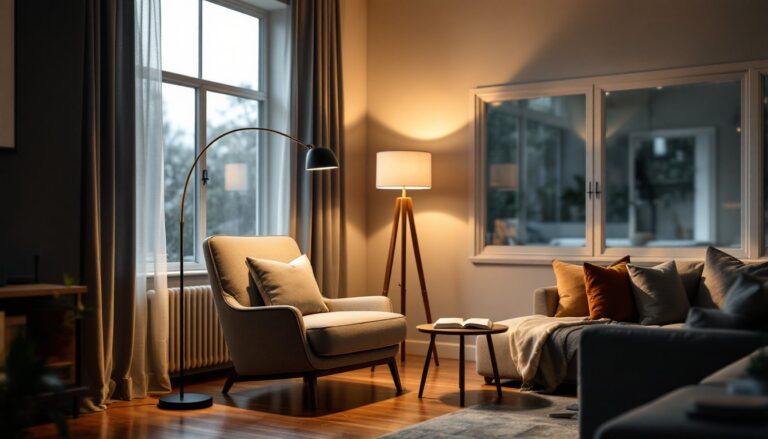
Floor lamps are workhorses. They take up a single floor space and deliver light across a wider area, ideal for reading corners, dark spots near windows, or beside seating where you don’t have a side table. Arc lamps, a floor lamp variant with an extended arm that curves over furniture, are especially useful when side tables are tight or nonexistent. Table lamps sit on surfaces (side tables, consoles, credenzas) and provide focused light in a smaller footprint. Both types come in shaded or open designs: fabric shades diffuse light softly for ambient use, while focused, narrower shades direct light for reading and detailed work.
Ambient lamps use frosted or frosted-style bulbs and wider fabric shades to cast gentle, diffused light. Task lamps feature adjustable arms, narrower shades, or higher lumen output to concentrate light on a specific area, crucial for reading or writing. Many modern floor and table lamps blend both: a shade that provides ambient fill plus brightness suitable for task work.
Accent and Decorative Lamps for Design Impact
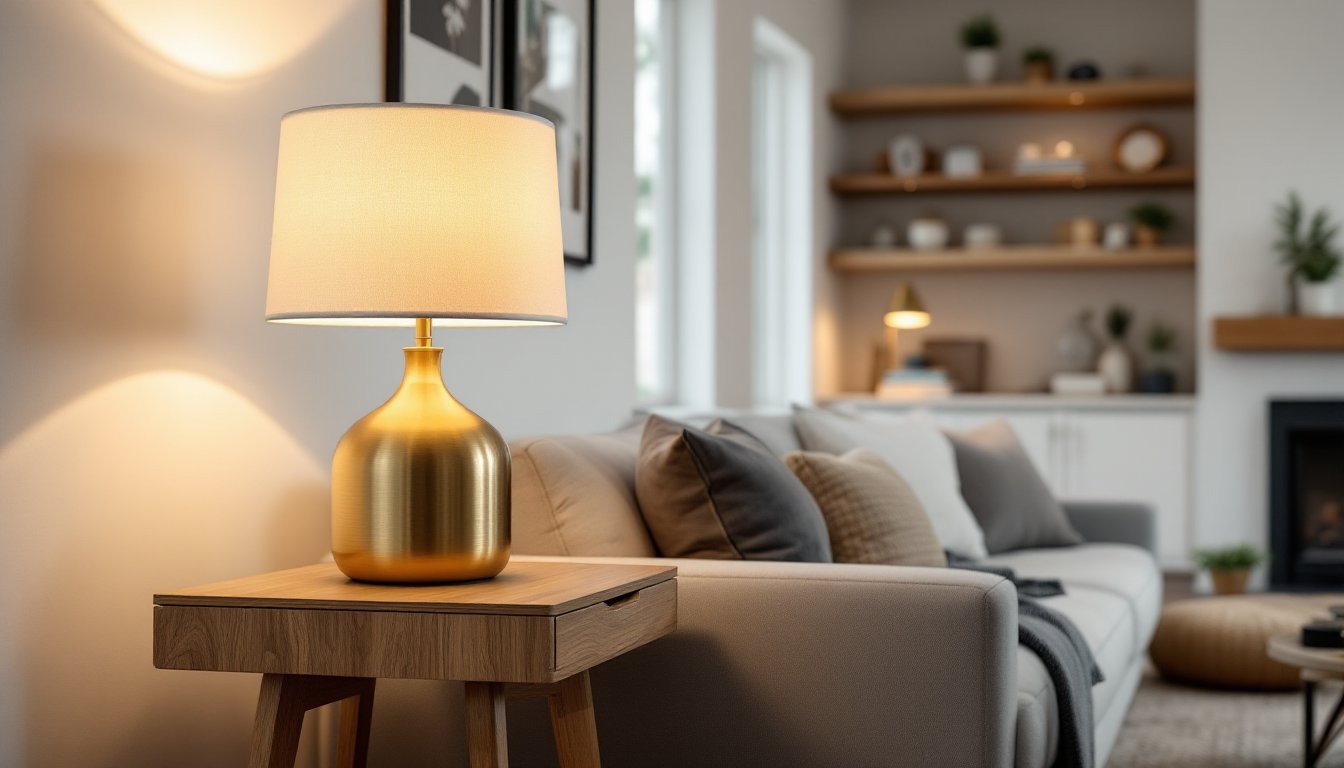
Accent lamps aren’t really about lighting an entire room, they’re about visual drama. Think sculptural bases, colored glass, brass or ceramic finishes, or Tiffany-style shades. These sit on sideboards, mantels, floating shelves, or side tables where they draw the eye and reinforce your overall decor language. A small accent lamp with a jewel-toned shade near a gallery wall, for instance, highlights art and adds warmth without overpowering the space. Decorative lamps work best in multiples or clusters and pair well with ceiling lights for living room to create visual rhythm.
How to Select the Right Lamp Size and Scale for Your Space
Scale matters more than most homeowners realize. A lamp that looks perfect in a showroom can drown a small living room or look spindle-y in a large space.
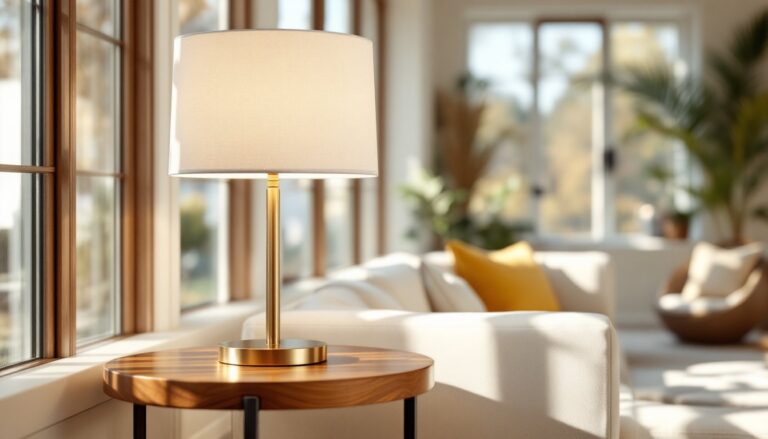
Table lamps typically range from 24 to 32 inches tall, though this varies by style. The key rule: when seated, the bottom of the shade should sit roughly at eye level. This prevents glare and spreads light evenly across your face and lap, critical for reading. A lamp that’s too short leaves your work surface in shadow: too tall casts harsh light straight down.
Floor lamps usually stand 58 to 64 inches tall. Scale them to the room: in a smaller living room (12 × 14 feet), a slim floor lamp with a 12-inch shade works: in a larger space, you can handle a more substantial lamp with a 16 to 18-inch shade. The shade diameter should roughly match the lamp’s height, or at minimum the width of the surface it sits on. If a table lamp sits on a 30-inch wide console, a shade smaller than 20 inches will look orphaned: one closer to 24 inches anchors the space.
Don’t guess, measure your seating heights and surfaces before shopping. A lamp chosen at scale looks intentional rather than accidental, and it functions better too. Check heights and dimensions on retailer websites: where to place recessed lighting in living room applies similar spatial logic to your overall lighting design.
Design Styles and Materials That Complement Your Decor
Your lamp should feel at home in your living room, not like a stray piece from a different house. Matching style and material to your existing decor creates cohesion, or, if you’re feeling confident, you can intentionally contrast for drama.
Contemporary living rooms pair well with clean-lined lamps in brushed brass, matte black, or polished chrome. Shades are often linen, white, or neutral. Transitional rooms (halfway between traditional and modern) work with lamps featuring classic shapes but modern finishes, think a traditional urn base in contemporary ceramic or glass. Traditional spaces welcome brass or bronze bases, fabric shades in cream or subtle patterns, and perhaps a bit of ornamental detail. Industrial and mid-century styles thrive with exposed-bulb Edison-style lamps, wood and metal combinations, or sculptural concrete bases.
Materials anchor the mood: glass bases feel airy and contemporary: ceramic brings warmth: wood (walnut, oak, live-edge) reads rustic or mid-century: metal (brass, copper, iron) is versatile across styles. A mismatch can work if intentional, for instance, a sleek brass floor lamp in a farmhouse room adds edge. Most rooms benefit from mixing at least two materials across your lamp suite: maybe a ceramic table lamp paired with a brass-base floor lamp. This prevents a flat, all-matching look while maintaining visual flow.
Shadow details matter too. Linen or cotton shades feel soft and timeless: pleated shades add formality: drum shades read contemporary. Designer resources like Design Milk showcase how contemporary interiors layer lamps across materials and finishes for visual interest.
Placement Strategies to Maximize Light and Visual Balance
A single lamp, no matter how nice, won’t light a living room well. Aim for at least three light sources: ideally a mix of ceiling fixtures, floor lamps, and table lamps. This layering creates flexibility, brighten everything at once for entertaining, or use just the floor lamp beside your reading chair for a cozy evening.
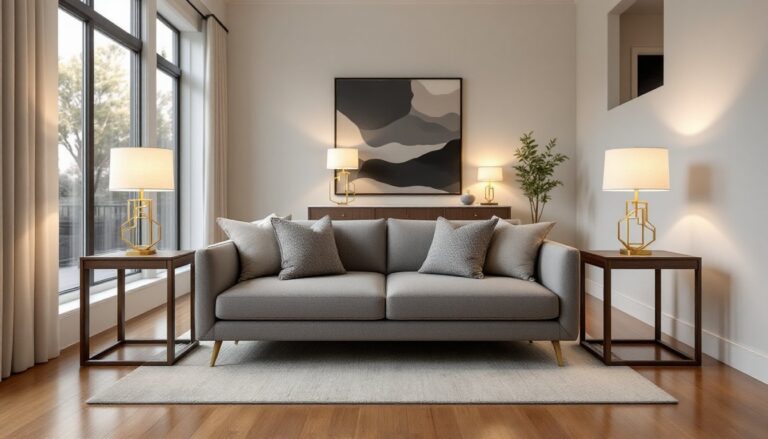
Balance matters visually and functionally. If all your lamps sit on one side of the room, light pools there and shadows pool on the opposite side. Instead, scatter lamps: one floor lamp near a window, a table lamp on a console beside a chair, another table lamp flanking a sofa. If the room is long, place lamps at both ends.
Positional strategy: put floor or table lamps beside seating for reading and conversation. Use accent lamps to highlight architectural features, a small sculptural lamp on a mantel, or a pair of small lamps flanking a gallery wall. Fill dark corners with lamps to reduce shadows and make the room feel larger. Lamps sitting on floating shelves or high pieces should have shades that let light down and out, not absorbed upward.
Don’t forget the relationship between lamp placement and ceiling lights for living room. Overhead fixtures handle broad fill: lamps handle accents and task work. Spacing them roughly 6 to 8 feet apart prevents dark gaps. Modern spaces often use wall sconces for living room alongside lamps for a streamlined look, especially in smaller rooms where floor space is precious.
Lighting Brightness and Bulb Choices for Comfort and Efficiency
Brightness isn’t about wattage anymore, it’s about lumens. Wattage is how much energy a bulb uses: lumens measure actual light output. A modern LED bulb might use 10 watts to deliver 800 lumens, while an old incandescent needed 60 watts for the same brightness.
For living room lamps, aim for 400 to 800 lumens per lamp, depending on shade design and room size. A translucent linen shade will feel brighter than a dark or thick shade at the same lumens because more light passes through. Combine all your lamps: a small living room (200–300 square feet) should total around 1,500 to 3,000 lumens from all sources: a large space (400+ square feet) needs 3,000 to 5,000+. This includes overhead lights, so your lamps might contribute 400 to 1,500 lumens of that total.
Color temperature matters for mood. Warm white (2700–3000K) feels cozy and is standard for living rooms: it mimics incandescent light and is easiest on evening eyes. Slightly cooler (3000–3500K) feels crisp but still comfortable for a living space. Avoid anything above 4000K in living rooms, that’s office lighting.
Choose LED bulbs, they’re efficient, last 15,000+ hours, and run cool. Select dimmable LEDs if your lamp socket and any wall dimmer support it. Dimmable bulbs cost a bit more but let you adjust mood from bright (8 PM dinner prep) to low (10 PM wind-down). Check bulb base size before buying: E26 (standard) is most common in the US. LED living room lighting covers specific LED strategies and smart-bulb options for deeper control.