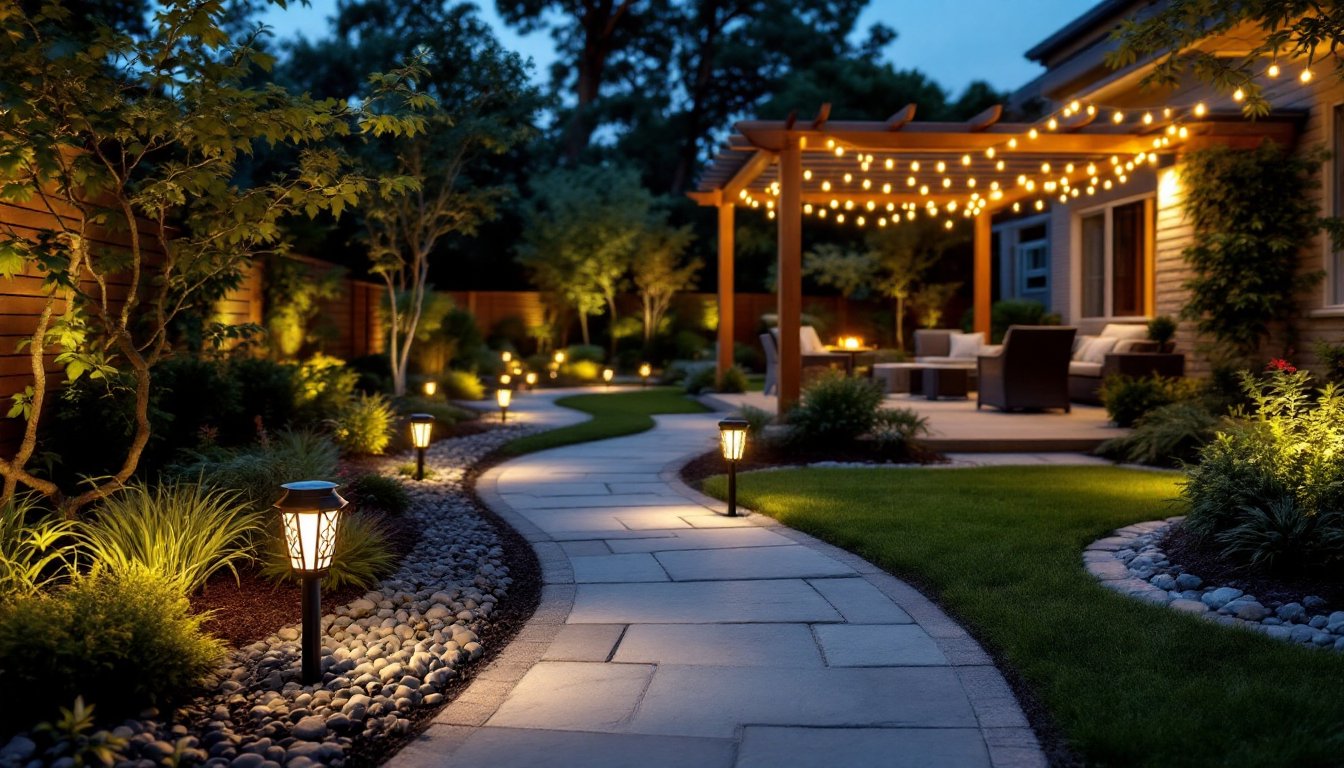
Solar outdoor lighting has become a game-changer for homeowners who want ambiance, safety, and energy savings without running power lines across the yard. Whether you’re lighting a patio for evening gatherings or marking a pathway with soft accent lighting, solar lights outdoor lighting solutions eliminate the need for buried electrical work and reduce your energy footprint. This guide walks you through the most practical solar lighting options, from solar path lights to solar patio lighting setups, and shows you how to install and maintain them so they work reliably year after year.
Table of Contents
ToggleKey Takeaways
- Outdoor solar lighting eliminates the need for expensive trenching, permits, and electrician fees while delivering long-term energy savings, with typical path lights costing just $10–$30 upfront and zero operating costs.
- Solar outdoor lighting requires at least 6 hours of unobstructed direct sunlight daily to perform reliably; assess your yard’s sun exposure before installation, as shaded areas will significantly reduce efficiency.
- Choose mid-range fixtures ($20–$35 per path light) with monocrystalline solar cells, sealed battery compartments, and manufacturer warranties rather than budget options that fail within one season.
- Proper installation and spacing—approximately one light every 4–6 feet on pathways—balances safety and ambiance while avoiding wasted investment on overcrowded layouts.
- Seasonal maintenance, including monthly panel cleaning and 3–5 year battery replacements ($10–$20), keeps your solar patio lighting and path lights performing optimally for a decade or more.
Why Solar Lighting Is Perfect for Modern Outdoor Spaces
No trenching, no permits, no electrician bills, solar outdoor lighting removes major barriers to yard lighting projects. A typical outdoor solar lights outdoor lighting system charges during the day via built-in photovoltaic cells and powers LED fixtures through the night on stored battery power. You install a light, set it in place, and that’s it.
Beyond convenience, solar lights make financial sense. A decent solar path light costs $10–$30 upfront and has zero operating cost. Over 5 years, that’s thousands in electricity savings versus traditional landscape lighting. Battery and LED replacement may run $20–$50 per fixture after 5–7 years, but you’re still ahead.
Safety and aesthetics both improve. Illuminated walkways cut trip hazards: accent lighting on a deck or patio creates defined zones and makes outdoor time safer after dark. Modern LED solar lighting outdoor systems come in styles ranging from minimalist posts to decorative lanterns, so you don’t sacrifice design for function.
Types of Outdoor Solar Lights for Every Area
Solar outdoor lighting comes in several categories, each suited to different spaces and uses.
Solar Path Lights and Spotlights
Solar path lights are the workhorses of outdoor lighting. These short posts (typically 12–24 inches tall) stake directly into soil and line walkways, driveways, or garden beds. Each fixture holds a rechargeable battery and LED bulb: no wiring needed. Expect 6–10 hours of runtime on a full charge, with brightness ranging from 20 to 100 lumens, bright enough to see the ground without glare.
Spotlights are taller, heavier cousins (24–36 inches) designed to accent focal points: a shrub, water feature, or architectural detail. They often include adjustable lamp heads so you can angle the beam. Both types work in nearly any soil: stake them in spring and forget about them until fall cleanup.
Choose fixtures with ABS plastic or aluminum bodies for durability in sun and moisture. Avoid cheap units with thin plastic, they warp and fail in one season. Check the lumen output and color temperature (warm white, around 2700K, looks inviting: cool white is more clinical).
Solar String Lights and Lanterns
Solar string lights drape across a pergola, fence, or patio edge to create atmosphere. They’re powered by a single solar panel (usually 4–6 watts) connected to a rechargeable battery, with 20–40 small LED bulbs strung on a cord. Installation is faster than traditional festoon wiring, just hang the cord and anchor the solar panel in direct sun.
String lights typically run 8–12 hours per night if the panel had full sun charging. Brightness is lower than path lights (5–15 lumens per bulb), so they’re for ambiance, not task lighting. Better Homes & Gardens and design-focused sites often showcase string light setups on decks and patios for their warm, inviting aesthetic.
Lanterns work similarly but offer more sculptural appeal. A solar patio lighting lantern sits on a table or post and stores the battery and solar cell inside. Many are designed to mimic traditional hanging lanterns or Moroccan-style fixtures. These suit formal outdoor entertaining spaces better than casual pathways.
Both string lights and lanterns require a protected location for the solar panel, a spot that gets 6+ hours of direct sun daily, free from shade. A panel mounted on a post or pergola rafter works well: don’t tuck it under eaves.
How to Choose and Install Solar Lighting for Your Yard
Choosing the right solar outdoor lighting starts with a site assessment and an honest count of fixtures needed.
Step 1: Map Your Lighting Needs
Walk your yard at dusk and note where you want light: entry paths, deck edges, dark corners, or accent zones. For safety, light any steps, uneven ground, or hazards. For ambiance, mark focal points and entertaining areas. Aim for 1 light every 4–6 feet on pathways: wider spacing feels gappy, and closer spacing wastes money.
Step 2: Check Sun Exposure
This is critical. Solar lights need at least 6 hours of unobstructed direct sunlight daily, not just daylight, but rays that clear trees, buildings, and shade. Morning south-facing or afternoon west-facing locations are ideal. If your yard is shaded much of the day (under large deciduous trees or next to a tall fence), solar outdoor lighting will struggle. Partial shade can work in summer when the sun is high, but performance drops in fall and winter.
Step 3: Select Fixture Types and Quality
Don’t buy the cheapest option. Mid-range solar path lights (around $20–$35 per fixture) from established outdoor brands often outlast budget models by 2–3 years. Look for:
- Sealed battery compartments to keep moisture out
- Monocrystalline solar cells (more efficient than polycrystalline)
- Adjustable brightness settings or dusk-to-dawn sensors
- Warranty coverage of at least 1–2 years
For solar patio lighting where you entertain, investing in a larger solar string light kit ($80–$150) is justified: it’ll handle a bigger area and last longer than three cheap units.
Step 4: Installation
Most path lights and spotlights stake into soil. If the ground is hard, soak it first or use a stake driver (a length of pipe over the light pole, driven with a mallet). Don’t force stakes into compacted or frozen earth, you’ll crack the housing. For decks or patios with no soil, use a weighted base or mount bracket instead.
Solar patio lighting fixtures like string lights require secure anchoring. Use stainless steel hardware (eye bolts, brackets) on wood structures: galvanized or powder-coated steel on metal. Position the solar panel where it won’t be shaded by the fixture itself or nearby objects as the sun moves.
For outdoor solar lights outdoor lighting on softer surfaces (mulch beds), step the fixture down slowly to ensure stable contact. A light that tips or shifts won’t charge properly.
Step 5: Activate and Test
Most units have a hidden on/off switch (often a plastic tab under the solar panel). Remove it before install, then test the light after sunset. If it doesn’t glow, the battery may be discharged: let it charge for 24 hours in full sun before concluding it’s defective. Gardenista and similar outdoor design resources often publish detailed installation and troubleshooting guides for various fixture types.
LED solar lighting outdoor setups are usually reliable from day one, but dust on the solar panel or a battery that’s been stored uncharged reduces performance. Clean panels monthly with a soft cloth.
Maintenance Tips to Keep Your Solar Lights Working Year-Round
Solar outdoor lighting is low-maintenance compared to traditional fixtures, but a few seasonal checks keep everything running.
Spring and Fall Cleaning
Wipe solar panels with a damp cloth to remove pollen, dust, and bird droppings. Dirty panels lose 20–30% efficiency. Check that light heads are free of spiderwebs and debris. If a light looks dim even after cleaning, the battery may be failing: replacement batteries cost $10–$20 and are usually a simple swap.
Fall Shutdown (Optional)
In harsh winters, consider removing solar path lights and storing them indoors. Freezing cycles can crack plastic housings, and icicles block panels. If you leave them outside, clear snow and ice regularly. Solar patio lighting fixtures like strings and lanterns are more durable if they’re quality units, but harsh winter salt spray and freeze-thaw cycles shorten lifespan. Cover units when not in use if possible.
Battery Replacement
After 3–5 years, rechargeable NiMH or lithium batteries lose capacity and won’t hold a full charge. A light that once ran 10 hours might manage 5. Replacement is cheaper than buying new fixtures: pop off the solar cap, swap the old battery for a new one (usually standard AA or AAA), and you’re done. Source replacements from the original manufacturer or a reputable battery supplier to ensure compatibility.
LED Bulb Care
LED bulbs in solar outdoor lighting can last 10+ years, so bulb failure is rare. If one fails, replacement bulbs are available and typically cost $5–$15. Check that you order the correct wattage and color temperature for your fixture.
Final tip: Document your fixtures (brand, model, purchase date, battery type) so you know what to replace when the time comes. Stylish garden solar fence lights showcased in design publications often feature durable brands that invest in quality batteries and housings, a good benchmark when choosing models for your own yard.
Conclusion
Outdoor solar lighting transforms a dark yard into a safe, inviting space without the cost and hassle of buried electrical work. Path lights, spotlights, string lights, and lanterns each fill a different role, and modern LED solar lighting outdoor options offer reliable performance and design flexibility. Choose quality fixtures, ensure adequate sun exposure, and perform basic seasonal maintenance, and you’ll enjoy solar outdoor lighting benefits for years. Your evening gatherings just got brighter, and your wallet will thank you.