Sarasota’s warm, sunny climate is ideal for year-round outdoor living, but when the sun sets, your landscape can disappear into darkness. Strategic landscape lighting transforms your outdoor space into a functional and beautiful extension of your home while boosting curb appeal and security. Whether you’re looking to highlight architectural features, create ambient gathering spaces, or simply make your property safer after dark, landscape lighting in Sarasota requires thoughtful planning that accounts for the region’s humidity, salt air, and intense seasonal changes. This guide walks you through the essentials, from design principles to installation options, so you can make informed decisions about lighting your Sarasota landscape.
Table of Contents
ToggleKey Takeaways
- Strategic landscape lighting in Sarasota extends outdoor living hours while boosting curb appeal and security in your subtropical climate.
- Choose marine-grade or coastal-rated fixtures made of stainless steel or quality powder-coated finishes to resist salt air corrosion and humidity.
- Effective landscape lighting design uses layering (ambient, task, and accent lighting) with proper spacing—pathway lights 6–8 feet apart and accent lights 3–6 feet from focal points.
- LED fixtures cost 20–30% more upfront but consume 75% less energy and last 25,000–50,000 hours, delivering significant long-term savings for Sarasota homeowners.
- Low-voltage DIY systems are budget-friendly starting around $150–$300, while professional installation is recommended for high-voltage systems, smart-home integration, or large layouts.
- Quarterly maintenance including fresh-water rinsing, seasonal cable inspections, and vegetation trimming keeps your landscape lighting system performing reliably in Sarasota’s demanding coastal environment.
Why Landscape Lighting Matters in Sarasota’s Climate
Sarasota’s subtropical environment presents unique challenges for outdoor lighting. High humidity, salt spray from nearby coastal areas, and intense summer sun all accelerate corrosion and fading of standard fixtures. Installing quality landscape lighting rated for marine or coastal environments isn’t just aesthetic, it’s a practical investment in durability.
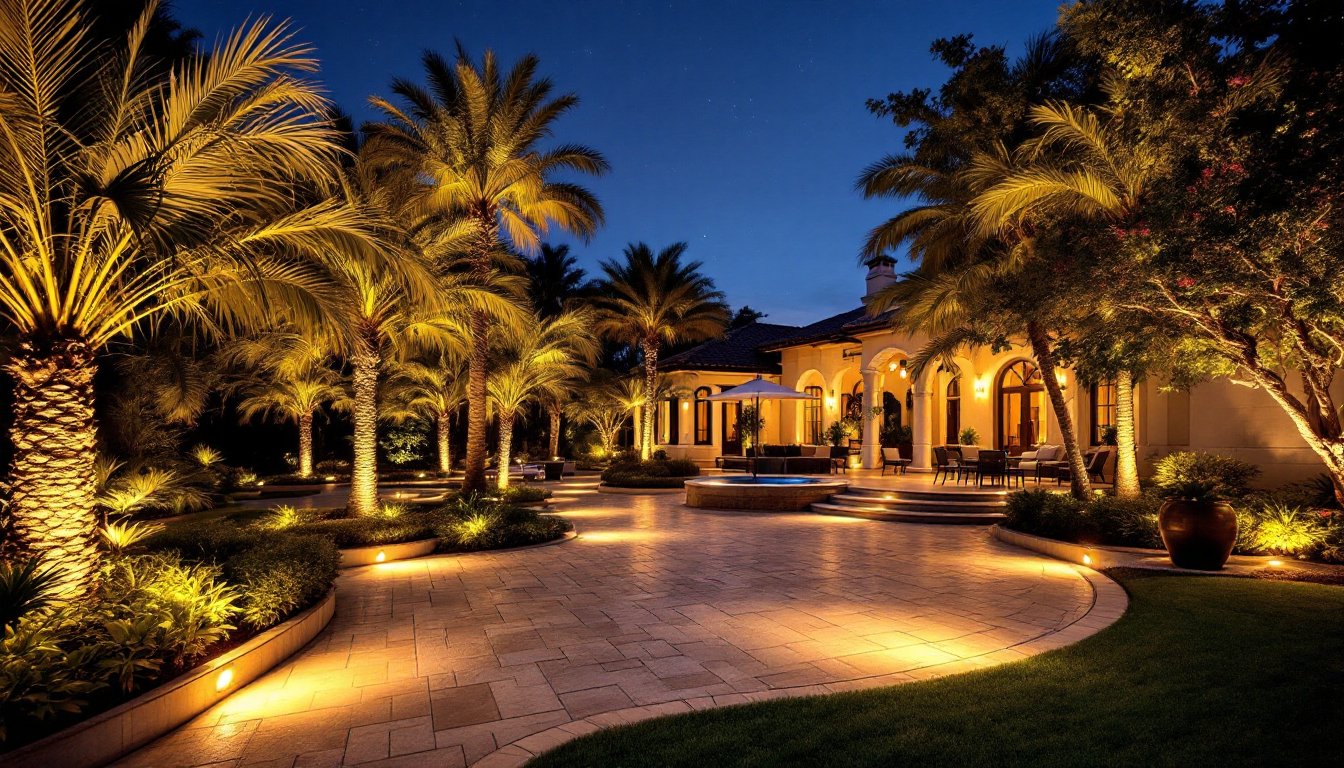
Beyond weather resistance, landscape lighting serves multiple functions in Sarasota homes. It extends your usable outdoor hours during evening gatherings, improves navigation around patios and driveways, and deters intruders by eliminating dark corners and shadows. Properly lit landscapes also showcase mature palms, flowering trees, and hardscaping that residents spend time and money developing. Uplighting a 40-foot sabal palm or grazing light across a stone wall creates visual interest and defines your property’s character at night, something that generic porch lights simply cannot achieve.
Florida building codes and local ordinances also require outdoor lighting for safety and security in certain areas. Check with your local municipality or homeowners association to understand any requirements or restrictions before planning your design.
Best Practices for Sarasota Landscape Lighting Design
Effective landscape lighting design starts with understanding layering: ambient (general illumination), task (functional lighting for walkways or seating), and accent (highlighting focal points). In Sarasota, layering helps you maximize energy efficiency while creating visual depth after dark.
Start with a site assessment. Walk your property at dusk and note where you move, gather, and want to draw attention. Identify focal points, a mature tree, architectural detail, water feature, or garden bed, that benefit from accent lighting. Measure distances from potential light sources to focal points: most landscape lights have an effective range of 10 to 20 feet, though spotlights and uplights can reach farther.
Plan for placement and spacing. Pathway lights typically space 6 to 8 feet apart and should be low (12 to 18 inches tall) to avoid glare and create a gentle guide. Accent lights work best positioned 3 to 6 feet away from the object you’re highlighting. Avoid over-lighting: Sarasota’s warm nights invite outdoor relaxation, and excessive brightness disrupts that ambiance and wastes energy.
Account for plant growth. Trees and shrubs grow over time, which affects lighting angles and shadows. Position lights with mature plant size in mind, not current dimensions. You’ll avoid frequent repositioning and poor light angles as vegetation matures.
Popular Lighting Styles and Fixtures for Sarasota Homes
Sarasota’s diverse architectural styles, from Mediterranean revival and Craftsman bungalows to contemporary homes, call for lighting that complements the existing design language.
Uplighting and spotlights remain workhorses in Sarasota landscapes. These fixtures mount at ground level and direct light upward or outward to emphasize height, texture, or silhouette. Spotlights work exceptionally well on tall palms and canopy trees: uplighting beneath architectural elements like columns or eaves creates dramatic shadow play. LED spotlights draw far less power than older halogen or incandescent versions, a crucial advantage in Sarasota’s long, energy-intensive summers.
Path and step lights combine function with subtlety. Low-voltage LED path lights guide walkways without creating harsh shadows or glare. In Sarasota’s evening social scene, subtle path lighting encourages safe movement while maintaining the relaxed outdoor atmosphere.
String lights and pendant fixtures have grown in popularity for patios and deck areas. Market-style Edison bulb strings or globe pendant lights hung overhead create warmth and intimacy. Choose fixtures with wet-rated sockets and stainless steel or powder-coated hardware rated for coastal environments: brass and untreated steel corrode quickly in salt air.
Recessed deck and patio lights embed directly into hardscaping, creating clean, modern aesthetics. These low-profile fixtures eliminate tripping hazards and work well on Sarasota’s countless composite decks and stamped-concrete patios.
Whatever style you choose, prioritize fixtures with stainless steel, marine-grade aluminum, or quality powder-coated finishes. Avoid bare copper or untreated brass, coastal salt air will oxidize them within months.
DIY vs. Professional Installation for Your Sarasota Landscape
Low-voltage landscape lighting systems are among the most DIY-friendly outdoor projects. A basic setup involves a transformer (typically 12V or 24V), low-voltage cable, and fixtures. You can install path lights, uplights, and spotlights in an afternoon with only a spade, wire stripper, and basic tools, no electrician required.
DIY works well if you’re confident with a shovel and comfortable burying cable safely. Dig shallow trenches (8 to 12 inches deep) along planting beds and under turf, laying cable away from roots and irrigation lines. Stake out your light locations beforehand and run cable to each spot. Splice connections carefully, loose connections cause flickering and premature fixture failure in Sarasota’s humid environment. Seal all splices with waterproof caps or heat-shrink tubing.
Professional installation makes sense for larger layouts, hardwired high-voltage systems, or smart-home integration. Licensed electricians handle permits, code compliance, and proper grounding, essential for systems drawing significant power or integrated with home automation. In Sarasota, many professionals also specialize in salt-air-resistant materials and design approaches tailored to the climate.
Consider professional help if you’re adding landscape lighting alongside deck construction, major landscaping, or electrical work. Coordinating these projects ensures lighting is planned before hardscaping and utilities are finalized. If you’re confident in your skills, but, DIY low-voltage systems offer excellent value and learning opportunity.
Budget-Friendly Tips for Landscape Lighting Projects
Landscape lighting costs vary dramatically based on system size, fixture quality, and installation method. Low-voltage DIY kits start around $150 to $300 and can light modest yards: comprehensive professional installations for large properties easily exceed $2,000 to $5,000. Sarasota’s material costs trend slightly above national averages due to coastal demand and shipping to coastal regions.
Phase your project. Install core pathways and focal-point accent lighting first. Add uplighting or expansion later as budget allows. This approach lets you enjoy immediate benefits while spreading costs over time and adjusting designs based on real-world performance.
Choose LED fixtures exclusively. They cost more upfront than incandescent or halogen counterparts, but consume 75% less energy and last 25,000 to 50,000 hours compared to 1,000 hours for incandescent bulbs. Over a five-year period, LED savings in replacement and electricity justify the premium.
Buy fixtures rated for your climate. Marine-grade or coastal-rated fixtures cost 20% to 30% more but won’t corrode within a year. Cheap fixtures seem economical until they fail and require replacement, worse, failed fixtures scattered across your property create an unkempt appearance. Quality fixtures from established brands offer better warranties and durability in Sarasota’s challenging environment.
Source fixtures thoughtfully. Local nurseries and landscape suppliers often stock fixtures suited to the region and can advise on salt-air resistance. Online retailers offer competitive pricing but require careful vetting for coastal-rated specifications. Explore Lighting Archives on Morton HILL for design inspiration and product insights tailored to homeowner projects.
Consider energy costs in your budget math. A 60-fixture low-voltage system runs roughly $8 to $15 monthly on a timer-controlled schedule: older halogen systems double that figure.
Maintenance and Seasonal Considerations in Sarasota
Sarasota’s subtropical climate, hot, humid, and salt-laden, demands proactive maintenance of landscape lighting systems. Inspect fixtures quarterly and clean them with a soft brush and mild soap. Salt spray deposits corrode fixtures faster than you might expect: routine rinsing with fresh water removes accumulated salt and extends fixture life significantly.
Check cable connections seasonally, especially where underground wire enters fixtures or transformers. Moisture intrusion and corrosion cause connection failures: sealed waterproof splices and properly rated connectors prevent most problems. If you notice flickering or dimming lights, a loose connection is the most common culprit, tighten all contacts and retest.
Trim vegetation thoughtfully. As trees and shrubs grow, they’ll shade lights or obscure focal points. Prune branches that block lighting angles, but don’t remove foliage excessively, canopy trees provide essential afternoon shade in Sarasota summers. Adjust uplighting angles annually to account for new growth.
Plan for hurricane season. High winds and salt spray accelerate corrosion in late summer and fall. Some homeowners remove string lights or vulnerable fixtures temporarily during peak season. Stainless steel and marine-grade finishes resist damage better, but nothing is entirely hurricane-proof. Check fixtures and hardware immediately after severe weather.
Adjust lighting hours seasonally. Winter brings earlier sunsets: summer daylight extends well past dinner. A programmable timer or smart controller (increasingly common on modern systems) lets you adjust light schedules to match seasonal day length and reduce unnecessary running time.
Resources like The Spruce’s guide to outdoor lighting and Better Homes & Gardens’ seasonal projects offer broader home maintenance perspective and complementary inspiration for your landscape work. Regular care, simple as it is, keeps your landscape lighting performing reliably and looking sharp year after year in Sarasota’s demanding environment.
Conclusion
Landscape lighting transforms Sarasota outdoor spaces from dark, unused voids into inviting extensions of your home. Whether you tackle low-voltage installation yourself or hire professionals, thoughtful design, quality fixtures rated for coastal climates, and regular maintenance ensure your investment performs for years. Start with a clear vision of what you want to highlight and illuminate, phase your project within your budget, and prioritize durability over bargain-basement pricing. Your Sarasota landscape will glow beautifully and safely, and you’ll spend more evenings enjoying your outdoor space after sunset.