Small bathrooms present a unique challenge: you need enough light to see what you’re doing, but too much brightness in a cramped space can feel harsh and unflattering. The right lighting setup doesn’t just improve visibility, it can make your bathroom feel larger, more inviting, and genuinely functional. Whether you’re tackling a tiny powder room or a compact ensuite, smart lighting choices turn awkward shadows into polished ambiance. This guide walks you through seven practical solutions to brighten your small bathroom without overcrowding it, all while keeping installation realistic for a DIY approach or professional hire.
Table of Contents
ToggleKey Takeaways
- Small bathroom lighting ideas should include layered lighting with overhead, vanity, and accent fixtures to avoid shadows and make the space feel larger and more inviting.
- Vanity mirror lighting requires at least 60-80 foot-candles (650-860 lumens) with cool white 4000-5000K bulbs to ensure safe grooming and accurate skin tone visibility.
- LED technology is the most energy-efficient option for small bathrooms, using 75-80% less energy than incandescent bulbs while lasting 3-5 times longer.
- Recessed lighting and LED strip lights are space-saving accent solutions that add depth and ambient glow without crowding a small bathroom visually.
- Flush-mount overhead fixtures with 4-6 inch diameters and 800-1200 lumens are ideal for bathrooms under 50 square feet to distribute light evenly without glare.
- Wall sconces mounted 60-66 inches from the floor work best for small bathrooms with limited ceiling space and provide both vanity and ambient lighting in one solution.
Why Bathroom Lighting Matters More Than You Think
Bathroom lighting does triple duty: it handles grooming tasks, sets mood, and influences how spacious (or cramped) the room feels. Poor lighting leads to squinting during shaving, uneven makeup application, and a space that feels dingy even when clean. Good lighting does the opposite, it expands perception of space and makes morning routines less frustrating.
Small bathrooms demand layered lighting because no single fixture can do everything well. A single overhead light creates harsh shadows under the eyes and chin during vanity tasks. Ambient light (the general glow) needs to be soft enough for evening use but bright enough for morning prep. Task lighting at the mirror is non-negotiable, you need at least 60-80 foot-candles (roughly 650-860 lumens) on the vanity for safe grooming. Accent lighting is the bonus layer: recessed fixtures, wall sconces, or LED strips that add depth and prevent the “utilitarian bathroom” look.
Overhead Lighting: Choosing the Right Fixture for Your Layout
Overhead fixtures are your foundation, but in a small bathroom, size and placement matter enormously. Oversized chandeliers or statement fixtures visually shrink the room and create uncomfortable glare. Instead, opt for flush-mount or semi-flush fixtures that hug the ceiling, they take up zero visual real estate and distribute light evenly.
A 4-6 inch diameter flush-mount fixture works well for bathrooms under 50 square feet. If your bathroom is particularly narrow, a single overhead light down the centerline is standard. For wider bathrooms, consider two smaller fixtures flanking the centerline or a linear semi-flush spanning the width, this mirrors professional design and eliminates dark corners.
For overhead lighting, choose 3000K (warm white) color temperature if your bathroom has warm finishes, or 4000K (neutral white) for contemporary or minimalist spaces. This affects how the rest of your lighting layers work together. Aim for fixtures rated 800-1200 lumens for a small bathroom: anything dimmer leaves corners shadowy, anything brighter risks eye strain. LED options have become the default and rightfully so, they cost less to run, last 25,000+ hours, and are available in every color temperature.
Vanity and Mirror Lighting: The Key to Perfect Task Lighting
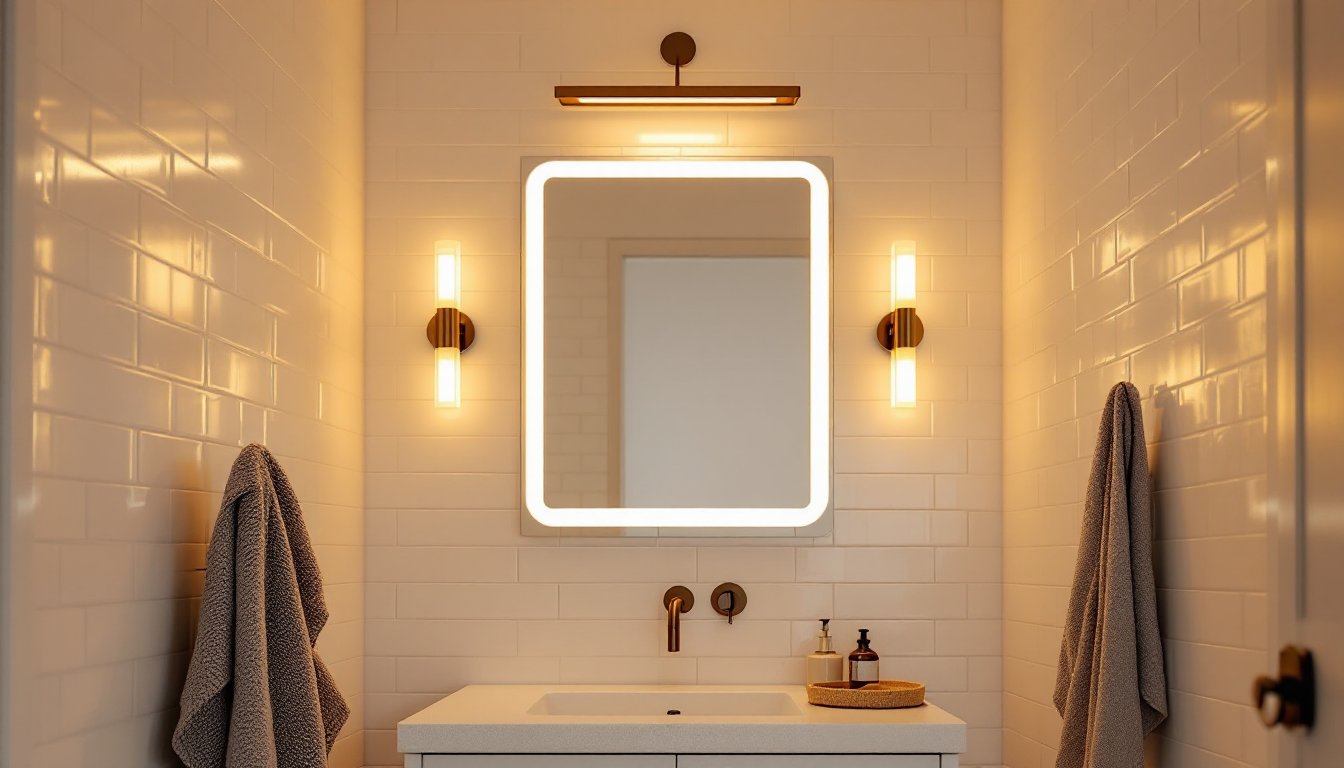
Your mirror is ground zero for task lighting, and this is where many DIYers skip or underdo it. Bathroom codes typically recommend at least 40 watts of incandescent lighting (or equivalent LED, roughly 400 lumens) on either side of the mirror, or 60-80 watts centered above. The goal is to light the face evenly without shadows or reflections that distort how you look.
A vanity light bar mounted directly above the mirror is the simplest solution and suits most small bathrooms. Choose a fixture 24-36 inches wide to span most standard mirrors without looking undersized. Make sure it’s centered and at least 60-66 inches above the floor for comfortable use. If your mirror is recessed into a corner, side-mounted sconces (discussed below) often work better than overhead fixtures.
For vanity bars, LED vanity strips rated 4000-5000K (cool white) are industry standard because they mimic daylight and show true skin tones, no surprises when you step outside. Flicker-free, dimmable options prevent eye fatigue during morning routines. Avoid bare-bulb designs in tiny rooms: they create uneven hotspots. Instead, use fixtures with frosted or diffused covers that spread light evenly across your face. Budget roughly $60-$150 for a mid-range LED vanity bar that’s reliable and dimmable: cheap options flicker or fail within a year.
Accent Lighting and Ambient Solutions
Once you’ve nailed overhead and vanity lighting, accent lighting separates a functional bathroom from one that feels designed. Accent fixtures add visual interest, guide the eye, and make a small room feel intentional rather than cramped. Two strategies dominate small bathrooms: recessed lighting for a clean, minimalist look, and wall sconces or strip lights for warmth and dimension.
Recessed Lighting for a Clean Look
Recessed downlights (also called “cans”) sit flush in the ceiling, creating a streamlined appearance. In a small bathroom, they’re invaluable because they consume zero visual space. A ring of 3-4 recessed lights around the room’s perimeter (roughly 12 inches from the wall) creates ambient glow without the overhead fixture doing all the work. This layering means you can keep the overhead fixture dimmer during evenings while recessed lights maintain soft ambiance.
For recessed lighting, choose 3-inch or 4-inch housings (the trim diameter) to avoid a crowded look. Install them on a dimmer circuit so you can adjust brightness for mood and energy savings. Position them roughly 4-6 feet apart around the room’s edges: too many creates a “commercial space” feel, too few defeats the purpose. Aim for 500-600 lumens per recessed light: they’re not meant to do heavy lifting, just fill gaps. Retrofit kits are available if you don’t want to tear into your ceiling, these sit inside existing ceiling openings, though new construction allows neater, integrated housing.
Wall Sconces and Strip Lights
Wall sconces flanking the mirror have already been mentioned for vanity work, but they’re also excellent ambient fixtures. Mounted 60-66 inches from the floor, they cast light across the room while keeping the vanity well-lit. For bathrooms with limited ceiling space (think attic bathrooms or sloped ceilings), sconces are often easier than recessed lighting.
LED strip lighting is the secret weapon for tiny bathrooms. Warm white (2700K) strips tucked above cabinets, behind mirrors, or along baseboards create indirect ambient light that softens shadows without glare. LED strip lighting is like the Swiss Army knife of bathroom design, versatile, easy to install, and inexpensive. A 16-foot strip costs $20-$60 and plugs into standard outlets (no wiring required for basic peel-and-stick versions). They’re dimmable, available in color-changing options if you want flexibility, and last 30,000+ hours. For a small bathroom, a single strip above the mirror or cabinet is often enough to fill in shadows from overhead and vanity lights.
Energy-Efficient Lighting Options
LED technology has matured enough that it’s the clear winner for bathroom lighting. Compared to incandescent or CFL bulbs, LEDs use 75-80% less energy, produce less heat (crucial in small bathrooms without great ventilation), and last 3-5 times longer. The upfront cost is higher, but the math works out: a $15 LED bulb running 2 hours daily costs roughly $1 per year in electricity, versus $4-5 for an incandescent.
When selecting LED fixtures, check the “smart” features: dimmability (ensures compatibility with wall dimmer switches), color temperature range (3000K for warm, 4000K-5000K for neutral/cool), and CRI (Color Rendering Index), aim for 90+ so colors look natural under your bathroom lights. Cheaper LEDs flicker or shift color when dimmed: mid-range options ($20-50 per fixture) avoid these problems.
Smart lighting (connected bulbs or fixtures you control via app or voice) is less critical in bathrooms than living rooms, but ventilation fans with integrated humidity sensors are genuinely useful. They automatically run when moisture builds up, preventing mold and extending paint life. These cost $100-$200 installed but save headaches down the line. For most small bathrooms, a dimmable LED vanity bar and one or two recessed lights cover your needs efficiently and affordably.