A dark driveway at night is both a safety hazard and a missed design opportunity. Whether you’re pulling in after sunset, hosting guests, or just want to boost your home’s curb appeal, outdoor driveway lighting transforms an overlooked area into a functional and inviting entrance. The good news? You don’t need an electrician or expensive hardwired systems to do it right. Modern driveway lighting solutions, from solar path lights to low-voltage LED fixtures, are affordable, easy to install, and available in styles that suit everything from contemporary to traditional homes. This guide walks you through the why, what, and how of driveway lighting so you can pick the right setup for your space and install it yourself.
Table of Contents
ToggleKey Takeaways
- Outdoor driveway lighting improves both safety and curb appeal by reducing accidents, deterring theft, and creating a welcoming entrance that ranks among the highest-ROI home upgrades.
- Solar path lights offer the easiest DIY installation and lowest cost ($10–50 per fixture) but sacrifice brightness and longevity compared to low-voltage LED systems, which deliver better performance for high-traffic driveways.
- Low-voltage LED driveway lighting systems provide a cost-effective middle ground ($100–500 for a basic setup), requiring only an outdoor outlet and a few hours of installation with no permits needed.
- Proper planning—sketching your layout, spacing fixtures 4–6 feet apart for continuous illumination, and checking for underground utilities before digging—is essential to avoid installation mistakes and costly repairs.
- Choose warm white lighting (2700K–3000K) for an inviting residential feel or cool white (4000K–5000K) for modern aesthetics, and layer different fixture heights and types to create visual depth and sophistication.
Why Outdoor Driveway Lighting Matters
Outdoor driveway lighting serves two critical jobs: safety and aesthetics. On the safety side, well-lit driveways reduce trips, falls, and accidents when you’re walking to or from your car in darkness. They also deter opportunistic theft by eliminating dark corners where someone might lurk or work unnoticed. A lit driveway signals that someone’s home and alert, a simple visual cue that discourages break-ins.
From a design perspective, driveway lighting is one of the highest-impact upgrades you can make. Your entrance is the first thing guests see, and thoughtfully placed lights frame the approach to your home and create a welcoming atmosphere. Studies from the National Association of Home Builders show that curb appeal improvements, including exterior lighting, consistently rank among homeowners’ top ROI projects.
Secondary benefits include improved visibility for mail carriers and delivery drivers, safer holiday decorating, and the ability to use your driveway space for evening gatherings or games. Good lighting also highlights architectural features like stone pillars, plantings, or a distinctive mailbox that might otherwise be invisible at night.
Types of Driveway Lighting Solutions
Before picking a solution, understand the main categories. Each has trade-offs in terms of installation, brightness, cost, and maintenance.
Hardwired Low-Voltage Systems use underground wiring from your home’s electrical panel through a transformer. They’re bright, reliable, and fully customizable, but they require a permit in most jurisdictions and often need professional installation. If you’re comfortable running conduit and you have a basic understanding of electrical safety, this is achievable as a DIY project, though many homeowners prefer to hire a licensed electrician for the panel connection.
Solar-Powered Lights charge during the day and emit light automatically at dusk. They need no wiring or permits, making them the easiest no-fuss option. The trade-off is reduced brightness (typically 50–150 lumens per fixture) and dependence on sun exposure and battery condition. Battery life usually ranges from 2–4 years.
Battery-Powered LED Fixtures sit in the middle: bright enough to be functional, easier to install than hardwired systems, and less dependent on constant sun exposure than solar lights. Some are rechargeable and others use standard batteries: costs and longevity vary.
Solar-Powered Lights
Solar pathway and spike lights are the most popular driveway lighting choice for DIYers. They’re inexpensive ($10–50 per fixture), need no electrical work, and take literally 30 seconds to install, just push the stake into soil or gravel. Modern solar lights use white or warm LED bulbs and come in minimalist or decorative styles.
There are two catches. First, they won’t perform well in heavily shaded driveways or in climates with short daylight hours (far north, constant cloud cover). Second, brightness drops noticeably once the battery degrades, usually after 2–3 years. For a temporary or low-traffic driveway, solar is unbeatable. For a high-use entrance or one with limited sun, you’ll likely want something brighter.
When shopping, look for monocrystalline solar panels (more efficient than polycrystalline), and check that the fixture has a lithium or NiMH battery, not cheap alkaline cells that fail quickly. Brands recommended on top driveway light reviews often highlight models with motion sensors, which activate the light only when movement is detected and extend battery life significantly.
LED Path and Landscape Lights
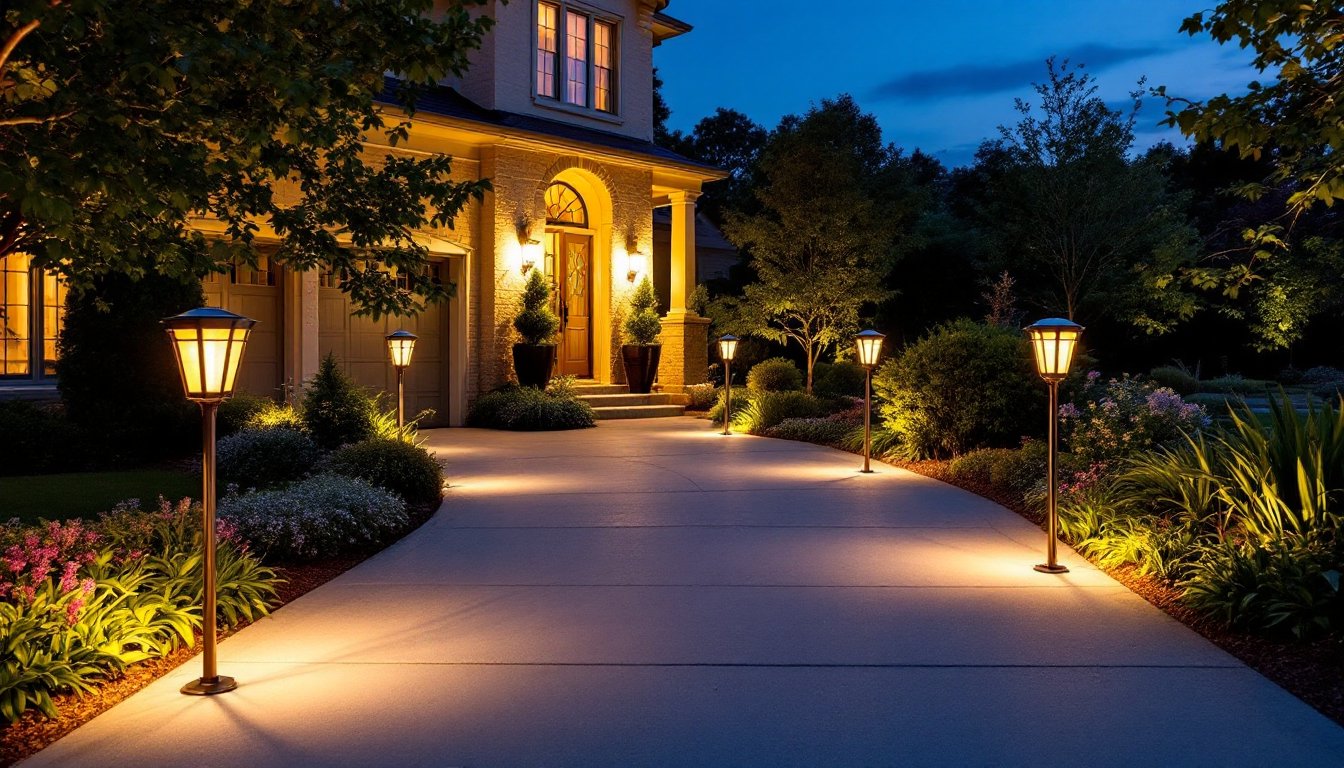
Low-voltage LED landscape lights, usually 12V systems, deliver brightness closer to hardwired fixtures but without the permit hassle or deep trenching. A typical setup includes a power adapter that plugs into an outdoor outlet, underground or surface-run cable, and a handful of spike or bollard fixtures. Installation takes a few hours, and costs range from $100–500 for a basic driveway setup.
The cable usually sits just 6–8 inches below the surface (well below most root systems), and the adapter itself can be housed in a weatherproof box near the outlet. If you have an existing outdoor outlet, this is very manageable DIY work. No permit needed in most jurisdictions, since the voltage is low and the power draw minimal.
LED lights use 80% less energy than incandescent and last 25,000+ hours. For a driveway lit 12 hours per day, that’s roughly 6–7 years of runtime before replacement. Choose warm white (2700K–3000K) for a welcoming feel or cool white (4000K) if you want clinical security-lighting brightness.
Installation Tips for DIY Success
Most driveway lighting failures stem from poor prep, not bad hardware. Here’s what separates a polished install from one that looks rushed.
Plan your layout before you buy. Walk your driveway at night and note dark spots, transitions, and problem areas. Space lights roughly 4–6 feet apart for continuous illumination, or 8–10 feet apart for spotty accent lighting. Draw a quick sketch with fixture locations and measure the distances. This prevents buying too few lights or discovering halfway through that you need cable extensions.
For solar lights: Spike them into soil or gravel at a slight angle so they face the area you want lit, not straight up. Avoid placing them under tree cover or eaves where they’ll stay in shade. If your driveway is pure asphalt or concrete with no soil, use adhesive-backed solar lights designed for hard surfaces, or invest in a few large pots with soil to house the lights near problem areas.
For low-voltage systems: Run the cable in a shallow trench (4–6 inches deep) along the driveway edge or lay it flat and cover it with landscape edging. Keep the adapter and transformer in a weatherproof enclosure near an outdoor outlet: if you don’t have one, you’ll need to install one or hire an electrician. Test the system before burying anything, nothing’s worse than digging up cable to troubleshoot.
Always check for utilities before digging. Call 811 (in the US) or your local utility locating service. Hitting a gas line or power cable is more than expensive: it’s dangerous. Even for shallow solar installs, a quick call takes 5 minutes and could save your life.
Wear safety glasses and work gloves when handling cable and fixtures. If you’re digging, use a spade carefully and consider marking the cable route with spray paint so no one accidentally tools through it later.
Acclimate materials. If you’re installing on a cold day, let batteries and fixture housings sit outside for 20–30 minutes before powering them on. Extreme temperature changes can trip internal protection circuits.
For cost estimates and finding local contractors if you decide professional installation makes sense for your situation, HomeAdvisor’s project tools can give you a ballpark figure based on your region and project scope.
Design Ideas to Enhance Your Curb Appeal
Lighting is as much about aesthetics as function. Here are proven strategies that work across different home styles.
Frame the entrance. Place a pair of matching lights flanking your driveway entrance or mailbox. This classic technique draws the eye and creates symmetry that feels intentional, not accidental. Uplighting fixtures (angled upward) work well here, as they highlight plantings or architectural features.
Use warm white for inviting spaces, cool white for dramatic effect. A warm 2700K–3000K light mimics candlelight and feels residential and cozy, ideal for most homes. Cool 4000K–5000K light has a modern, security-focused feel and is better for contemporary or industrial aesthetics.
Mix fixture types. Combine taller landscape lights (18–24 inches) with shorter path lights (6–12 inches) to create visual rhythm. A single light type can look flat: layered heights add depth and sophistication.
Highlight features, not just surfaces. Instead of lighting the driveway itself, angle lights to uplight a stone column, illuminate plantings alongside the approach, or silhouette a distinctive gate or fence. This creates visual interest and draws visitors deeper into your landscape.
Consider motion sensors for security without overkill. A motion-activated light near a garage entrance or side of the house provides safety without blasting your entire driveway in light all night. Pair these with dimmer solar lights along the approach for a balanced, layered effect.
Test color temperature before committing. If you’re buying a dozen solar lights, buy one or two first and live with them for a week. What looks good in a showroom photo might clash with your home’s exterior color or landscape in person. Smart home tech and lighting trends often feature seasonal reviews of popular fixture styles that can guide your aesthetic choices.
Conclusion
Driveway lighting is a high-impact project that most homeowners can tackle in an afternoon. Start with a clear goal, safety, aesthetics, or both, then pick a solution that fits your driveway type, budget, and tolerance for maintenance. Solar lights are the fastest and cheapest starting point: low-voltage systems offer more brightness and longevity: hardwired systems are the most powerful but require professional help or serious electrical confidence. Plan your layout, check for utilities, and don’t rush installation. A well-lit driveway pays dividends in safety, curb appeal, and the simple pleasure of arriving home to a welcoming, well-designed entrance.