Good lighting can completely change how a living room feels, and LED living room lighting has made this easier and more affordable than ever. Unlike traditional incandescent or CFL bulbs, LEDs deliver bright, consistent light while using a fraction of the energy. They last longer, run cooler, and give you flexibility in color temperature and control options. Whether you’re starting fresh or upgrading existing fixtures, understanding your LED options helps you create a space that’s both practical and inviting. This guide walks through the essentials: why LEDs make sense, what fixtures work best, and how to layer lighting for real-world comfort.
Table of Contents
ToggleKey Takeaways
- LED living room lighting uses 75% less energy than incandescent bulbs and lasts 25,000 to 50,000 hours, delivering $100+ in annual savings for a typical household.
- Layer three types of light—ambient (general brightness), task (reading/focused work), and accent (highlighting features)—to eliminate harsh shadows and create a balanced, inviting living room.
- Choose color temperature strategically: 2700K for cozy relaxation, 3000K for balance, or 4000K for focused work, with dimmable LEDs offering mood and energy control simultaneously.
- Recessed lighting and LED ceiling fixtures form the backbone of living room design, while wall sconces and strip lights add accent lighting that reduces eye strain without visual clutter.
- Ensure LED bulbs match your fixture type (A19, BR30, PAR16) and wattage limits, use dimmable LEDs with compatible dimmer switches, and consult local building codes before installing new wiring or circuits.
Why LED Lighting Is the Best Choice for Living Rooms
LEDs outperform older technologies in almost every way that matters to homeowners. They use 75% less energy than incandescent bulbs and last 25,000 to 50,000 hours, that’s roughly 10 to 20 years of typical household use. No more changing bulbs annually or worrying about heat damage to surrounding materials.
Color temperature is where LEDs shine for living rooms. You can choose 2700K (warm white) for a cozy, relaxed vibe, 3000K (soft white) for balance, or even 4000K (cool white) if you prefer brightness without warmth. Many modern LED bulbs and fixtures are dimmable, giving you control over mood and energy use simultaneously. Some options integrate with smart home systems, letting you adjust color and brightness from your phone or voice control.
Cost-wise, the upfront price of LEDs has dropped significantly. Your electric bill will shrink noticeably once you switch, a household running 30 incandescent bulbs can save $100+ annually just by switching to LEDs. For renters or those in temporary spaces, LED bulbs alone (without fixture replacement) deliver immediate savings and flexibility.
Types of LED Living Room Lighting Fixtures
Ceiling Fixtures and Recessed Lighting
Ceiling fixtures, like chandeliers, flush-mounts, or semi-flush models, form the backbone of living room lighting. LED ceiling fixtures come pre-equipped with LED bulbs or LED modules, eliminating the need to hunt for compatible bulbs. A flush-mount works in rooms with 8-foot or lower ceilings, while semi-flush and pendant fixtures add visual interest with a bit of hanging depth.
Recessed lighting (often called “can lights” or “downlights”) is the workhorse for modern living rooms. These fixtures sit flush in the ceiling and direct light downward, creating a clean, uncluttered look. Living Room Recessed Lighting offers detailed planning for spacing and positioning. LED recessed lights come in standard sizes (4-inch and 6-inch trim diameters are most common), and you choose either fixed beam for narrow focus or adjustable gimbal heads to angle light as needed. Recessed fixtures require ceiling access and may require drywall patching or coordination with existing joists, so they’re best tackled during renovation or if you’re comfortable working in attic spaces.
For guidance on exact placement, where to place recessed lighting in a living room ensures your fixture spacing delivers balanced illumination without dark spots or glare.
Wall Sconces and Accent Lights
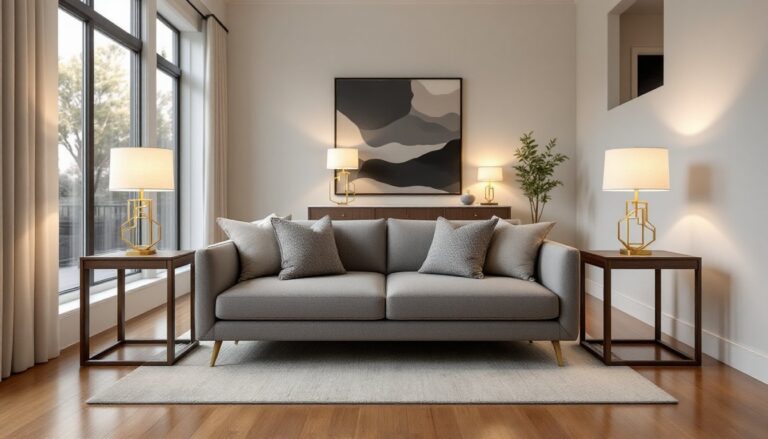
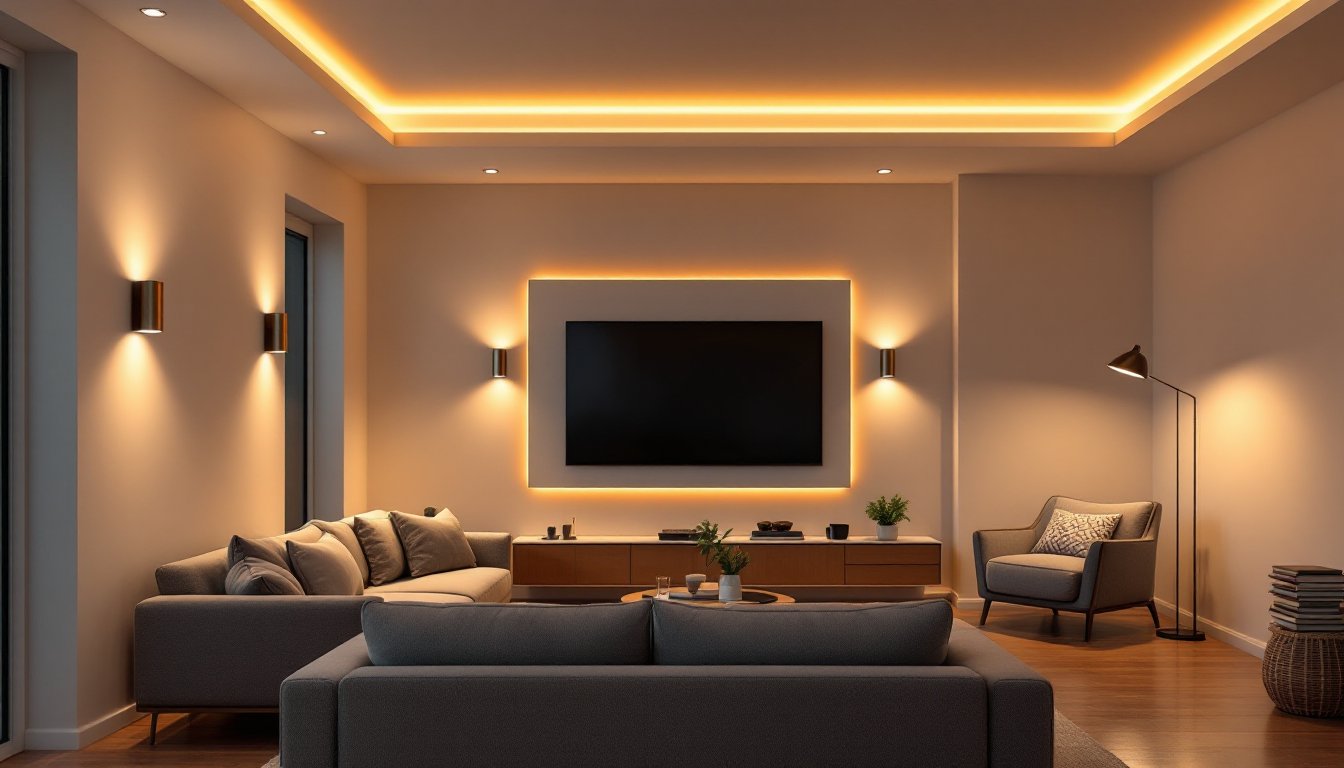
Wall sconces flank a TV, artwork, or seating area, providing ambient light and design flair. LED sconces use minimal electricity while eliminating heat and glare issues common with halogen fixtures. Installation typically means running wire through the wall (roughed-in during new construction) or using surface-mounted wiring in retrofit scenarios. For most living rooms, place sconces 18–24 inches to either side of a focal point and 60–66 inches from the floor.
LED strip lighting ideas offers creative solutions for accent lighting, behind TV panels, crown molding, or shelving. These low-profile lights add drama and ambiance without cluttering the overhead space. Strip lights install with adhesive backing and plug into standard outlets or integrate with smart controllers. They’re especially effective for creating ambient backlight that reduces eye strain when watching TV.
How to Design a Layered LED Lighting Plan
Professional designers layer three types of light: ambient (general room brightness), task (focused light for reading or hobbies), and accent (highlighting art or architectural features). This prevents harsh shadows and one-note boredom.
Start by measuring your living room’s square footage and ceiling height. A rough rule: you need 1 to 1.5 watts per square foot for ambient light from ceiling fixtures. A 250-square-foot room with 9-foot ceilings needs roughly 250–375 watts of ambient light spread across 3–5 ceiling fixtures or recessed lights. That’s 50–125 watts per fixture, easily handled by LED fixtures rated for 9–15 watts (equivalent to 60–100W incandescent output).
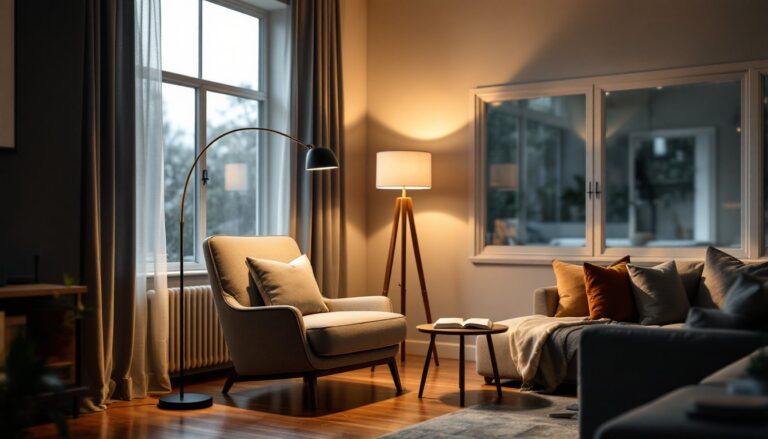
For task lighting, place a dimmable floor lamp or table lamp near seating where reading happens. Aim for 800–1000 lumens focused on the reading surface, not scattered broadly. Accent lighting, strip lights or picture lights, should be roughly half the brightness of ambient light, so eyes don’t dart between extremes.
Consider the room’s function. Living rooms that double as home offices need brighter, cooler light (3500–4000K) during the day: a relaxation-focused space benefits from warm dimmers. Best lighting for living rooms provides comprehensive strategies for balancing aesthetics and practicality. If you’re working with a tight footprint, small living room lighting ideas show how smart fixture placement and strip lights maximize visual space without overwhelming it. A lighting layout tool can help sketch fixture positions before you commit to installation.
Installation Tips for DIY Lighting Projects
Safety first: Turn off power at the breaker before touching any wiring. Use a non-contact voltage tester to confirm the circuit is dead. Wear safety glasses and work gloves, especially when handling sharp trim ring edges on recessed lights.
For simple bulb swaps or standalone fixtures, you’re usually safe. Screw-in LED bulbs are drop-in replacements, match the bulb type (A19, BR30, PAR16) to your fixture and check wattage limits on the fixture label. If your fixture is rated “60W max” and your LED is equivalent to 100W incandescent, it may overheat or fail prematurely. Check the actual wattage draw (usually 8–15W) on the LED bulb packaging.
Harder projects, running new circuits, installing recessed fixtures, or wiring sconces, require understanding your home’s electrical code (NEC standards apply nationwide, but local jurisdictions add rules). In most areas, you can DIY, but some jurisdictions require a licensed electrician for new wiring above a certain amperage. Check with your local building department before starting.
For recessed lights in existing ceilings, you’ll need an attic or crawl space above. Use retrofit cans (smaller, lower-profile fixtures) if headroom is tight. For new construction or complete remodels, new construction cans sit between joists before drywall goes up. Seal around each can with fire-rated caulk, electrical codes require this to prevent thermal bridging and fire hazard. External references like best home lighting strategies and resources on leading LED strip options offer visual inspiration and tested product reviews. For longer installations, consider hiring an electrician to run wiring and mount fixtures, your time and sanity are worth the cost.
Dimmers aren’t compatible with all LEDs. Buy dimmable LED bulbs and a LED-compatible dimmer switch: standard dimmers can cause flickering or hum. Test a few bulbs before committing to a full set.
Conclusion
LED living room lighting isn’t just an energy-saving upgrade, it’s a foundation for comfort, control, and style. Layer your fixtures, match color temperature to mood, and choose dimmable options whenever possible. Start small with smart bulbs or a single recessed light retrofit, then expand once you see the difference in your electric bill and living space. The combination of efficiency, longevity, and design flexibility makes LEDs the clear winner for any living room renovation.