Modern farmhouse kitchen lighting strikes a balance between rustic charm and clean contemporary lines, and it’s become the go-to aesthetic for homeowners who want warmth without the heavy, dated feel of traditional farmhouse design. This style embraces industrial metals, natural textures, and thoughtful layering to create kitchens that are both functional and inviting. Whether you’re planning a full kitchen overhaul or refreshing outdated fixtures, understanding the principles of modern farmhouse lighting will help you make decisions that brighten your space and enhance your home’s overall appeal. Let’s walk through the essentials so you can light your kitchen the right way.
Table of Contents
ToggleKey Takeaways
- Modern farmhouse kitchen lighting combines rustic warmth with clean contemporary lines using materials like galvanized metal, matte black finishes, and brushed brass in intentionally simple designs.
- Layer your lighting with three essential components: ambient lighting for overall brightness, task lighting for work zones like the sink and island, and accent lighting to highlight architectural features.
- Install recessed lights spaced 4 to 6 feet apart with warm white LED bulbs (2700K to 3000K) on dimmers to maintain an inviting farmhouse aesthetic while maximizing energy efficiency.
- Hang pendant lights 12 to 18 inches above counter surfaces and size them to approximately one-third of your island length for proper proportion and visual balance.
- Use LED strip lights under cabinets for functional, cool-running task lighting that transforms workspaces without visible fixtures.
- Consult local building codes and hire licensed electricians for recessed lighting, pendant installations, and any structural ceiling work to ensure code compliance and safety.
What Defines Modern Farmhouse Kitchen Lighting
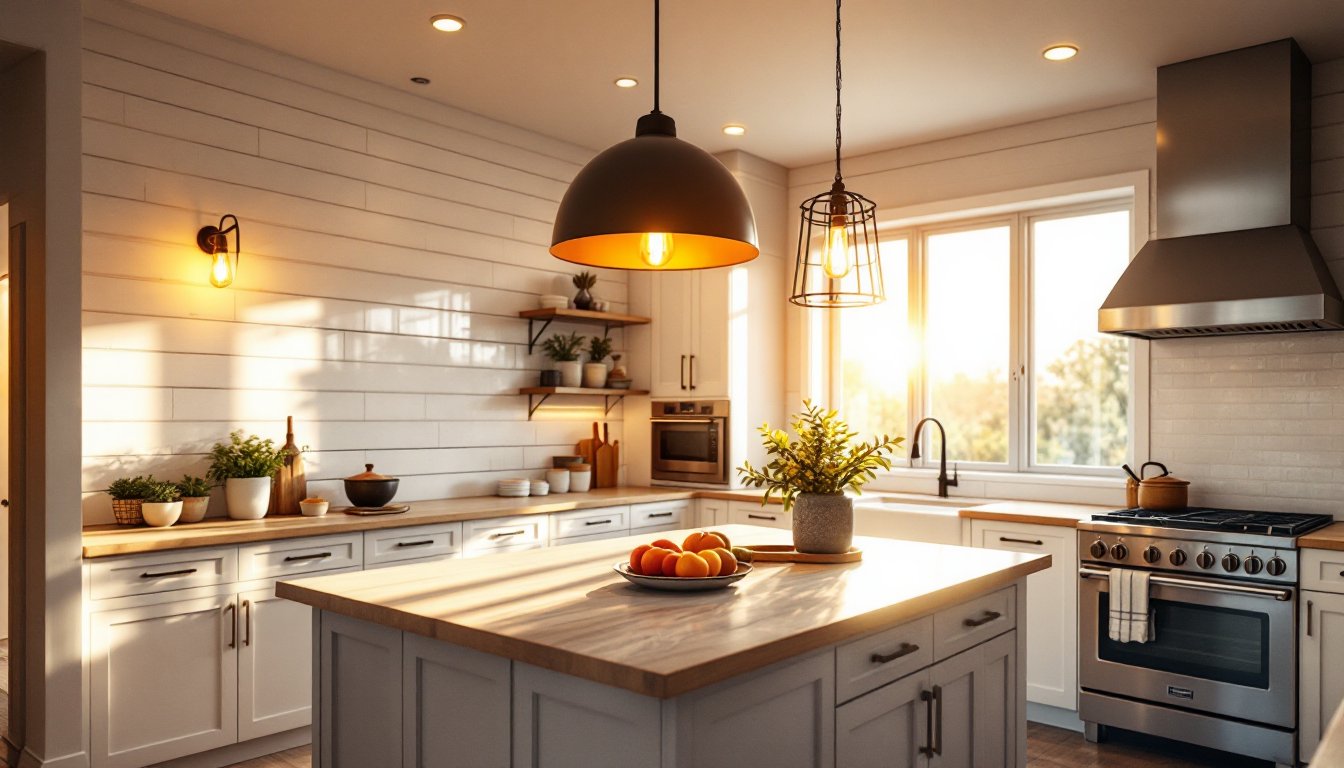
Modern farmhouse lighting borrows from two worlds: the weathered, nostalgic feel of rural design and the sleek, uncluttered lines of contemporary style. You’ll see galvanized metal shades paired with matte black finishes, Edison-style bulbs mixed with clean geometric designs, and a preference for materials like wrought iron, brushed brass, and reclaimed wood.
The color palette tends toward warm whites and soft yellows rather than harsh cool tones. Fixtures are often statement pieces, prominent enough to be noticed but scaled appropriately to the kitchen’s size. Ornate Victorian details and heavily fussy ornamentation don’t fit here: instead, think intentional simplicity with character.
Scale and proportion matter significantly. A single oversized pendant above an island creates drama without clutter, while a row of smaller fixtures maintains balance. The modern part of the equation means you’re choosing fixtures that work efficiently and blend with contemporary cabinetry and countertops rather than fighting against them.
Essential Lighting Layers for Farmhouse Kitchens
Professional kitchen design relies on three lighting layers: ambient (overall illumination), task (focused work light), and accent (highlighting features). Modern farmhouse kitchens succeed when all three work together without one overpowering the others.
Ambient Lighting Foundations
Ambient lighting provides the foundation, the general brightness when you walk into the kitchen. Recessed lighting works well here, particularly when spaced correctly and on a dimmer. A typical rule is to place recessed lights 3 feet from walls and 4 to 6 feet apart for even coverage, though this varies by fixture wattage and ceiling height. For a modern farmhouse look, consider recessed lights in combination with a semi-flush ceiling fixture to add visual interest without the visual weight of a full chandelier.
A semi-flush or low-profile fixture in brushed brass or matte black complements warm wood tones and contemporary cabinetry. Pair it with warm white LED bulbs (2700K to 3000K color temperature) to maintain that inviting, farmhouse feel. LEDs have improved dramatically, they’re now energy-efficient, long-lasting, and available in dimmable options that let you adjust brightness throughout the day.
Task and Accent Lighting Strategies
Task lighting targets work zones: the sink, range, and prep areas. Pendant lights over an island or peninsula are the workhorse of modern farmhouse kitchens. Choose pendants with clear or frosted glass paired with metallic fixtures, matte black, brushed brass, or oil-rubbed bronze are classics that won’t look dated in five years. Hang pendants 12 to 18 inches above the counter surface, adjusting based on fixture size and ceiling height. You’ll see this lighting approach across design platforms like The Kitchn, where functionality and aesthetics merge seamlessly.
For undercabinet lighting, LED strip lights are ideal. They illuminate countertop workspaces and add visual warmth to lower cabinetry. Unlike incandescent undertask lights, LED strips run cool, don’t generate heat near food prep areas, and consume minimal electricity. LED strip lighting transforms functionality into a subtle design element, you see the light, not the fixture itself.
Accent lighting highlights architectural details: open shelving, a statement backsplash, or a range hood. A small recessed or track light directed at these features creates depth and draws the eye. This layer is subtle but crucial for the curated, intentional feel that separates modern farmhouse from generic.
Popular Fixtures and Styles to Consider
When shopping for modern farmhouse fixtures, certain styles have proven staying power. Dome pendants with matte finishes work over islands and in multiples down a hallway. Schoolhouse-style lights, the familiar white or cream porcelain shade with metal brackets, stay relevant because they’re versatile and read as farmhouse without screaming “dated 2015.”
Cage-style or geometric pendants in black metal offer a contemporary edge that grounds the rustic elements. Pair these with Edison-style or vintage filament bulbs (which are actually now mostly LED but mimic the look) if you want additional character. Just keep them subtle: a single oversized statement pendant usually beats a row of overly ornate fixtures.
Wrought iron wall sconces flanking a range hood or over open shelving add vertical interest and practical task lighting. For a coastal or transitional take, brass or gold-finish fixtures introduce warmth alongside the more industrial metals. The key is restraint, mixing too many finishes creates visual noise rather than intentional variety.
Recessed lighting and semi-flush mounts aren’t glamorous, but they’re the backbone. If you’re uncertain about committing to statement pendants, start conservative and layer in accent pieces later. Lighting is easier to upgrade than structural elements, and your confidence grows once you see how fixtures interact with your actual space.
Practical Installation and Design Tips
Before buying fixtures, measure your kitchen carefully. Island pendants should be centered and hung no lower than 12 inches above the counter (more clearance if you have high ceilings). Pendant sizing matters: a general rule is to choose a fixture width that’s 1/3 of the island length, but this varies by design preference and style.
Consider electrical placement early. If you’re adding under-cabinet lighting, run wiring during a kitchen remodel if possible, retrofitting requires either surface-mounted channels (less elegant) or careful routing behind cabinets. Recessed lighting and ceiling fixtures may require new wiring and access to the ceiling cavity: this is where permits and licensed electricians come in. Check your local building code (most jurisdictions follow the National Electrical Code or NEC) to determine whether your project needs a permit. Structural or load-bearing considerations rarely apply to lighting, but electrical work often does.
Dimmers are a game-changer for modern farmhouse kitchens. They let you adjust ambiance from bright task lighting to soft evening glow. Ensure bulbs are labeled as dimmable: not all LEDs dim smoothly, and cheap options flicker annoyingly. Mid-range LEDs (around $3 to $8 per bulb) usually perform better than budget options.
Installing under-cabinet lighting is one of the more achievable DIY electrical projects if your cabinets are already in place and you route wiring safely along studs and joists. For pendant or recessed installation, a second pair of hands and basic understanding of junction boxes and wire connections is essential. When in doubt, hire a licensed electrician, a $200 service call beats a house fire or code violation.
Source inspiration from design sites like Remodelista, which curates high-quality kitchen remodel inspiration and product guides. This helps you build a visual library before committing to purchases. Modern farmhouse kitchen lighting ideas abound online, but seeing how fixtures perform in real homes, with actual lighting conditions and cabinet colors, prevents costly missteps. Modern farmhouse dining spaces often use similar principles, so look at complementary rooms for cohesion across your home.
Conclusion
Modern farmhouse kitchen lighting succeeds through thoughtful layering, quality fixtures in timeless finishes, and careful attention to scale and placement. Start with solid ambient lighting, add focused task lights where you work, and use accent lighting to showcase your kitchen’s best features. Plan electrical work early, invest in dimmable warm-white LEDs, and don’t shy away from professional help when code compliance or structural access is involved. Your lit kitchen will reward you with both function and beauty.