Your bedroom should be a sanctuary from the day’s chaos, but harsh overhead fixtures and poor lighting design can undermine that feeling fast. The difference between a bedroom that feels cold and institutional versus one that feels warm and inviting often comes down to one overlooked element: lighting. Good bedroom lighting isn’t just about visibility, it’s about creating an environment that supports better sleep, relaxation, and a genuine sense of refuge. This guide walks you through everything you need to know to design a cozy bedroom lighting setup that actually works, from understanding color temperature to installing the right fixtures and bulbs for your space.
Table of Contents
ToggleKey Takeaways
- Cozy bedroom lighting prioritizes warm color temperatures (2700K or below) that signal your body to produce melatonin and support better sleep, unlike cool daylight bulbs that suppress rest.
- Layering your bedroom with three lighting types—ambient, task, and accent—creates flexibility for different activities while avoiding the harsh, sterile feeling of a single overhead fixture.
- Dimmable fixtures and warm white LED bulbs rated 2700K with high CRI (90+) are essential for transforming a bedroom into a relaxing sanctuary without requiring expensive smart home technology.
- Wall sconces, bedside lamps with soft shades, and accent lighting like LED strips provide depth and visual interest while keeping light diffused and comfortable for evening wind-down.
- Proper cozy bedroom lighting directly affects sleep quality and the time it takes to fall asleep, making fixture and bulb selection far more impactful than most people realize.
Why Bedroom Lighting Matters More Than You Think
Most bedrooms fail on lighting because people treat it like an afterthought. A single overhead fixture might check the “visible” box, but it won’t create an atmosphere that encourages rest. When you flip that switch at night, harsh light from a recessed can or pendant sends a jolt of brightness that keeps your nervous system on alert, not ideal when you’re trying to wind down.
Proper bedroom lighting does three things simultaneously: it supports your circadian rhythm, it gives you flexibility to shift the mood depending on the time of day, and it makes the room feel intentional rather than generic. Studies show that lighting affects both sleep quality and the time it takes to fall asleep. A well-designed system lets you transition from functional light (say, getting dressed in the morning) to warm, dim light in the evening that signals to your body it’s time to rest.
This is why layering, using multiple light sources at different brightness levels and color temperatures, matters so much. Your bedroom isn’t a single-use space. You read there, you get ready there, you relax there. One lighting setup won’t handle all those functions without compromise. Think of cozy bedroom lighting as a dimmer switch for your entire routine, not just a way to turn things on and off.
Understanding Color Temperature and Its Impact on Sleep
Color temperature is measured in Kelvin (K), and it’s the most direct lever you have to control how cozy or clinical your bedroom feels. Lower numbers equal warmer, more orange-yellow light: higher numbers are cooler, blue-white light. Here’s the practical breakdown:
Warm white light (2700K or below) mimics sunset and candlelight. This is what you want in a bedroom in the evening. It signals your brain to produce melatonin, the hormone that makes you sleepy. Your body recognizes it as “time to rest.” Soft white or neutral white (3000K to 4100K) sits in the middle ground. It’s suitable for reading or getting ready without feeling as clinical as cool white, but it doesn’t relax you quite like warm tones. Cool or daylight white (5000K and above) resembles midday sun and full alertness. You don’t want this in your bedroom at night, it suppresses melatonin and keeps you wired.
This is where smart bulbs and dimmers become valuable. Many people install LED strip lighting ideas that can shift color temperature throughout the day, or use bulbs rated at 2700K as their baseline for evening relaxation. If you’re buying traditional bulbs, look for packaging labeled “warm white” or “soft white” and check the Kelvin rating. Avoid anything labeled “daylight” or “cool white” for bedroom task lighting and accent fixtures. The few extra dollars for the right color temperature pay for themselves in better sleep and a genuinely cozy feel.
Layer Your Lighting: The Three-Tier Approach
Layering means building your bedroom’s lighting from three distinct types, each serving a purpose. This approach gives you flexibility and prevents the “one light on” trap that makes a room feel sterile.
Ambient Lighting for Overall Warmth
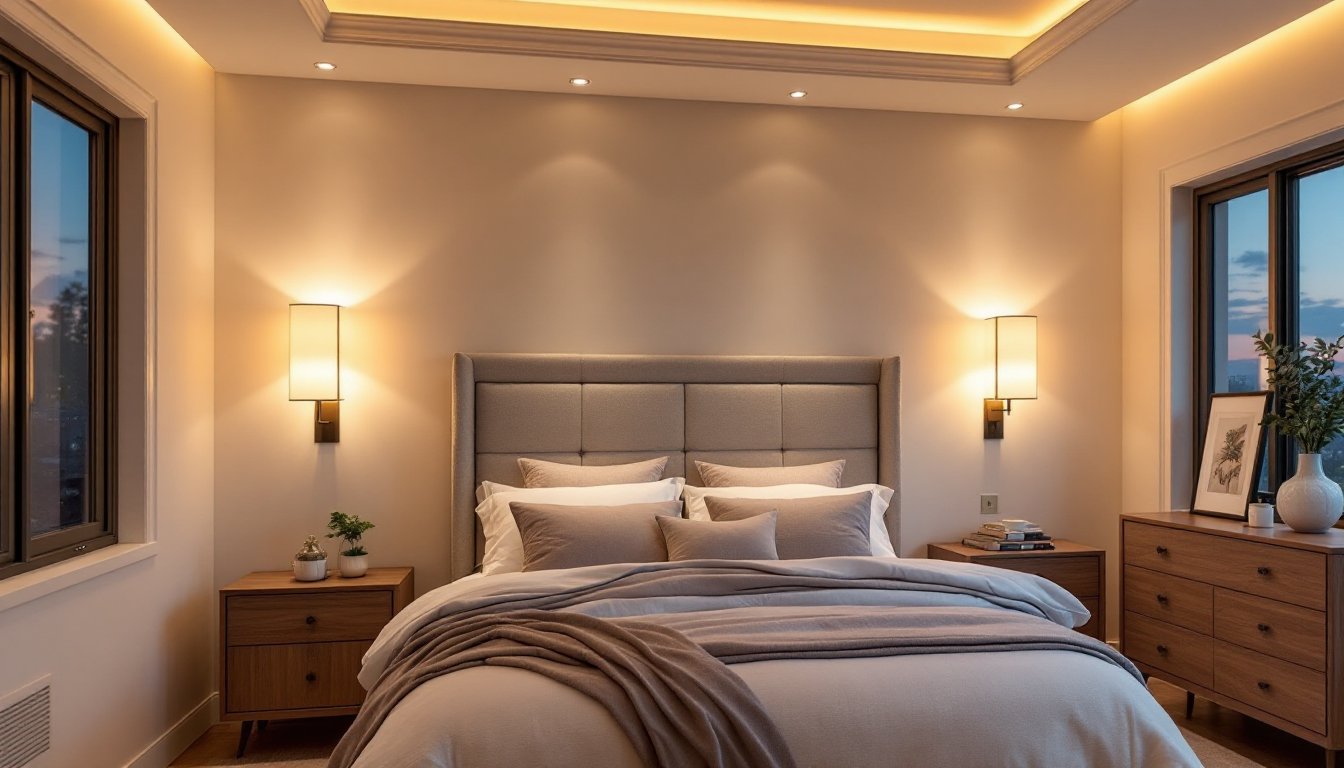
Ambient lighting is your baseline, soft, general illumination that covers the whole room without being intense. Avoid a single overhead fixture as your only ambient source. Instead, use a combination: ceiling-mounted fixtures rated at 2700K, wall sconces on either side of the bed, or even a low-wattage recessed light in one corner. Recessed lights work best when they’re not centered over the bed: think about spacing them toward the edges or above a dresser area.
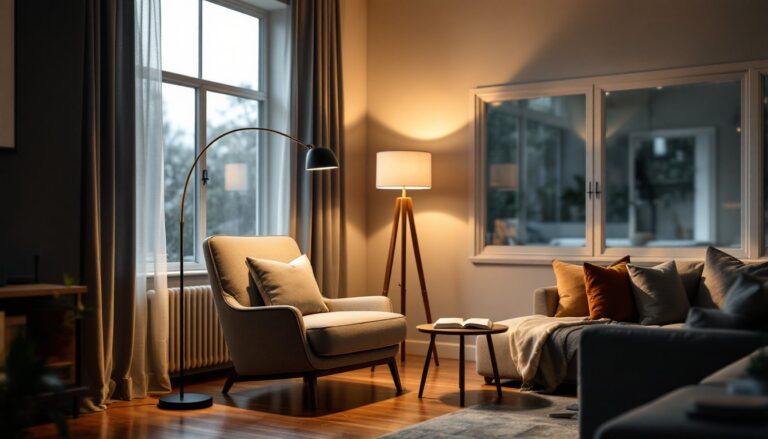
Wall sconces with fabric shades or frosted glass diffuse light evenly and add visual interest. Look for fixtures with dimmer compatibility, it’s non-negotiable for bedroom comfort. Dimmers let you set ambiance without replacing bulbs. If you’re renting or want a no-install option, floor lamps with 40–60 watt-equivalent warm bulbs work surprisingly well to bounce soft light off walls and ceilings. Avoid bare bulbs or clear glass shades that create glare.
Task Lighting for Function and Comfort
Task lighting handles reading, getting dressed, or any activity where you need real visibility. Bedside table lamps are the standard here, put one on each nightstand if possible. Look for lamps with 3-way bulbs or dimmers so you can dial brightness up for reading and down for just enough light to find the bathroom at night. A lamp shade matters: it softens the light and prevents the glare that keeps you awake.
If you have a vanity or dresser in the bedroom, consider adding a small wall-mounted reading light on the wall above it or a dedicated task lamp on the furniture surface. These don’t need to match your ambient fixtures, function first. For bedside reading, an arm lamp or a simple clip-on fixture can work too, especially if it has adjustable positioning. Lighting for Bedroom solutions often combine task and ambient in one fixture, but separating them gives you more control.
Accent Lighting to Set the Mood
Accent lighting is the secret weapon for coziness. It highlights artwork, creates visual depth, or adds a soft glow in corners. Think of it as finishing polish. LED strip lighting along a shelf, under a floating nightstand, or behind the headboard adds drama without taking up space or generating heat. Picture lights above a favorite piece of art or a simple uplighter (a small lamp pointing at the wall or ceiling) to add ambient fill light in dark corners.
Accent lighting is also where you can be bolder with placement and style. A string of warm Edison bulbs tucked along a shelf, a small accent lamp in a corner, or even a compact salt lamp all contribute to the cozy factor. The goal is layered, soft light coming from multiple heights and directions, not one bright source. Many people find that after adding accent lighting, the room finally feels like theirs.
Best Fixtures and Bulbs for a Cozy Bedroom
Not all fixtures and bulbs are created equal. Here’s what actually works for cozy bedroom lighting:
Bulb type matters more than you’d think. LED bulbs dominate now, and for good reason, they’re efficient, stay cool, and last years. Incandescent and halogen are fading out (and less efficient), but some people still prefer their warm, natural glow. CFL bulbs are reliable but take a moment to warm up, which feels less responsive when you flip a switch. For bedrooms, warm white LED bulbs rated 2700K are your baseline. Look for high Color Rendering Index (CRI), ideally 90 or above. CRI measures how accurately a bulb renders colors: higher numbers mean skin tones look more natural and the room feels less artificial.
Smart bulbs (like Philips Hue or LIFX) let you adjust both brightness and color temperature from your phone or voice command. If you’re upgrading, they’re worth the investment, you can set evening routines that gradually dim and warm your lights, supporting your natural sleep cycle. Budget options like WYZE or Nanoleaf offer similar features at lower price points. Dumb bulbs are fine too: just pair them with dimmable fixtures and wall-mounted dimmers.
For fixtures, prioritize diffusion. A frosted or fabric shade softens light. Direct-glow fixtures create pools of harsh light that feel uncomfortable in a bedroom. Wall sconces with linen or cotton shades look good and perform well. Pendant lights over a vanity or shelf should have similar shading. Recessed lights benefit from trim rings with diffusers that break up the harsh spot of light they’d otherwise throw. If you’re installing new fixtures, choose ones compatible with dimmers, check the packaging or product spec sheet.
Bedside lamps are often underestimated. Don’t settle for whatever’s cheapest. A good lamp has a weighted base (no tipping), a well-designed shade, and a 3-way socket or separate dimmer for brightness control. Ceramic, wood, or linen-based lamps feel cozier than plastic or glass. The shade should be tall enough that you don’t see the bulb when sitting up in bed. Brands like living room recessed lighting layout guides emphasize the importance of fixture placement and quality, principles that transfer directly to bedrooms.
Final tip: buy bulbs in bulk. Having extras means you’re not scrambling for a burned-out bulb at midnight, and you can experiment with different brightness levels (40, 60, or 75 watt-equivalent) to find what feels right in each fixture. Many people buy one brightness for ambient light and another for task lighting, then stock both.