When you step outside after dark, does your yard disappear into black? Low voltage landscape lighting changes that, and it’s far more approachable than most homeowners think. Unlike line-voltage outdoor fixtures that require a licensed electrician and permit paperwork, low voltage lighting systems run safely on 12 volts, making them ideal for DIY installation. Whether you’re lighting a walkway, highlighting plants, or creating ambiance on your patio, finding the right system near you and installing it yourself can transform your outdoor space in a weekend. This guide walks you through what to look for, where to find quality options locally, and how to get the job done without very costly.
Table of Contents
ToggleKey Takeaways
- Low voltage landscape lighting operates safely on 12 or 24 volts, making it ideal for DIY installation without permits or licensed electricians, and can transform your outdoor space in a weekend.
- Finding low voltage lighting solutions near you at local home improvement stores, garden centers, and outdoor lighting showrooms lets you see fixtures in person and compare color temperature and beam spread before purchasing.
- Choose a transformer rated for at least 25% more capacity than your planned load, prioritize solid copper cable with UV-resistant jackets, and invest in LED fixtures for durability (25,000+ hours) and 75% energy savings compared to halogen bulbs.
- A complete multi-fixture low voltage landscape lighting system costs $150–$400 for basic setups, while LED systems save $40–$80 annually in electricity and require minimal maintenance over 5–10 years.
- Successful installation requires planning your layout at dusk, burying cable in shallow trenches to protect it from mowers, and testing all fixtures before adjusting angles and brightness for the desired outdoor effect.
- Start small with a modest 4–6 fixture system under $250 to learn what works in your space, then expand next season—this phased approach spreads cost and prevents over-committing to a design that doesn’t age well.
What Is Low Voltage Landscape Lighting and Why It Matters
Low voltage landscape lighting operates on 12 or 24 volts (compared to standard household 120 volts), powered by a transformer that plugs into any standard outlet. This fundamental difference makes it safe to touch, install without a permit in most jurisdictions, and far less demanding than traditional outdoor wiring.
The appeal goes beyond safety. Low voltage systems use less energy, run cooler, and generate minimal heat, a real advantage when positioning lights near plants or in tight spaces. They’re also modular: you can start with a basic setup and expand it later, adding more fixtures as your budget allows. The transformers typically include built-in timers and photoelectric cells, so lights come on automatically at dusk and off at dawn.
Unlike line-voltage fixtures that cast harsh, bright light, low voltage systems tend to produce softer, more controlled illumination. This makes them perfect for accent lighting, path lighting, and subtle landscape definition. Most homeowners see lower electricity bills and fewer complications compared to hiring an electrician for permanent wiring, that’s why low voltage landscape lighting has become the go-to choice for DIY projects.
Finding Low Voltage Lighting Solutions in Your Local Area
Starting your search locally narrows options and lets you see fixtures in person, a huge advantage since color temperature and beam spread differ visibly between models. Your first stops are big-box home improvement stores and local garden centers. Both stock transformers, fixtures, and cabling year-round.
When searching, look for “low voltage landscape lighting kits” or “12-volt outdoor lighting systems.” A basic kit typically includes a transformer, 50–100 feet of cable, and four to eight fixtures, running $80–$200 depending on quality. Upscale outdoor lighting showrooms in your area often carry premium brass or stainless steel fixtures and can advise on layouts: expect to pay more, but you’ll get expert guidance.
If you hit a dead end locally, online retailers ship quickly and often have broader selections. Pairing a local visit with online research gives you the best of both worlds: hands-on inspection plus variety.
Top Places to Shop Locally
• Home Improvement Centers – Home Depot, Lowe’s, Menards. Broad selection, staff can clarify product specs, and you’ll find everything in one trip.
• Independent Garden Centers – Often stock curated, higher-quality fixtures and can offer personalized design advice.
• Outdoor Living Showrooms – Specialize in landscape lighting and may offer installation services if you decide to hire out.
• Local Electrical Supply Shops – Less common but excellent for commercial-grade transformers and cable if you’re tackling a large yard.
When you’re at the counter, ask staff about warranty, transformer capacity (measured in watts), and whether kits are expandable. A reputable shop will answer without hesitation. If they’re vague, keep looking.
Key Features to Look for in a Quality System
Not all low voltage systems are created equal. Here’s what separates a reliable setup from one that’ll frustrate you in a season.
Transformer Power (Watts) – This determines how many fixtures you can run. Most residential kits use 300–600-watt transformers. A single LED path light draws roughly 4–5 watts: a spotlight uses 8–12 watts. Overload a transformer and lights dim and flicker. Choose one rated for at least 25% more capacity than your planned load, don’t max it out.
Cable Quality – The wire connecting transformer to fixtures matters. Look for solid copper conductor (not aluminum) and a UV-resistant jacket. Cheap cable degrades in sunlight and corrodes quickly. Most kits include 12 or 10 gauge wire: 10 gauge is better for longer runs (over 100 feet) since it resists voltage drop.
Fixture Durability – Outdoor fixtures face frost, sun, and moisture. Stainless steel and anodized aluminum outperform painted steel or plastic long-term. Check that seals are tight and that the fixture housing keeps water out. LED fixtures cost more upfront but last 25,000+ hours and use 75% less power than halogen bulbs, they pay for themselves in a year or two.
Timer and Sensor Options – A built-in photocell (light sensor) and timer let you customize when lights operate. Dusk-to-dawn sensing is standard: programmable timers give you evening-only or on-demand control. Smart transformers with WiFi are pricier but let you manage lighting from your phone.
Warranty – Reputable brands offer 2–5 year warranties. If a transformer or fixture fails in warranty, you’re covered. Always read the fine print: some warranties don’t cover outdoor exposure or DIY installation (a red flag).
DIY Installation Tips for Your Landscape Lighting
Installation is straightforward, but cutting corners on layout and prep work is the #1 reason DIY projects disappoint. Plan before you buy, measure twice, and don’t rush.
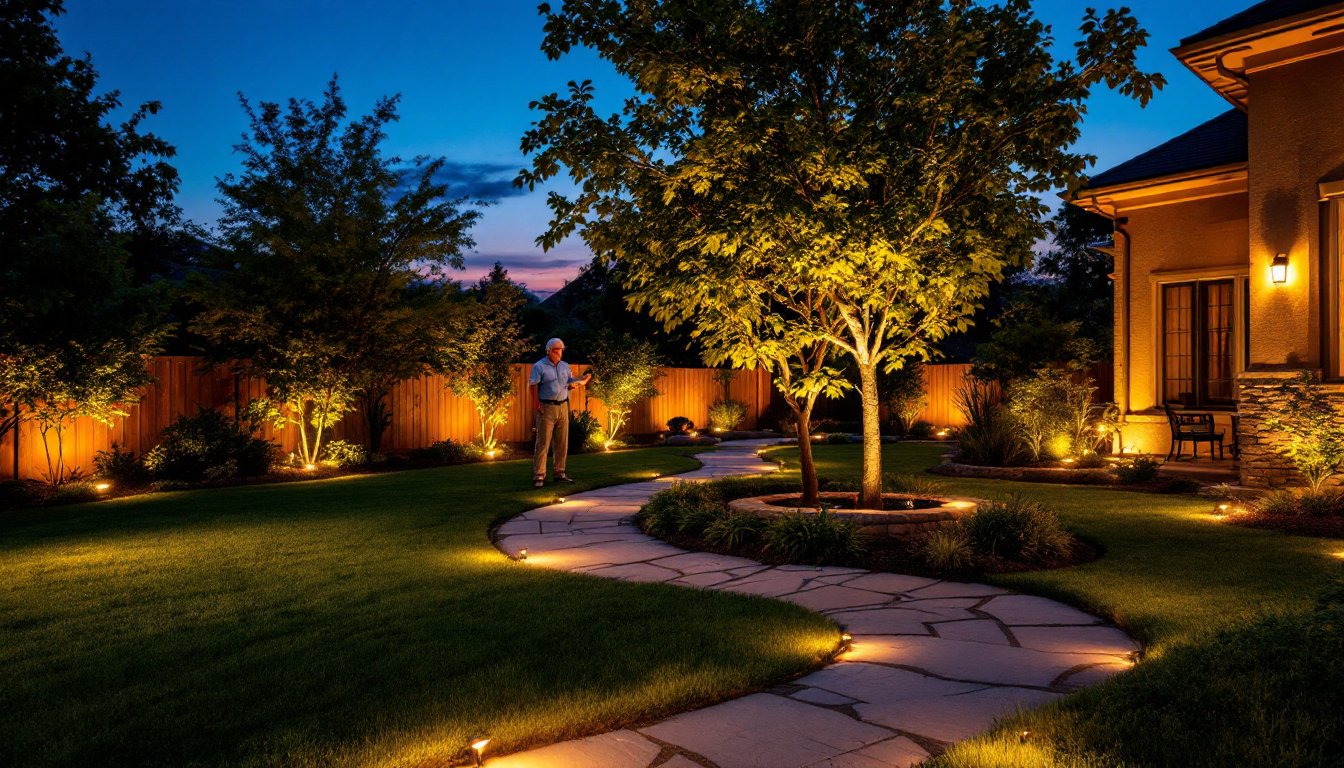
Step 1: Plan Your Layout – Walk your yard at dusk and identify where you want light: along pathways, highlighting focal points (a tree, water feature, or architectural detail), or creating ambient glow. Sketch a rough plan on paper and note distances from power source (outlet). Group fixtures within 75 feet of the transformer, beyond that, voltage drop dims lights noticeably.
Step 2: Prepare the Cable Run – Landscape lighting cable can sit on top of soil, but burying it protects it from mowers and weather. Use a flat shovel to cut a shallow trench (4–6 inches deep) along your planned route. Cable doesn’t need conduit for low voltage, but it shouldn’t cross foot traffic paths or sit exposed in direct sun all day.
Step 3: Install Fixtures – Most landscape fixtures have stake-mounted bases. Push them firmly into the ground at your marked spots. Verify the angle and direction of light before securing: you can adjust them easily at this stage. Connect each fixture to the main cable using the included connector clips, they’re weatherproof and require no tools.
Step 4: Connect the Transformer – This is the easiest part. Strip about 6 inches of insulation from the cable ends, insert them into the transformer terminal screws, and tighten. Plug the transformer into an outdoor GFCI outlet. If one isn’t nearby, install a weatherproof outlet (this may require a licensed electrician in some jurisdictions: check local codes).
Step 5: Test and Adjust – Turn on the system during daylight to confirm all fixtures light up. If a fixture doesn’t work, check the connection at the transformer and ensure the wire is fully inserted. Once everything’s on, wait for dusk to see the actual effect. Brightness and spread will look different in darkness: now’s the time to tweak angles.
Safety & Tools You’ll Need – Wear gloves and safety glasses when digging and working with wire. You’ll need a screwdriver, wire strippers, a flat shovel, and a marking pen. A multimeter (optional but handy) tests for voltage at the transformer. Since low voltage is inherently safe, you don’t need special electrical training, but pay attention to connection security, loose terminals corrode and fail.
Read the instruction manual fully before starting. Different transformers have slightly different wiring schemes, and mistakes here mean a dark yard.
Budget-Friendly Options and Cost Considerations
Low voltage landscape lighting won’t drain your wallet, but pricing varies by quality and scope. Understanding the breakdown helps you allocate your budget smartly.
A basic single-fixture kit runs $40–$80 and works for a small patio or entryway. A complete multi-fixture system (transformer, 50–100 feet of cable, 6–8 fixtures) costs $150–$400. Premium LED systems with smart controls push toward $500+. Expanding an existing kit with additional fixtures costs $15–$50 per fixture, depending on material and output.
Halogen bulbs are cheaper upfront ($3–$8 per bulb) but consume more energy and need replacement every 2–3 years. LED fixtures cost $20–$60 per fixture initially but last 5–10 times longer and cut energy use dramatically. For a 6-fixture system running 6 hours per night, LED saves roughly $40–$80 annually in electricity and bulb replacement, meaningful if you’re keeping the system long-term.
When budgeting, don’t forget:
• Connectors and splitters – If expanding beyond a kit, you’ll need weatherproof cable connectors ($2–$5 each).
• Wire gauge – Upgrading from 12 to 10 gauge for long runs adds $15–$30 but prevents voltage drop and frustration.
• Outdoor outlet – If one doesn’t exist near your planned transformer location, installation runs $200–$400 through an electrician (required for safety).
• Seasonal maintenance – Budget $10–$20 yearly for replacement bulbs (halogen systems) and occasional weatherproofing.
Start small. A modest 4–6 fixture system under $250 lets you learn what works in your space. Expand next season once you see where shadows fall and which fixtures deliver the look you want. This phased approach spreads cost and avoids over-committing to a design that doesn’t age well.
For real-world cost comparisons and contractor quotes, resources like HomeAdvisor provide project estimates and can help you decide whether DIY or hiring a local installer makes sense. If your yard is complex or you simply prefer professional installation, hiring local outdoor lighting pros is an option, though you’ll pay $1,500–$3,000 for a full design and installation.
Conclusion
Finding and installing low voltage landscape lighting near you is genuinely doable. Start by visiting local garden centers and home improvement stores to see fixtures in person and ask questions. Invest in quality transformers, durable fixtures, and proper cable, cheap components fail fast outdoors. Follow a deliberate installation plan, measure your runs, and bury cable to protect it. If you’re unsure about electrical work or wiring specifics, consult expert DIY guides or a local electrician before diving in. A well-designed low voltage system pays dividends in curb appeal, security, and pride in a job completed yourself.