Tulsa’s outdoor spaces deserve lighting that works as hard as you do. Whether you’re hosting a summer cookout or just want to see your pathway safely after dark, the right outdoor lighting transforms your yard into a functional and inviting retreat. But here’s the catch: Tulsa’s climate, hot summers, occasional ice storms, and intense sun, demands fixtures and planning that can actually withstand the elements. This guide walks you through choosing, placing, and installing outdoor lighting that doesn’t quit after one season.
Table of Contents
ToggleKey Takeaways
- LED outdoor lighting is the best choice for Tulsa’s climate, lasting 25,000+ hours while using minimal power and running cool in extreme heat.
- Invest in weatherproof fixtures rated IP65 or higher with sealed components and corrosion-resistant housings to survive Tulsa’s summer heat, humidity, and ice storms.
- Layer your Tulsa outdoor lighting strategy with ambient, task, and accent lights mounted at least 8–12 feet high to prevent glare and ensure even coverage without harsh shadows.
- Motion-sensor entry lights and dusk-to-dawn photocell switches automate your outdoor lighting while cutting energy costs by 70–80% compared to traditional incandescent fixtures.
- Proper installation of outdoor lighting requires GFCI protection, corrosion-resistant fasteners, and buried cable in conduit at least 12 inches deep to meet code and prevent water damage.
Why Outdoor Lighting Matters For Tulsa Homeowners
Good outdoor lighting isn’t just about ambiance, it’s about safety, security, and making your property usable after sunset. A well-lit pathway prevents trips and falls on uneven ground. Motion-sensor lights near entry points deter unwanted visitors without you flipping switches. And let’s be honest: a lit patio makes the difference between sitting inside after dark or actually enjoying your yard.
Tulsa homeowners often overlook lighting until they’re fumbling with a phone flashlight to find their keys. Outdoor lighting also increases curb appeal and home value. Potential buyers notice a home that’s inviting at night. Beyond the practical stuff, strategic lighting highlights landscaping features, a nice tree, a water feature, or architectural details you’ve worked on.
The challenge is durability. Tulsa summers push 95+ degrees, and winter ice storms can wreak havoc on poorly installed fixtures. You need fixtures rated for outdoor use, proper wiring, and installation that keeps moisture out. Skipping these details means replacing lights every year.
Best Lighting Options For Tulsa’s Climate And Landscape
LED lights dominate for good reason: they run cool, last 25,000+ hours, and use a fraction of the power incandescent or halogen fixtures demand. For Tulsa’s heat, LEDs are your best friend, they won’t overheat in a fixture baking in the sun all day.
Solar pathway lights are tempting and work decently for ambient lighting along walkways, but don’t rely on them as your primary light source. Tulsa’s humidity can degrade cheap solar units, and cloudy days mean dimmer performance. If you go solar, invest in mid-range fixtures with sealed batteries and durable housings, not dollar-store options.
String lights and bistro lights add charm to patios and deck areas. Use weather-rated versions with sealed bulbs and UV-resistant cords. These look great for entertaining but aren’t functional task lighting, pair them with brighter fixtures for safety.
Flood lights and spot lights are workhorses. A 1000W or 500W LED flood light mounted high on your house or a pole lights a large area with minimal glare. Dimmable options let you dial in the right brightness for different times or moods.
Weatherproof Fixtures For Harsh Seasons
Look for fixtures rated IP65 or higher, this means they’re dust-tight and can handle water spray from any direction. Tulsa’s occasional ice storms and heavy rains demand this protection. Aluminum or stainless steel housings resist corrosion better than painted steel.
Check that bulbs and sockets are sealed. Moisture creeping into a fixture socket causes corrosion and electrical problems. Gaskets and silicone sealants around the fixture base prevent water infiltration. Bronze or powder-coated finishes hold up better in Tulsa’s heat and humidity than bare metal.
Strategic Placement Guide For Maximum Impact
Lighting placement is half the battle. Too bright and you’ll glare into neighbors’ windows or wash out your landscaping. Too dim and you’ve wasted money on fixtures that don’t work.
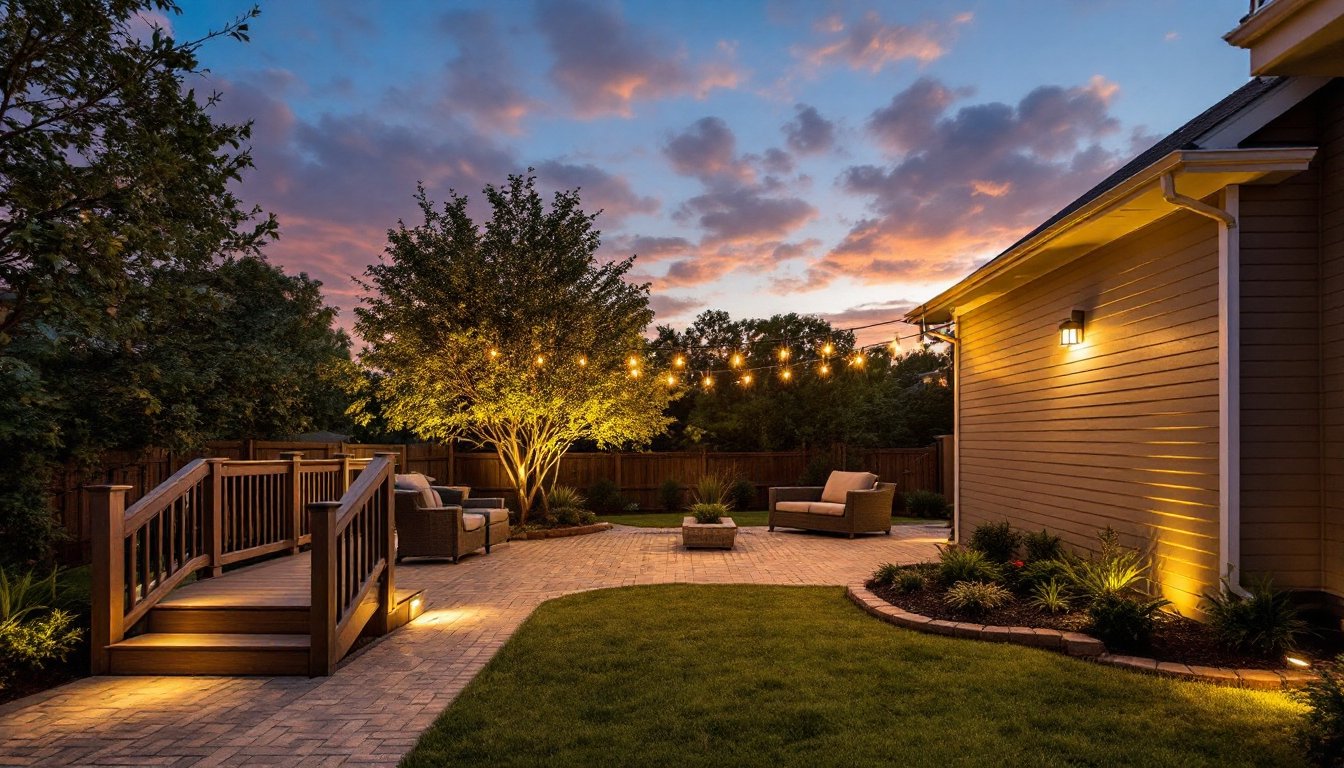
Start with layer lighting: ambient (general brightness), task (functional areas like steps), and accent (highlighting features). Ambient light comes from fixtures overhead or mounted high on the house, think wall-mounted fixtures 8–10 feet up. Task lighting focuses on areas where people actually move: walkways, deck stairs, and entryways. Accent lighting draws attention to a nice tree, garden bed, or architectural detail.
Mount fixtures at least 8–12 feet high when possible. Lower fixtures create harsh shadows and glare at eye level. Higher placement spreads light evenly and looks less intrusive. Aim fixtures slightly downward to avoid blinding passersby or your neighbors.
Warm white light (2700K color temperature) is forgiving and inviting, perfect for patios and social areas. Cool white (4000K+) is sharper and better for task areas or security lighting where you want bright, clear visibility. Don’t mix them wildly: stick to one or two color temperatures throughout your yard.
Lighting Your Deck, Patio, And Pathways
For a deck or patio, combine overhead or perimeter mounting with ground-level or deck rail lights. Recessed lights or low-profile fixtures along the deck railing provide functional light without glare overhead. String lights overhead add atmosphere without doing the heavy lifting alone. Aim for 20–30 foot-candles of light (measurable but honestly, “bright enough to see your drink” is the DIY metric).
Pathways need gentle, continuous light without dark spots. Mount fixtures 4–6 feet high along the path, spaced 8–10 feet apart. Solar pathway lights work fine for accent here, but pair them with one or two brighter fixtures at intersections or near the house. At the base of steps, add a light to each side, uneven steps in dim light are a liability.
Entry doors get a dedicated fixture mounted above, angled slightly down. This lights your guest’s face, not just their feet, and deters porch pirates. Motion sensors on entry lights are smart, they’re only bright when needed, saving energy.
Energy-Efficient Solutions That Save You Money
LED fixtures cost more upfront but return that investment fast. A typical outdoor LED flood light uses 10–20 watts versus 150+ watts for an old halogen. If you run it 8 hours a night, the math is stark: LEDs cost pennies to operate monthly, halogen fixtures run into dollars.
Dimmer switches let you run lights at lower levels when you don’t need full brightness. This cuts energy use and extends bulb life further. Smart bulbs and fixtures let you schedule lights, they turn on at dusk, off at midnight, without manual intervention. Companies like Philips Hue make outdoor-rated smart bulbs, though they’re pricey. For most DIYers, a simple photocell switch (dusk-to-dawn sensor) under $20 handles scheduling automatically.
Motion sensors are underrated energy savers. A light that’s only on when motion is detected uses a fraction of the energy of a light that runs all night. For security lighting, motion sensors are nearly essential, you want to know when someone’s moving around your property.
Grade your fixtures by intended use. Accent lights highlighting a tree? Lower wattage is fine: it’s all about perception. Security or task lighting for stairs? Go brighter. This layered approach lets you use efficient, lower-wattage fixtures most of the time and save.
DIY Installation Tips For Tulsa Homeowners
Many outdoor lights plug into a standard outdoor outlet or hardwire into your electrical system. Plug-in fixtures are the easiest, no wiring, but you’re limited by cord length and outlet placement. Hardwired fixtures require running cable through conduit, often buried, and tying into a junction box or breaker. If you’re not comfortable with electrical work, hire a licensed electrician. Outdoor wiring has specific code requirements (NEC Article 680 and 690 cover outdoor circuits), and a permit is almost always needed for hardwired outdoor lighting.
For plug-in fixtures, use heavy-duty outdoor extension cords rated for wet locations (marked with a W on the cord). Coil excess cord neatly and keep connections off the ground where they collect water. GFCI outlets (ground-fault circuit interrupters) are mandatory outdoors, if your outlet isn’t GFCI protected, install a GFCI outlet or plug a GFCI adapter into the existing outlet.
When mounting wall fixtures, locate the mounting surface carefully. Check behind siding for a stud or use heavy-duty anchors designed for outdoor use. Use corrosion-resistant fasteners, stainless steel or exterior-grade galvanized bolts, never bare steel. Caulk around the fixture base with outdoor silicone sealant after mounting to keep water out.
For ground-level or in-ground lights, dig a proper footing if the fixture sits on the ground, and ensure drainage around the base. Standing water rots wood and causes rust. Bury any cable in conduit at least 12 inches deep if you’re running it across a yard, this protects it from damage and meets code.
Test everything before finishing. Flip the breaker or plug in the fixture and confirm it works. Check for any water intrusion after a rain. A problem caught before you’ve buried cable or finished landscaping beats discovering it weeks later. Wear gloves and eye protection while wiring, and never work on live circuits, turn off power at the breaker first.