Good outdoor lighting does more than just chase away the dark, it extends your living space, sets a mood, and turns an ordinary backyard into somewhere you actually want to spend time. Whether you’re hosting a dinner party, reading on the deck, or just enjoying a quiet evening, the right modern backyard lighting ideas make all the difference. In 2026, the shift is toward layered, flexible systems that combine aesthetics with function. From warm Edison bulbs strung overhead to smart RGB systems that change color on command, today’s options blend practicality with design appeal. This guide walks through seven proven approaches to light your backyard properly, no Pinterest fluff, just real strategies that work.
Table of Contents
ToggleKey Takeaways
- Modern backyard lighting ideas combine layered lighting zones—ambient, task, and accent—to create both functional and inviting outdoor spaces.
- LED Edison bulbs use 80% less energy than incandescent alternatives while maintaining warm color temperatures and lasting 25,000+ hours.
- Low-voltage landscape lighting systems require a transformer sized 20% larger than total fixture wattage and should be positioned within 50 feet of fixtures for optimal performance.
- Smart color-changing RGB lighting systems work with voice assistants and offer scheduling and remote control, though established brands with active firmware support are more reliable than budget alternatives.
- Proper installation requires GFCI outlets for safety, outdoor-rated wire and fixtures rated for wet locations, and hiring a licensed electrician for hardwired systems to prevent shock and fire hazards.
- Strategic placement of post caps, pathway lights, and submersible pool fixtures at proper spacing (4–8 feet for pathways, 4–6 feet for landscape beds) transforms a yard into a resort-like outdoor living area.
String Lights and Bistro Edison Bulbs
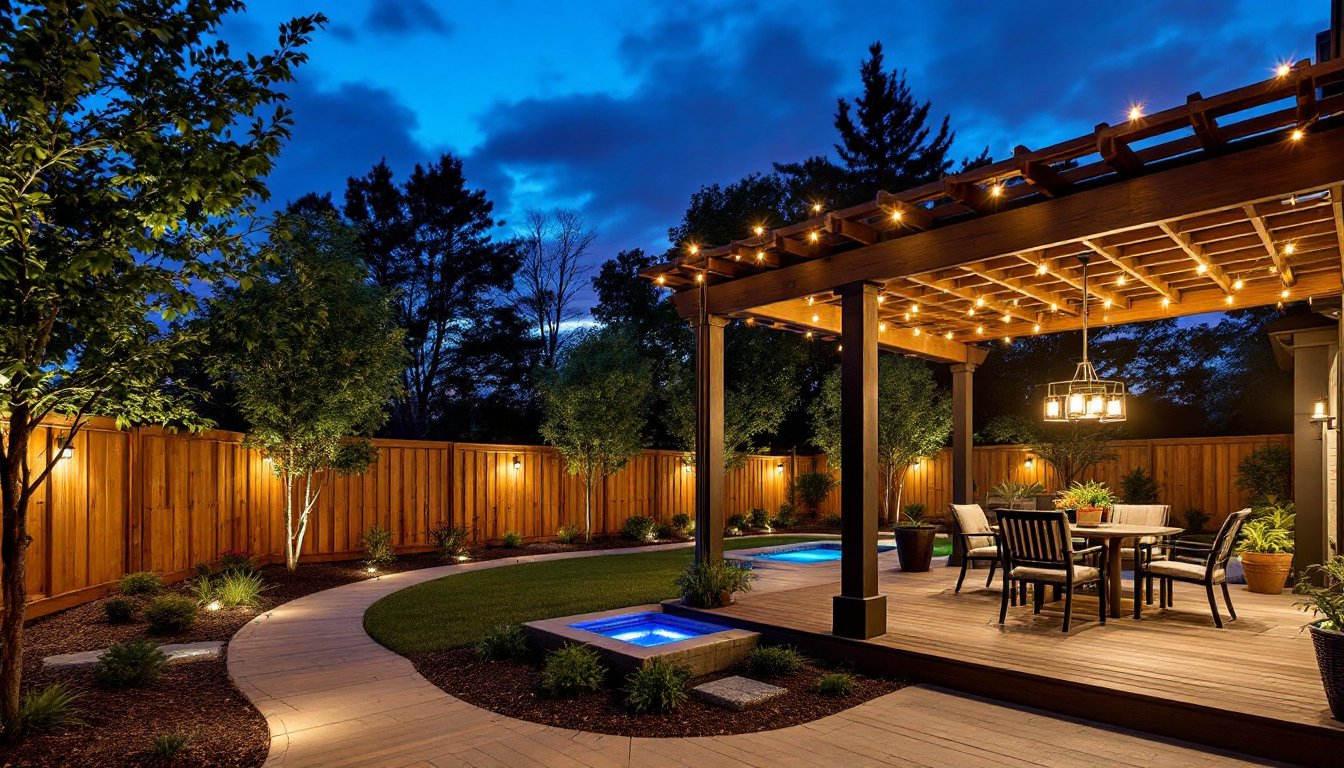
String lights remain a cornerstone of outdoor ambiance, and for good reason. They’re affordable, relatively simple to install, and they create that warm, inviting glow homeowners crave. Bistro-style Edison bulbs, those filament-forward vintage-looking units, have become the go-to aesthetic choice, offering both character and practical illumination.
When shopping for string lights, you’ll encounter two main types: incandescent Edison bulbs and LED versions. Incandescent burn hotter and draw more power but deliver a richer, warmer color temperature (around 2700K). LED Edison bulbs mimic that warmth while using 80% less energy and lasting 25,000+ hours versus the 1,000-2,000 hour lifespan of incandescent.
Installation typically requires a sturdy overhead structure, a pergola, fence line, or the eaves of your home. You’ll want 14 AWG outdoor-rated wire rated for wet locations (check the label). String lights commonly come in 20, 30, or 50-foot lengths: measure your span first, then add 15% for sag and connections. Mount fixtures every 6–8 feet using weatherproof brackets, not nails driven into wood grain.
For safety, connect to a GFCI outlet (ground fault circuit interrupter) that cuts power if moisture is detected, required by code in wet areas. If you don’t have an outdoor outlet, hire a licensed electrician to install one safely. Never daisy-chain extension cords or use indoor fixtures outdoors: water intrusion leads to shock hazards and fire risk. Cost ranges from $30–$150 per string depending on bulb type and wire gauge, though installation labor can add significantly if running new circuits.
LED Landscape Lighting for Ambient Glow
Landscape lighting, those low-voltage fixtures tucked into flower beds, along pathways, or at the base of trees, creates depth and visual interest while keeping foot traffic safe. Modern LED landscape kits simplify setup by bundling a transformer, low-voltage cable, and multiple fixture heads in one package. Most operate on 12V or 24V, far safer than line voltage (120V) and requiring no permit in most jurisdictions.
A typical system includes a transformer (plugged into a standard outdoor outlet), low-voltage cable (runs from transformer to each fixture), and the fixture heads themselves. Transformer wattage matters: calculate the total wattage of all fixtures, then choose a transformer 20% larger for headroom. A 100-watt transformer handles roughly 8–10 LED landscape lights at 10 watts each.
Place the transformer within 50 feet of your fixtures (check product specs, exceeding this distance causes voltage drop and dim lights). Run cable along the base of plants, under mulch, or in shallow trenches: outdoor-rated cable withstands moisture, UV, and freezing.
Uplighting and Accent Lighting Techniques
Uplighting angles light upward from the ground toward trees, walls, or architectural features. A single uplight at the base of a large tree creates dramatic shadow play and draws the eye upward. Accent lighting highlights texture, think stone walls, fencing, or planting borders. Position accent lights at 45–60 degrees for best effect: too steep looks harsh, too shallow fades into glare.
Space landscape fixtures 4–6 feet apart along pathways for even coverage. Use warm color temperatures (2700K) near seating areas and cooler tones (4000K) in security-focused zones. LEDs deliver consistent color: avoid mixing old halogen and new LED fixtures, the warm/cool mismatch will look jarring. Budget $200–$500 for a mid-size yard system (500–1500 square feet), including transformer and 8–12 fixture heads.
Smart and Color-Changing Light Systems
Smart backyard lighting is no longer niche, WiFi and Bluetooth systems that let you dim, color-shift, or schedule lights from your phone are increasingly standard. These systems work with voice assistants (Alexa, Google Home) and often include sunset/sunrise automation, scene presets, and remote on/off controls.
Most smart outdoor lights use WiFi or Bluetooth and require a hub or bridge (some connect directly to your phone). Key things to check: Does the system work outdoors in rain and freezing temps? Can it integrate with your existing smart home hub? What’s the app like, intuitive or clunky? Read reviews carefully: connectivity hiccups are the #1 complaint.
Color-changing RGB lights let you shift from warm white for dinner to cool blue for a party vibe. They’re pricier ($40–$100 per bulb versus $15–$30 for fixed-color smart bulbs) but worth it if you entertain frequently. For reliability, stick with established brands that actively support firmware updates: cheap WiFi lights from unknown makers often drop off the network after a year.
Installation is straightforward, screw into existing outdoor fixtures or string light sockets, connect to your home WiFi, and pair via app. No rewiring needed. Cost starts around $150–$300 for a basic smart string light system (10 bulbs + hub) and scales up with additional bulbs and zones. Recent research from leading smart home platforms shows adoption of connected outdoor lighting has tripled since 2023, reflecting growing comfort with wireless home automation.
Deck and Patio Illumination Solutions
Decks and patios are high-traffic zones that need both safety and ambiance. Deck-post cap lights, recessed soffit fixtures, and patio pendant lights each fill different roles. Choosing the right combo keeps your space functional and beautiful.
Post cap lights sit atop deck or fence posts and typically use 1–3 watts of LED, drawing power from a low-voltage transformer or solar cell. They mark steps and railings without drowning the space in light. Recessed soffit lights flush-mount into the underside of a deck, pergola, or overhang, they cast light downward and avoid glare. Pendant fixtures hang from chains or rods and work well over dining tables or lounge areas, similar to indoor pendants but in wet-rated housings.
When planning, think layers. Start with ambient light (soffit or post caps providing overall visibility), then add task light (pendants over a dining table), then accent light (landscape uplighting for drama). This three-tier approach prevents harsh shadows and monotony.
For deck-post caps, measure your post dimensions (standard posts are 4×4 nominal, roughly 3.5 inches actual). Most caps require a post height of at least 3–4 feet to sit securely. Recessed lights need 4–6 inches of cavity space, so verify your deck framing before ordering. A well-planned deck design takes these fixtures into account during construction: retrofitting is messier. Budget $30–$60 per post cap light, $40–$100 per recessed fixture, and $50–$150 per pendant depending on material and features. Labor costs for hardwiring (if adding new circuits) can exceed fixture costs, so assess whether low-voltage solar or battery options suit your needs first.
Water Feature and Pathway Lighting
Pools, fountains, and ponds become focal points at night with proper lighting. Underwater LEDs cast glowing light through water, creating a jewel-box effect. Pathway lights guide guests safely and add an organized, upscale feel to your landscape.
Submersible lights (LED underwater fixtures) come in wired and solar versions. Wired units offer brighter output and reliable performance: solar versions are easier to install but dimmer and dependent on sunny days. Most submersible lights are sealed to IP67 or IP68 (fully waterproof). Never use indoor or non-rated fixtures in water, shock and corrosion risk is real. Position fixtures on the pool bottom or fountain basin, aiming upward and out. Blue and white LEDs work best for water: avoid reds and greens, which look murky underwater.
For pathway lighting, space fixtures 4–8 feet apart depending on desired brightness. Solar stake lights are popular because no wiring is needed, but they underperform in shade and cloudy climates. Low-voltage pathway lights (wired to your transformer) output more lumens and last longer. Mount them 12–18 inches above grade so light spreads at foot level. If using recycled plastic or fragile finials, position them a foot from high-traffic edges to avoid kick damage.
Cost for submersible pool lights runs $25–$75 per fixture. Solar pathway lights average $10–$20 each: wired pathway lights, $15–$40. Budget also depends on cable runs, if transformers and outlets are far from your pool or pathway, trenching and conduit add $200–$500. Proper waterproofing and GFCI protection are non-negotiable: hire a licensed electrician if you’re uncertain about wet-location wiring. Design inspiration from leading outdoor living sources shows how layered water and pathway lighting elevates a yard from functional to resort-like.
Conclusion
Modern backyard lighting is about creating zones, ambient glow where you lounge, task light where you cook or dine, accent light that highlights your landscape’s best features. Start by mapping your yard, identifying key gathering spots and sightlines, then layer in lights accordingly. Whether you go solar-simple or invest in a smart RGB system, the result is a backyard that’s safer, more useful, and genuinely inviting after sunset.